


 77°F
77°F


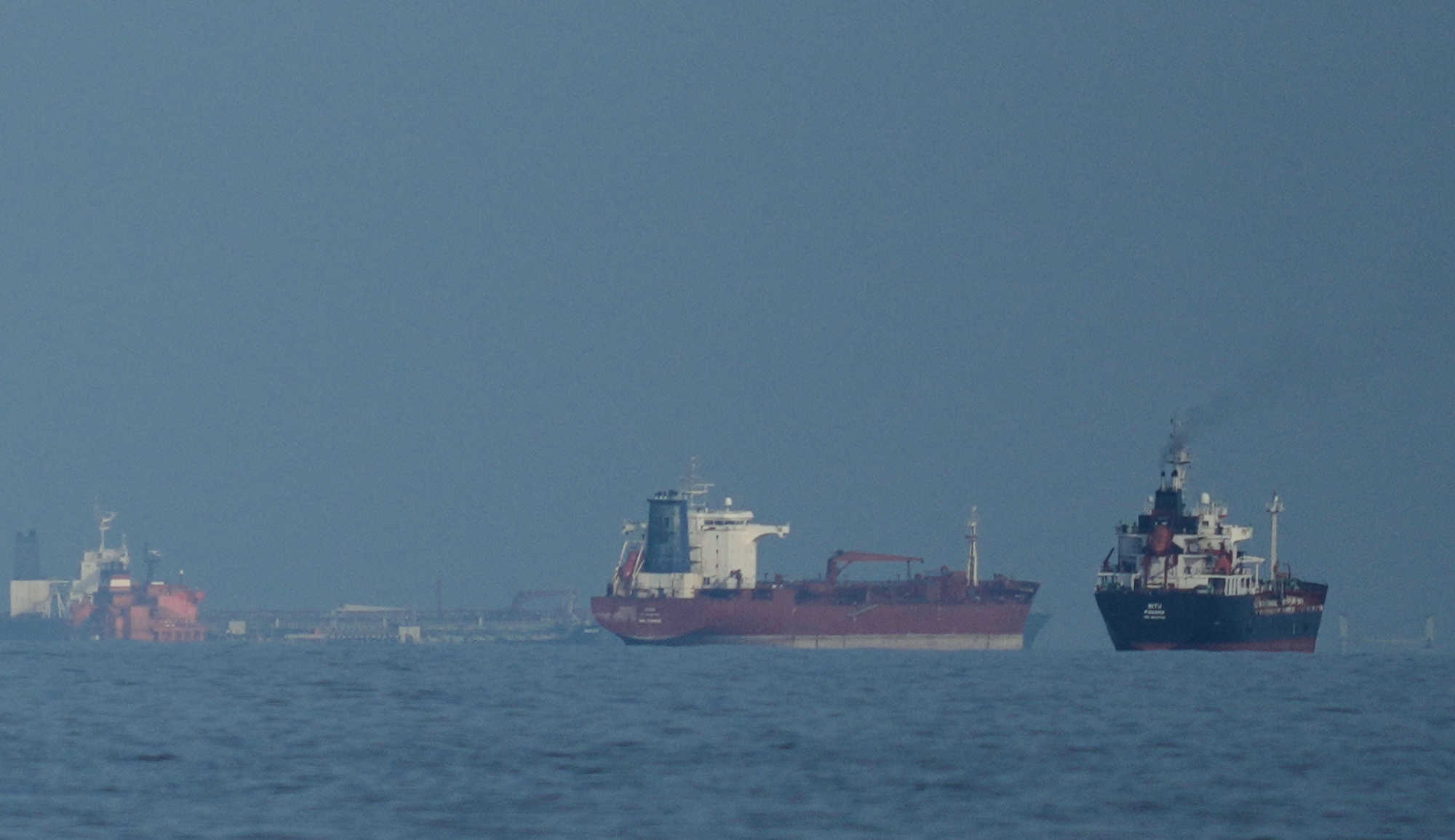
Oil tankers and cargo ships line up near the Strait of Hormuz, a critical global energy chokepoint, as markets react to news of a U.S.-Iran ceasefire and falling crude prices.
President Donald Trump said Sunday that the United States and Iran have reached a deal to halt their war and reopen the Strait of Hormuz, sending oil prices sharply lower and raising the possibility of relief from fuel-market pressure that has impacted the U.S. Virgin Islands through ferry fares, WAPA’s fuel-cost outlook, shipping charges, gasoline prices and imported consumer goods.

The U.S. and Iranian officials said they had agreed on a peace framework to end the conflict, halt the U.S. blockade of Iran and reopen the Strait of Hormuz. The agreement is expected to be signed Friday in Switzerland, though the precise terms were not immediately known.
“The Deal with the Islamic Republic of Iran is now complete,” Trump wrote on Truth Social. Pakistan Prime Minister Shehbaz Sharif, whose country served as a mediator, also announced that a deal had been reached.
Trump said the Strait of Hormuz, one of the world’s most important energy shipping lanes, would reopen Friday and that he had ordered the end of the U.S. blockade of Iranian ports.
“Ships of the World, start your engines. Let the oil flow!” Trump wrote.
Iran’s deputy foreign minister, Kazem Gharibabadi, said a broader agreement would be negotiated during a 60-day ceasefire period, including sanctions relief. The future of Iran’s nuclear program is also expected to be addressed in later talks.
The market reaction was immediate. Brent crude futures fell $3.51, or 4.02%, to $83.82 by 2203 GMT, while U.S. West Texas Intermediate fell $3.93, or 4.63%, to $80.95. Trading Economics also showed Brent falling on June 14, while Wall Street Journal market coverage cited analysts who said Brent could fall further if the Strait of Hormuz remains open and oil flows resume.
For the Virgin Islands, the development matters because the territory’s economy is highly exposed to imported fuel, freight and energy costs. The Consortium has reported repeatedly in recent weeks that the war and disruption in the Strait of Hormuz had been affecting local transportation, utility and consumer costs.
On June 11, the Public Services Commission approved a 66-cent emergency ferry surcharge for 90 days for Varlack Ventures and Transportation Services USVI, after the companies requested a 75-cent increase. The surcharge was sought in response to rising diesel prices.
Maria Hodge, attorney for the ferry companies, told the PSC that diesel prices increased by almost $3 per gallon between January and March.
“These numbers have carried a little, because the cost of diesel has fluctuated,” she said, “but the basic effect of the war in Iran and the effect of the closure of the Strait of Hormuz on the cost of diesel fuel to these two companies has been ongoing and obvious and unavoidable.”
Electricity costs have also been tied to the same global fuel pressures. The PSC voted last week to keep WAPA’s Levelized Energy Adjustment Clause at 22.22 cents per kilowatt hour through at least September 30, 2026. Julius Wright, the PSC’s consultant on electric utility matters, said the recommendation was driven largely by the conflict in Iran, the spike in fuel costs and WAPA’s financial condition.
“The Commission should accept WAPA’s offer to keep the LEAC rate at 22.22 cents per kilowatt hour,” Mr. Wright told commissioners.
He also warned that WAPA’s cash position limited the commission’s options.
“Because they are so cash-strapped, it’s not in the best interest of the customers, the Commission or the company to lead them into such a situation that they can’t pay their vendors and collect their fuel costs.”
The territory has also seen fuel-related pressure in shipping. The Consortium previously reported that Tropical Shipping and Crowley raised fuel-related cargo charges affecting the U.S. Virgin Islands trade as the war constrained Hormuz and pushed oil above $100 a barrel.
Tropical’s published schedule showed the bunker surcharge on a 20-foot dry container rising from $100 to $350 and on a 40-foot dry container from $200 to $700. Crowley’s finalized schedule showed a 20-foot charge moving from $200 to $400, a 40-foot charge from $400 to $800, and vehicle charges rising from $90 to $170.
Those increases are significant for a territory that depends heavily on imported food, household goods, vehicles, construction materials, refrigerated cargo and consumer shipments. Even when merchants absorb part of the cost, higher fuel and freight charges eventually place pressure on landed costs.
The broader cost-of-living backdrop has already been a concern. During the FY2027 budget overview, OMB Director Julio Rhymer said inflation reached 7.6% in 2025, “driven largely by the territory’s heavy reliance on imported goods, which totaled $4 billion.” BIR Director Joel Lee also said the “cost of goods that consumers are paying has unfortunately increased,” and that consumers are “feeling that pinch.”
A sustained reopening of the Strait of Hormuz could ease some of that pressure if lower crude prices flow through to diesel, gasoline, shipping and utility costs. However, it remains unclear how quickly any relief would reach Virgin Islands consumers, especially where surcharges, inventories, contracts and regulatory decisions are already in place.
The announcement nevertheless marks the first major de-escalation signal in weeks for a conflict that has affected global oil markets and sharpened local concerns over fuel, transportation, electricity and imported goods.