





 77°F
77°F


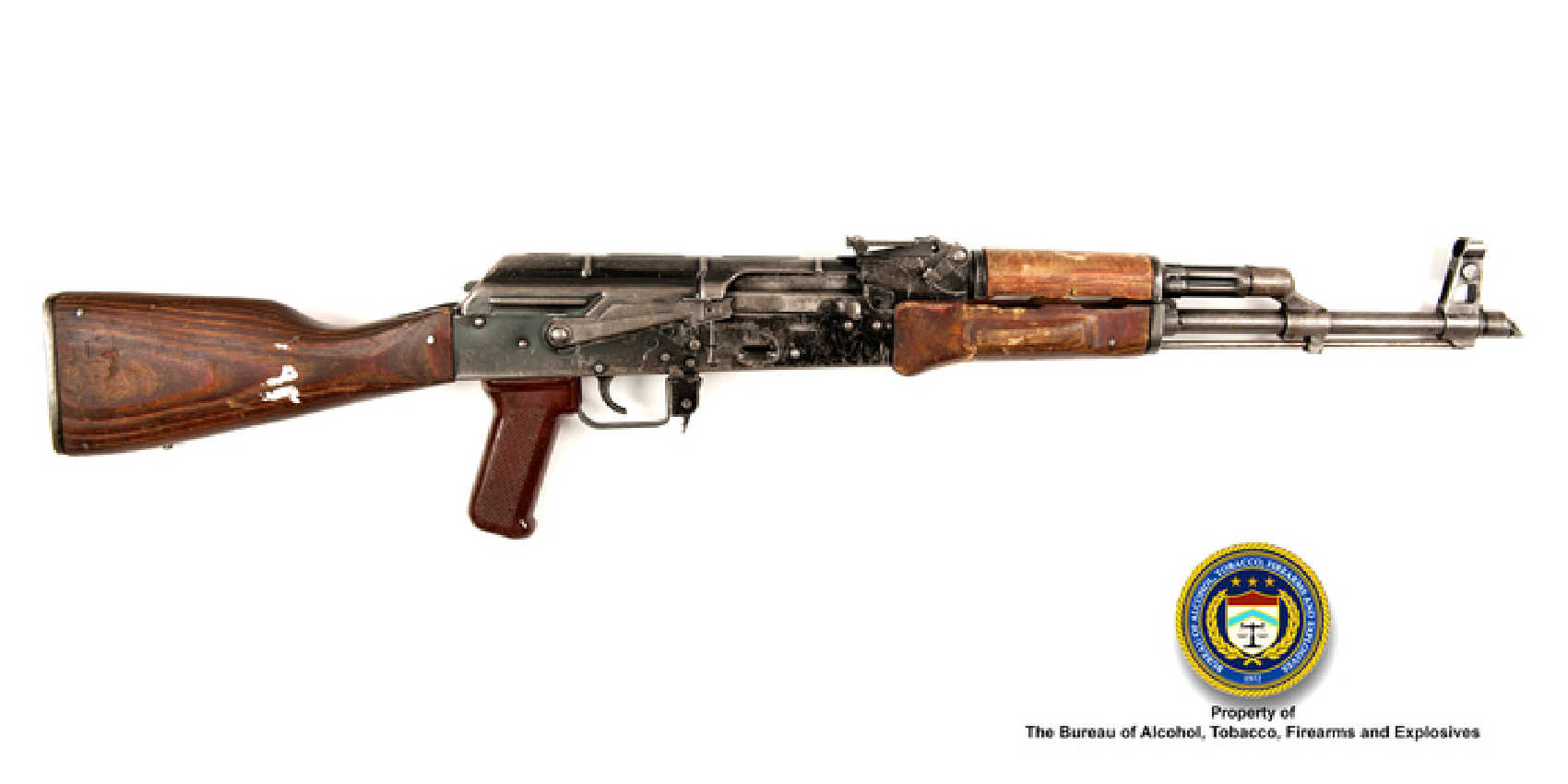
An AR-type semiautomatic rifle. The Justice Department has expanded its lawsuit against the V.I. government, challenging restrictions on AR-15-style rifles, magazine capacity and other firearm regulations.
The U.S. Department of Justice has substantially expanded its federal civil-rights lawsuit against the Government of the Virgin Islands and the V.I. Police Department, alleging that VIPD imposed firearm restrictions without statutory authority for decades — including continuing to enforce provisions modeled on a federal assault-weapons ban after that law expired in 2004.

In an 18-page amended complaint filed Sept. 2 in District Court, federal attorneys say information obtained during the litigation has broadened what began last year as a challenge primarily to the territory's firearm-licensing process. USDOJ now alleges a much wider pattern involving firearm and magazine restrictions, public carry, suppressors, firearm registration, storage requirements and portions of the territory's recently enacted Act 9113.
The allegations have not been adjudicated. The Government of the Virgin Islands has previously disputed DOJ's characterization of its firearms system and argued that Act 9113 corrected the deficiencies challenged in the original lawsuit.
DOJ Says Practices Date Back to at Least 2004
The federal case, United States v. Government of the Virgin Islands, was originally filed Dec. 16, 2025 against the territorial government, VIPD and Police Commissioner Mario Brooks. DOJ brought the action under a federal statute that allows the United States to seek court intervention when it has reasonable cause to believe law-enforcement officers are engaged in a pattern or practice that deprives people of constitutional rights.
The original complaint focused heavily on the firearm-licensing process. Federal attorneys alleged that VIPD subjected applicants to lengthy delays, required the installation of gun safes, conditioned applications on home inspections and continued requiring applicants to establish a special reason for carrying a firearm even after the U.S. Supreme Court's 2022 decision in New York State Rifle & Pistol Association v. Bruen.
The Sept. 2 amended filing goes considerably further.
DOJ says it recently learned that the alleged misconduct “goes back literally decades to at least 2004.” According to the complaint, VIPD acknowledged on Aug. 13 that for decades it had enforced firearm and magazine-capacity restrictions contained in the federal Assault Weapons Ban of 1994 even after that federal statute expired.
The federal ban was enacted for 10 years and expired on Sept. 13, 2004. It had restricted certain semiautomatic firearms and ammunition-feeding devices capable of holding more than 10 rounds, subject to exceptions.
DOJ alleges that after the federal law expired, VIPD nevertheless continued restricting what kinds of firearms Virgin Islanders could possess even though those restrictions were no longer contained in federal law and, according to the United States, had no basis in territorial statute.
Federal attorneys make a similar allegation regarding magazine capacity. The amended complaint says VIPD independently prevented residents from possessing magazines holding more than 10 rounds even though, DOJ contends, no federal or Virgin Islands statute authorized the department to impose that restriction.
The filing does not specify how many firearm-license applicants or gun owners were affected by those historical practices, nor does it identify individual enforcement actions stemming from each alleged restriction.
Safe, Home Inspections and Long Licensing Delays
The amended complaint also incorporates and expands upon DOJ's earlier allegations about how VIPD processed firearm-license applications.
Federal attorneys allege that VIPD required applicants to install a gun safe permanently bolted to the structure of their home without statutory authority. DOJ says each applicant was required to have a separate safe even when two applicants, such as a married couple, lived in the same household.
DOJ further alleges that VIPD for years required firearm applicants to submit to inspections of their homes without first establishing probable cause. According to the complaint, applicants who declined an inspection would not have their applications processed.
The department sometimes took several months to a year to schedule and complete those inspections, DOJ alleges, contributing to delays that the federal government says routinely stretched for months and, in some instances, close to a year before a firearm license was issued.
The amended filing also accuses VIPD of denying otherwise qualified applicants because the department determined they owned “too many” firearms, despite DOJ's contention that no territorial law authorized such a limit.
DOJ Says Restrictions Continued After Supreme Court Ruling
Another portion of the lawsuit concerns the territory's former requirement that applicants demonstrate a particular justification for carrying a firearm.
Before Act 9113 changed the statute, Virgin Islands law allowed the commissioner to require an applicant to establish a good reason to fear death or serious injury, or some other “proper reason” for carrying a weapon.
DOJ says VIPD continued applying that requirement after the Supreme Court's 2022 Bruen ruling, which held that states could not condition the general right to carry a handgun for self-defense on an applicant demonstrating a special need beyond that of ordinary citizens.
The territorial government has told the court that it has stopped imposing that requirement. DOJ says it has sought evidence allowing it to independently verify that assertion.
Federal attorneys also allege that VIPD historically restricted licenses to designated purposes such as “home protection” or “business protection,” rather than allowing licensed gun owners to generally carry firearms in public for self-defense.
Firearm Licensing Halted for Weeks, Complaint Says
DOJ's amended complaint also targets a disruption earlier this year.
According to the filing, VIPD announced on March 20 that it would continue accepting firearm-license applications but that “all other services” were suspended because of technical difficulties. DOJ says the suspension included issuing firearm licenses and continued for weeks.
Federal attorneys argue that VIPD should have developed a temporary or provisional mechanism for issuing licenses instead of stopping issuance entirely. The complaint characterizes the shutdown as another component of what DOJ alleges is a broader pattern of unconstitutional firearm regulation.
Act 9113 Now Becomes a Major Part of the Case
The expanded federal lawsuit also places the territory's new firearms law, Act 9113, squarely at the center of the case.
Governor Albert Bryan signed the legislation on June 24. The measure extensively rewrote Virgin Islands firearm law, including licensing and registration requirements, firearm and magazine restrictions, storage provisions and rules governing where weapons may be carried. The Legislature's records identify it as the 2026 Second Amendment Rights and Public Safety Act.
At the time, Government House said the previous framework was overly burdensome and vulnerable to constitutional challenge, describing the replacement as a measure intended to protect lawful gun ownership while establishing public-safety parameters. The territorial government subsequently argued in federal court that the new law corrected the problems identified by DOJ and rendered the original lawsuit moot.
DOJ disagreed.
The amended complaint now attacks several provisions of Act 9113 and alleges that VIPD's enforcement of them forms part of the same unconstitutional pattern.
Among the provisions challenged are restrictions on magazines capable of holding more than 15 rounds and on the sale or transfer of firearms manufactured to accept them. DOJ specifically identifies AR-15-style rifles among the weapons potentially affected.
The federal government is relying heavily on a July 17 ruling by the Third Circuit Court of Appeals involving New Jersey. In that case, the appeals court held unconstitutional a law that effectively banned magazines capable of holding more than 15 rounds. DOJ argues that the ruling directly undermines the Virgin Islands' own magazine restriction.
The Consortium previously reported on DOJ's effort to obtain a preliminary injunction against those provisions shortly after the Third Circuit ruling. At the time, the federal challenge was focused principally on the magazine limit and firearms manufactured to accommodate magazines exceeding that capacity.
The amended complaint now reaches well beyond those provisions.
Suppressors, Long Guns, Demonstrations and Registration Challenged
DOJ is also challenging Act 9113's prohibition on firearm suppressors, contending that suppressors fall within Second Amendment protection and cannot be categorically prohibited without a sufficient historical analogue. That argument remains for the District Court to decide.
Another challenge concerns provisions allowing law enforcement to prohibit licensed firearm carriers from carrying within designated areas surrounding public demonstrations. Act 9113 allows restricted areas extending as far as 1,000 feet from demonstrations involving activities such as picketing, marching, vigils or other public expressions capable of attracting crowds. The statute also permits firearm exclusion zones around certain special events.
DOJ argues that the authority is too broad and describes a 1,000-foot restriction as potentially creating an area almost half a mile across in which licensed individuals cannot exercise their firearm-carry rights.
Federal attorneys are separately challenging the law's general prohibition on publicly carrying long guns, including semiautomatic rifles, as well as the territory's requirement that firearms be registered.
The complaint also takes aim at the territory's safe-storage law, but more narrowly. DOJ argues the statute is unconstitutional to the extent that it requires firearms to be stored in a manner that prevents owners from having them readily available for immediate self-defense.
Legislature Has Already Moved to Amend New Gun Law
The litigation is evolving while lawmakers are themselves making changes to Act 9113.
On Aug. 26, the 36th Legislature adopted firearm-related Amendment 36-859, sponsored by Sen. Clifford Joseph, to Bill 36-0344. The Legislature's tracking system says the amendment would, among other things, change references to a 15-round magazine limit to 17 rounds and modify portions of the firearm-licensing process.
The legislation to which the firearm amendment was attached was otherwise an appropriation measure for the Department of Public Works to repair, renovate or remove the pedestrian bridge near the Western Cemetery and former Addelita Cancryn Junior High School on St. Thomas. The Legislature's own Aug. 26 account of the session identifies Bill 36-0344 by that bridge-related purpose.
The unusual legislative sequence drew attention inside DOJ's amended complaint.
“USVI's legislative process is not transparent,” federal attorneys wrote, adding that it can sometimes be difficult to determine what lawmakers have approved until after legislative action has been completed.
DOJ told the court that, when the amended complaint was filed, it understood that lawmakers had approved another bill attempting to alter the magazine restrictions and sent it to the governor, but federal attorneys had not yet reviewed the final text. DOJ therefore took no position on whether those changes would satisfy the Third Circuit's recent ruling.
Even if the Legislature succeeds in correcting particular statutory provisions, however, DOJ argues that doing so would not resolve its broader case because the federal government is now challenging VIPD's historical practices themselves, including restrictions it alleges were imposed without any statute authorizing them.
Territory Previously Argued Case Should Be Dismissed
Before DOJ filed the amended complaint, the Government of the Virgin Islands had sought dismissal of the case, arguing that Act 9113 created clear and objective firearm-licensing standards and corrected the practices attacked in the original December complaint.
U.S. District Judge Evan Rikhye rejected the territory's mootness argument during an Aug. 19 hearing and allowed DOJ to amend its complaint to account for changes that had occurred since the lawsuit began.
The Sept. 2 filing is the result.
DOJ now asks the court for a declaration that VIPD has engaged in a pattern or practice of conduct that violates federally protected constitutional rights and for an injunction preventing continuation of that alleged conduct. The federal government is not seeking monetary damages in the amended complaint.

The case remains pending, and DOJ's newest allegations, including its assertion that VIPD enforced restrictions derived from an expired federal law for decades without territorial statutory authority, have not yet been resolved by the court.