





 77°F



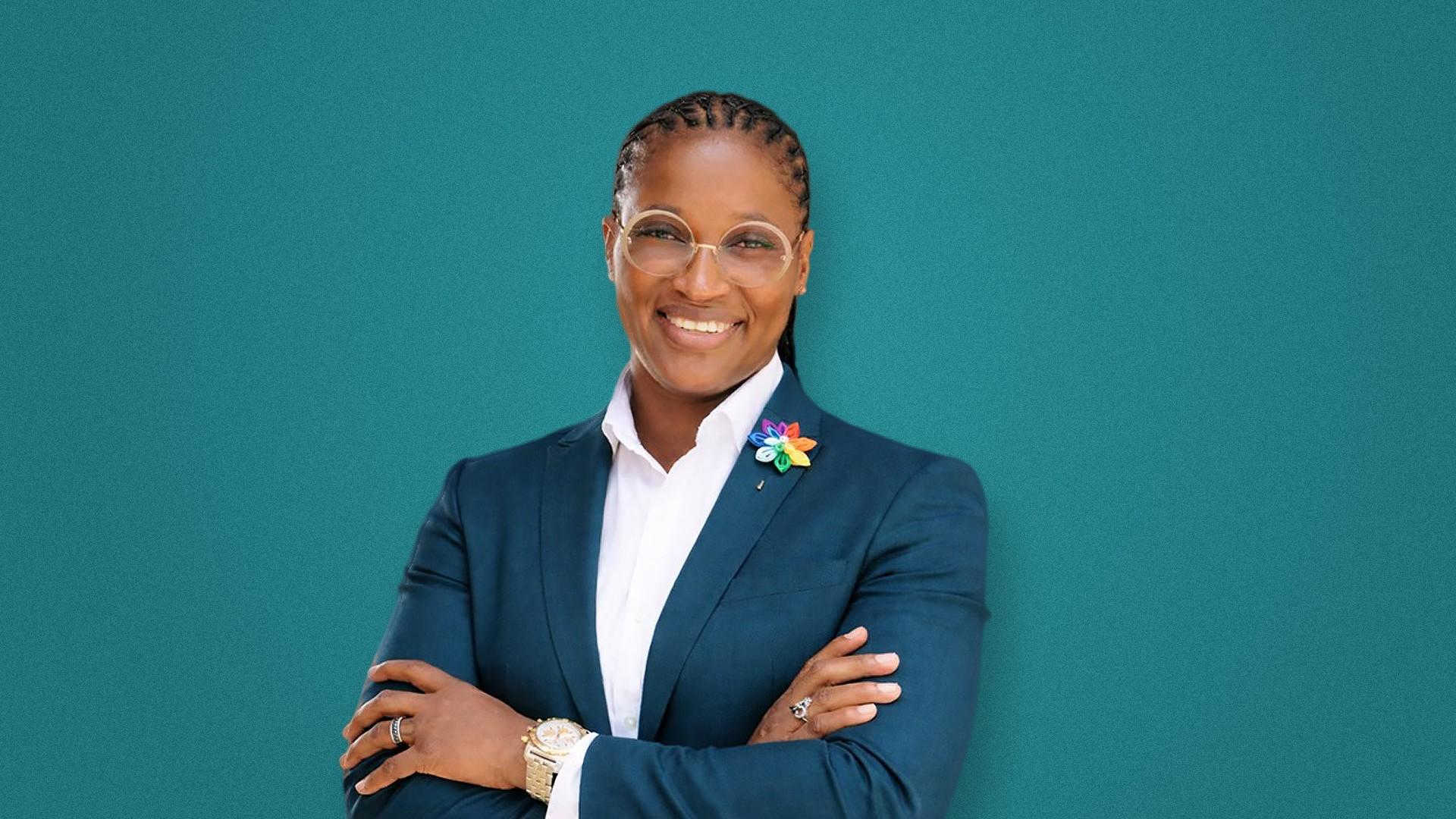
Former Virgin Islands senator Janelle K. Sarauw won a decisive victory Tuesday in the territory's delegate to Congress race, defeating independent candidate Shelley A. H. Moorhead by more than 9,400 votes and securing the congressional seat being vacated by Stacey Plaskett, who won the governorship in the same general election.

Sarauw, the Democratic nominee, received 13,029 votes, representing 76.93 percent of the 16,936 votes recorded in the contest, according to combined unofficial early-voting and Election Day results released by the Elections System of the Virgin Islands. Moorhead received 3,586 votes, or 21.17 percent, while another 321 votes were recorded as write-ins.
The overwhelming margin gives Sarauw a return to elected office after nearly four years outside the Legislature and places her in position to become the territory's first new delegate to Congress since Plaskett assumed the position in January 2015.
Sarauw's victory also represents a significant political turnaround for a former independent senator who unsuccessfully sought the lieutenant governorship in 2022 before joining the Democratic Party earlier this year.

The Elections System's unofficial results show that Sarauw won a clear majority, comfortably exceeding the threshold required under federal law and eliminating the need for a runoff based on the reported returns.
Sarauw dominates both early voting and Election Day
Sarauw established an overwhelming advantage during early voting, securing 8,243 votes compared with Moorhead's 2,060. The early-voting results, released at 8:22 p.m. Tuesday, gave Sarauw approximately 78.5 percent of the votes recorded in the contest.
Her advantage continued when the Elections System released its Election Day results at 8:56 p.m.
Sarauw received another 4,786 votes on Election Day, compared with 1,526 for Moorhead.
Combining the two reports, Sarauw finished 9,443 votes ahead of her opponent, receiving more than three times the number of votes recorded for Moorhead.
The results reflect a strong showing across both voting periods and indicate that Sarauw was able to attract substantial support beyond the Democratic voters who selected her during the August primary.
The two Elections System reports accounted for 20,047 ballots cast territory-wide, including 12,242 early ballots and 7,805 reported in the subsequent Election Day summary.
Of those ballots, 16,936 contained recorded selections in the delegate contest.
The results remain unofficial pending the required canvass and certification process. However, the size of Sarauw's lead and her overwhelming majority provide the basis for the Consortium's election-night projection of her victory.
The Elections System maintains its official 2026 general election results and announcements on its website.
A congressional transition after nearly 12 years
Sarauw's victory follows Plaskett's decision to leave Congress after six consecutive terms to seek the governorship.
Plaskett, who first won election in 2014, has represented the Virgin Islands in Washington since January 2015. During her tenure, she gained national prominence through her congressional committee assignments, advocacy for the territories and participation in the second impeachment trial of President Donald Trump.
Her decision to run for governor created an open congressional seat for the first time in more than a decade.
Tuesday's results completed a Democratic political transition in which Plaskett won the governorship alongside Senate President Milton Potter, while Sarauw secured the party's nomination for the congressional seat and went on to win the general election.
The changes will place a new governor in Government House and a new representative in Washington at the beginning of 2027.
For Sarauw, the new role presents substantially different responsibilities from those she exercised during her time in the Virgin Islands Legislature.
The territory's delegate to Congress may introduce legislation, participate in committee proceedings, conduct congressional oversight and advocate for federal appropriations. However, the position does not include a final vote on legislation before the full House of Representatives.
That limitation makes coalition-building, committee assignments and relationships with voting members of Congress particularly important to the territory's ability to advance its interests.
Sarauw repeatedly emphasized those considerations during the Democratic primary campaign, arguing that the Virgin Islands must develop strategic relationships with lawmakers from other U.S. territories and states sharing similar geographic and economic concerns.
From independent senator to Democratic nominee
Sarauw served three consecutive terms in the Virgin Islands Legislature, beginning in 2017 and concluding in January 2023.
During her legislative tenure, she developed a reputation for questioning government spending, utility management, public accountability and the handling of disaster-recovery resources.
Her legislative work included measures addressing consumer protection, healthcare, government transparency, education and the regulation of the Water and Power Authority.
In 2022, Sarauw ran for lieutenant governor alongside former Senator Kurt Vialet on an independent gubernatorial ticket. The pair was unsuccessful in its effort to unseat Governor Albert Bryan Jr.
She subsequently shifted her political strategy, joining the Democratic Party in February 2026 and entering the race for delegate to Congress.
The decision represented a departure from her previous political identity as an independent. During the primary campaign, Sarauw argued that Democratic Party membership would provide greater opportunities to establish alliances and work effectively within a Congress dominated by the two major national parties.
She also maintained that joining the party would not prevent her from challenging established political interests when she believed the territory's needs required it.
That strategy proved successful in the August 1 Democratic primary.
According to the certified primary election results, Sarauw received 5,167 votes in a four-way contest, defeating former U.S. Attorney Delia Smith, who received 3,202.
Teri Helenese placed third with 848 votes, while former Senator Emmett Hansen received 522. Another 24 votes were cast for write-in candidates.
Sarauw secured approximately 52.9 percent of the primary vote, giving her an outright majority against three opponents with varying federal government and political experience.
As the Consortium reported following the primary, the contest placed considerable emphasis on federal disaster-recovery funding, territorial equality, healthcare financing and the ability of the Virgin Islands to exercise greater influence in Washington.
Sarauw's general-election victory Tuesday demonstrated a substantial expansion of that electoral support, as she attracted voters beyond the Democratic primary electorate.
Healthcare, retirement funding and disaster recovery among priorities
Sarauw's congressional campaign platform focused on several major areas of federal policy affecting the Virgin Islands, including Medicaid funding, prescription drug costs, veterans' healthcare, economic diversification and the financial stability of the Government Employees' Retirement System.
She proposed pursuing the elimination of federal Medicaid funding restrictions affecting the territory while also addressing hospital reimbursement rates and the local financial requirements associated with expanded federal healthcare assistance.
Her campaign also called for changes to the federal rum cover-over formula, which directs certain federal excise tax revenues to the territorial government.
Sarauw argued that modernizing the formula could help generate additional resources for the retirement system, whose long-term financial condition remains a major concern for government workers and retirees.
Federal disaster recovery emerged as another significant issue during the campaign.
The Virgin Islands continues to manage reconstruction projects funded following Hurricanes Irma and Maria, with rising construction costs, lengthy approval processes and federal administrative requirements complicating recovery efforts.
Sarauw proposed advocating for disaster-equity legislation, seeking a Government Accountability Office review of FEMA's approval processes and encouraging members of Congress to visit the territory to evaluate its reconstruction challenges directly.
She also discussed expanding economic opportunities on St. Croix's South Shore, including the possibility of developing a regional mail and logistics hub that could serve the Caribbean and other international markets.
Another component of her strategy involved organizing Virgin Islanders living on the mainland to advocate for the territory's interests with the voting members of Congress representing their states.
She argued that the diaspora could provide additional political influence on matters where the Virgin Islands' delegate lacks a vote on final legislation.
Moorhead's independent challenge
Sarauw faced Shelley A. H. Moorhead, an independent candidate whose public advocacy has centered on territorial self-determination, reparative justice and the Virgin Islands' relationship with the federal government.
Moorhead entered the general election without participating in the Democratic primary and drew the second position on the official ballot.
His candidacy also received an endorsement from the U.S. Virgin Islands Green Party, although he appeared on the ballot as an independent rather than a Green Party nominee.
Despite that support, Moorhead was unable to significantly narrow Sarauw's advantage during either early voting or Election Day.
He received 2,060 early votes and another 1,526 on Election Day, finishing with 3,586 territory-wide.
The result leaves Sarauw with one of the most decisive margins among the territory-wide contests in Tuesday's election.
New representation in Washington begins in January
Sarauw is scheduled to begin her two-year congressional term on January 3, 2027, pursuant to 48 U.S.C. §1712, the federal law governing the election and tenure of Virgin Islands delegates to Congress.
The statute requires a candidate to receive a majority of votes cast for the office. If no candidate achieves that threshold, a runoff must be held between the two leading candidates 14 days after the general election.
Sarauw's nearly 77 percent share of the recorded vote places her well beyond that requirement.
The Elections System is scheduled to certify the general election results on November 13, following the required canvass and review of outstanding ballots.
Once in Congress, Sarauw will become the Virgin Islands' principal representative in federal legislative proceedings at a time when the territory faces major decisions involving disaster recovery, federal healthcare policy, economic development and its political relationship with the United States.
Her election also marks a significant return to public office after her unsuccessful 2022 campaign, transforming a former independent senator into the Democratic Party's newest congressional representative from the Virgin Islands.

For the territory, the result represents a change in Washington leadership after nearly 12 years under Plaskett, with Sarauw now preparing to carry the Virgin Islands' federal priorities into the next congressional term.