





 77°F



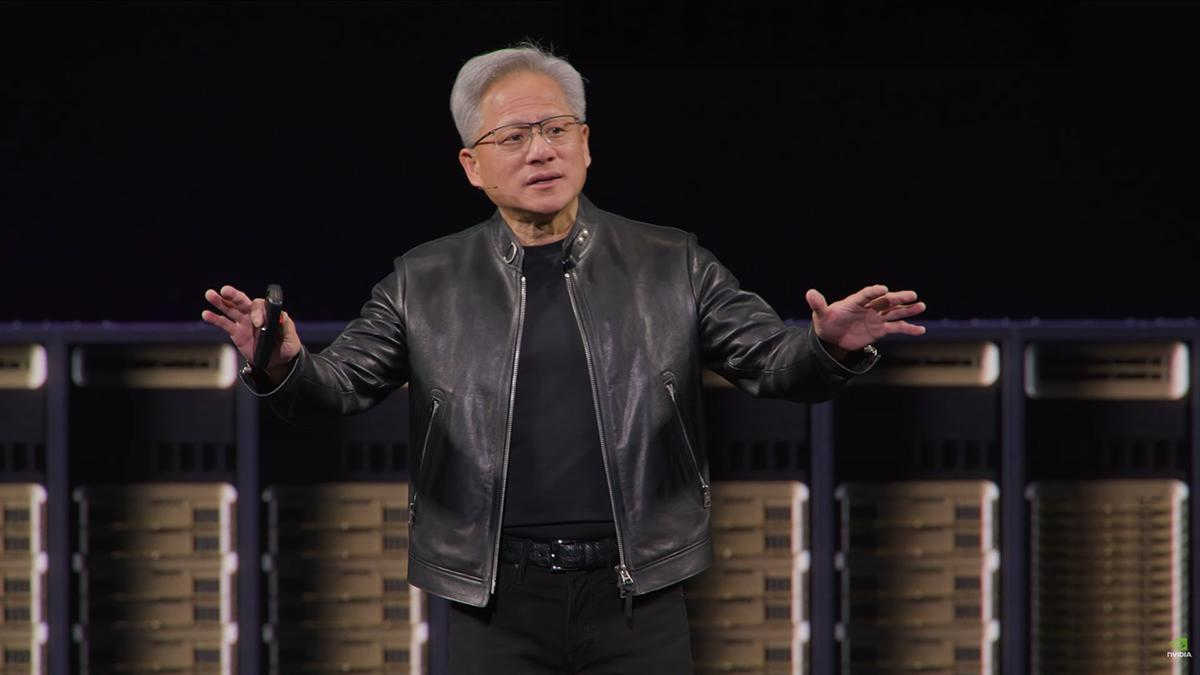
Nvidia co-founder Jensen Huang has resigned as president, chief executive officer and a member of the company's board of directors, effective immediately, ending 33 years of leadership at the artificial intelligence chip giant amid mounting scrutiny of his reported personal relationships and allegations involving a suspected Chinese intelligence operation.

The company announced the leadership change Thursday, November 12, naming longtime Chief Financial Officer Colette Kress as interim CEO and appointing Harvey C. Jones as chairman of its board of directors.
Nvidia occupies an indispensable position in the global artificial intelligence industry, supplying the advanced processors and computing infrastructure that power many of the world's most sophisticated AI systems. Its technology underpins the development and operation of AI models and services from major companies including OpenAI, Microsoft, Google, Amazon and Meta, making Nvidia a foundational force in an industry attracting hundreds of billions of dollars in investment. The company's dominance has also placed it at the center of the technological competition between the United States and China, where access to advanced AI chips is increasingly viewed as a matter of economic strength, military capability and national security.
Washington has imposed restrictions on exports of Nvidia's most powerful processors to China, seeking to preserve America's technological advantage and limit Beijing's access to computing capabilities that could accelerate its AI ambitions. Nvidia's influence extends across cloud computing, autonomous vehicles, robotics, scientific research and virtually every major frontier of AI development, making its leadership and strategic direction consequential not only for shareholders, but for the future of the global technology industry.

Huang's departure comes just four days after Nvidia's board publicly expressed confidence in him while initiating an independent investigation into reports that he had been targeted by a foreign intelligence operation. The company did not specify the reason for his resignation or announce any findings of misconduct.
Kress, who has served as Nvidia's executive vice president and CFO since September 2013, will retain her financial responsibilities while serving as interim chief executive. Nvidia said its board has begun searching for a permanent replacement and will consider both internal and external candidates.
Jones, an Nvidia director with more than three decades of experience as a technology executive and investor, becomes the company's first board chairman.
In Thursday's announcement, Jones expressed confidence in Kress and Nvidia's existing management team, saying the company expects its operations, customer commitments and technology development to continue without interruption.
Kress said she was committed to building on the foundation Huang established over the past 33 years while maintaining the company's focus on customers, technology and business execution.
The sudden transition follows a series of revelations that placed Huang's personal conduct and Nvidia's security safeguards under intense scrutiny.
On November 8, Huang issued an apology to Nvidia employees, acknowledging that he had been unfaithful to his wife and accepting responsibility for the harm caused to his family.
The acknowledgment followed investigative reporting concerning Huang's relationship with Alice Huang, a businesswoman associated with Singapore-based Megaspeed International, a purchaser of Nvidia processors. News reports have alleged that Alice Huang had connections to Chinese intelligence and raised questions about whether the relationship created opportunities to obtain sensitive information or influence the company's dealings involving China.
Those allegations have not been established through publicly released official findings. China's Foreign Ministry has rejected the espionage allegations, describing them as unsubstantiated.
In its November 8 announcement, Nvidia's board said it had no reason to believe that company secrets or national security had been compromised, but pledged to examine the available information.
Two days later, Nvidia's independent directors retained former acting U.S. Attorney Joon H. Kim and the law firm Wachtell, Lipton, Rosen & Katz to conduct the investigation.
The leadership crisis intensified Wednesday after additional reporting alleged that Huang had another extramarital relationship with an Nvidia executive who reported to him. Reuters subsequently reported that Nvidia's board was meeting to consider his future, following earlier reports that directors were preparing for his possible removal.
The controversy has also reached Congress, where lawmakers are examining the potential national security implications of Huang's reported relationship and Nvidia's business dealings involving China.
On November 5, House Foreign Affairs Committee Chairman Brian Mast, House Select Committee on China Chairman John Moolenaar and House Intelligence Committee Chairman Rick Crawford requested that Huang appear for a closed-door congressional briefing on November 18.
The chairmen asked Huang to accept the date or propose an alternative by November 11. As of Thursday morning, no public confirmation of an agreed briefing date or issued subpoena had been identified.
The uncertainty surrounding Huang's leadership has also rattled financial markets. Nvidia shares fell more than 8 percent in extended trading Wednesday following reports of the board's deliberations, and were down more than 7 percent in Thursday's premarket trading.
Huang co-founded Nvidia in 1993 and oversaw its transformation from a graphics-processing company into a dominant supplier of advanced processors powering artificial intelligence systems worldwide. His departure creates a significant leadership transition for a company central to the global AI industry and the technological competition between the United States and China.
Nvidia said its previously scheduled third-quarter fiscal 2027 financial results will be released Tuesday, November 17, followed by an earnings conference call.

Thursday's resignation announcement did not disclose findings from the independent investigation, establish that sensitive technology had been compromised or attribute Huang's departure to any specific allegation.