


 77°F
77°F


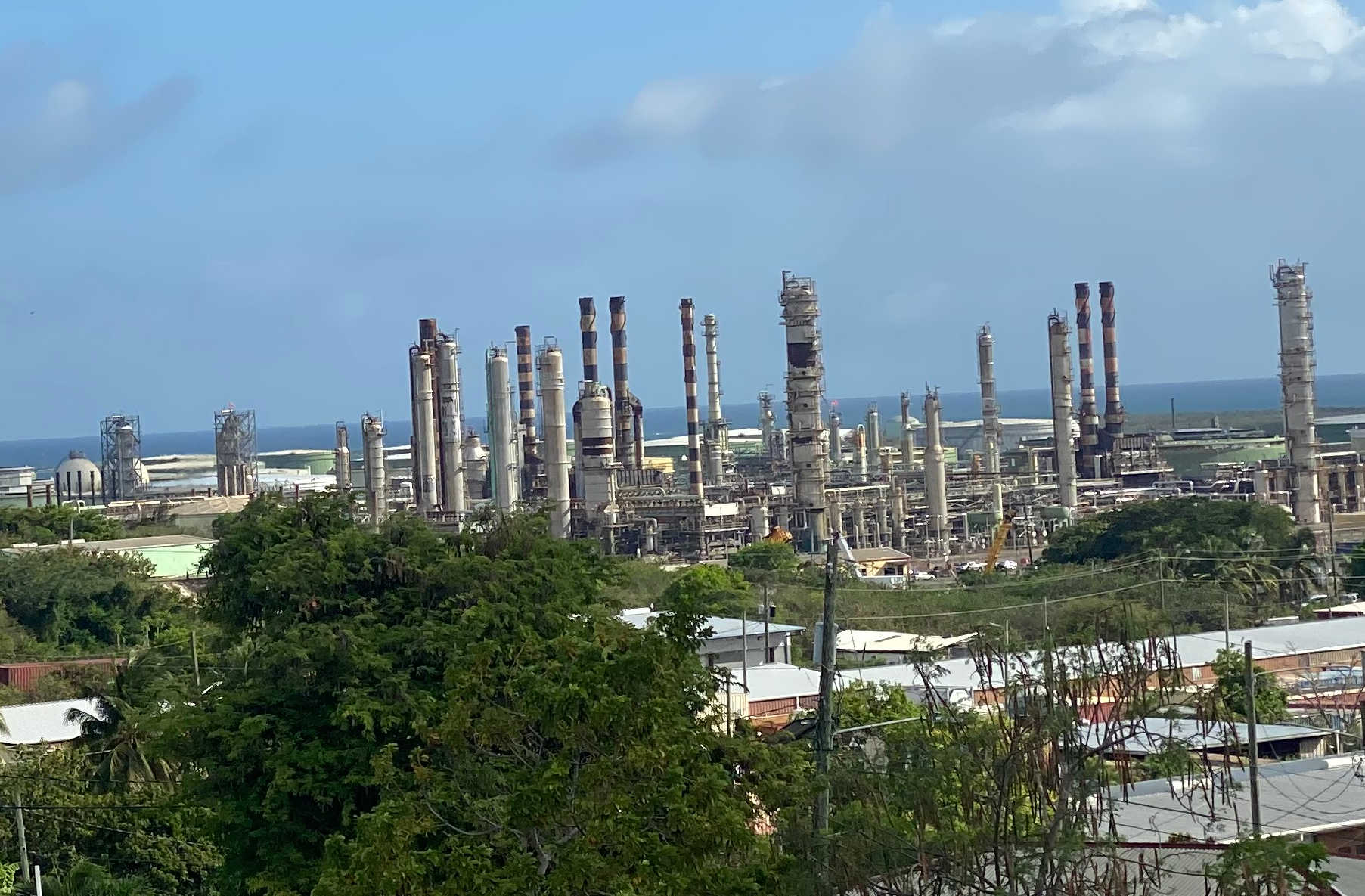
Oil refinery (idled) and storage terminal on the south shore of St. Croix. Photo Credit: ERNICE GILBERT, V.I. CONSORTIUM.
ST. CROIX — The U.S. Environmental Protection Agency says the removal of ammonia, amines and liquefied petroleum gas from the St. Croix refinery has been completed, allowing the agency to discontinue air monitoring for ammonia, nitrogen dioxide and sulfur dioxide while other environmental and safety requirements at the facility remain in place.

The work stems from a series of EPA enforcement actions involving the refinery, now owned by West Indies Petroleum Limited and Port Hamilton Refining and Transportation, LLLP. The sprawling south shore facility was previously operated under the Limetree Bay and HOVENSA names.
Port Hamilton contractors began the chemical-removal work in April 2023 under a Dec. 5, 2022 legal agreement requiring the safe removal of anhydrous ammonia, LPG and amine solutions from equipment EPA had identified as a concern.
The agreement also granted EPA full access to the site to oversee the work and short-term safety measures until the chemicals were either removed or secured.
With those removal operations now complete, EPA has stopped the related air monitoring.
Separate 2024 Order Requires Additional Safety Work
Completion of that phase does not end EPA’s oversight at the refinery.
EPA and Port Hamilton entered another administrative order on consent on Aug. 23, 2024, requiring the company to safely remove additional materials and implement enhanced safety measures involving LPG Units No. 1 and No. 2.
That order followed a detailed inspection of the facility.
EPA has also made available a redacted General Duty Clause inspection report dated Dec. 19, 2023. Port Hamilton made the redactions in an effort to protect information that could potentially qualify as confidential business information or personally identifiable information, although EPA said it had not made a final determination on those classifications.
The appendices were also withheld because they could contain confidential business information.
Water-Disharge Compliance Remains Under Review
EPA’s involvement at the refinery has extended beyond air quality and chemical safety.
On July 21, 2023, the agency issued administrative compliance orders to Port Hamilton and West Indies Petroleum, operators of the refinery, as well as Limetree Bay Terminals — now doing business as Ocean Point Terminals — which operates the neighboring bulk fuel terminal.
The orders required the companies to apply for coverage under Territorial Pollutant Discharge Elimination System permits for pollutant discharges into receiving waters and to implement corrective actions.
EPA shared the orders with the Virgin Islands government, including the Department of Planning and Natural Resources.
Port Hamilton submitted a permit application to DPNR’s Division of Environmental Protection on June 7, 2024.
Days later, from June 10 through June 14, EPA conducted National Pollutant Discharge Elimination System compliance evaluation inspections involving areas owned or operated by Port Hamilton, areas operated by Ocean Point and portions of the complex jointly operated by the two entities.
The inspections included wastewater and seawater-intake sampling. DPNR personnel participated.
EPA said it is evaluating the information and observations gathered during those inspections and working with DPNR to bring Port Hamilton and Ocean Point into compliance with the Clean Water Act and territorial TPDES rules.
EPA's Enforcement History Dates to 2022
The chemical-removal initiative followed EPA inspections in August and September 2022 aimed at evaluating conditions at the refinery.
During its September inspection, EPA said it identified serious deficiencies in the way the facility was being maintained.
The agency subsequently issued its inspection report to Port Hamilton and said it could not discuss some aspects further while active discussions with the company remained underway. EPA nevertheless released the report publicly in the interest of transparency.
One month earlier, on Aug. 7, 2022, Port Hamilton reported that a pile of petroleum coke — a charcoal-like byproduct of petroleum refining — was smoldering at the St. Croix facility.
EPA responded on Aug. 18 by requesting information and documents concerning the incident.
Earlier Dispute Over Restart Permitting
EPA’s scrutiny of a potential refinery restart began soon after West Indies Petroleum and Port Hamilton acquired the former Limetree Bay refinery.
On March 2, 2022, the Department of Justice and EPA sent the new owners letters outlining a number of requirements to be addressed before restarting the facility. DOJ said its correspondence concerned matters in active litigation and therefore was not published on EPA’s website.
On March 22, EPA separately informed West Indies Petroleum and Port Hamilton that, based on information then available, there were strong indications that the refinery would need a Prevention of Significant Deterioration permit before any potential restart.
EPA requested additional information concerning past and proposed changes to refinery process and emissions units before making its final determination.
On Nov. 16, 2022, EPA determined that the refinery’s owners and operators were required to apply for and obtain a new PSD air pollution permit before restarting operations. Such applications require detailed modeling of potential air-quality impacts and an analysis of the best available pollution-control technology.
That determination relied on EPA’s Reactivation Policy and was accompanied by the agency’s supporting legal analysis.
Refinery Acquired Through Bankruptcy Process
West Indies Petroleum and Port Hamilton emerged as the winning bidder for the former Limetree Bay refinery through a bankruptcy auction in December 2021.
The sale followed the collapse of Limetree Bay’s attempt to restart refining operations.
In May 2021, EPA ordered Limetree Bay to stop operations following multiple air-emission incidents. The agency determined at the time that continued refinery operations posed an imminent and substantial endangerment to public health, public welfare or the environment.
That order was later supplemented and extended through a complaint and stipulation filed in July 2021.
Monitoring Resources Remain Available
EPA continues to make refinery-related environmental information publicly available.
Its Benzene Fenceline Monitoring Dashboard provides monitoring information that is updated quarterly, with data expected to appear approximately 75 days after the end of each calendar quarter. EPA also provides a video tutorial explaining how to navigate the dashboard.
The agency maintains a separate online resource covering air-monitoring activities connected with the St. Croix facility.
EPA has also published numerous documents associated with the removal process, including its February 2023 conditional approval letter, Port Hamilton’s January 2023 executive summary of removal options and master schedule, the company’s options report, questions submitted by EPA and Port Hamilton’s subsequent responses.

The agency’s latest update marks completion of the specific removal operations involving ammonia, amines and LPG, while other obligations involving safety, wastewater discharges and environmental compliance continue.