


 77°F
77°F


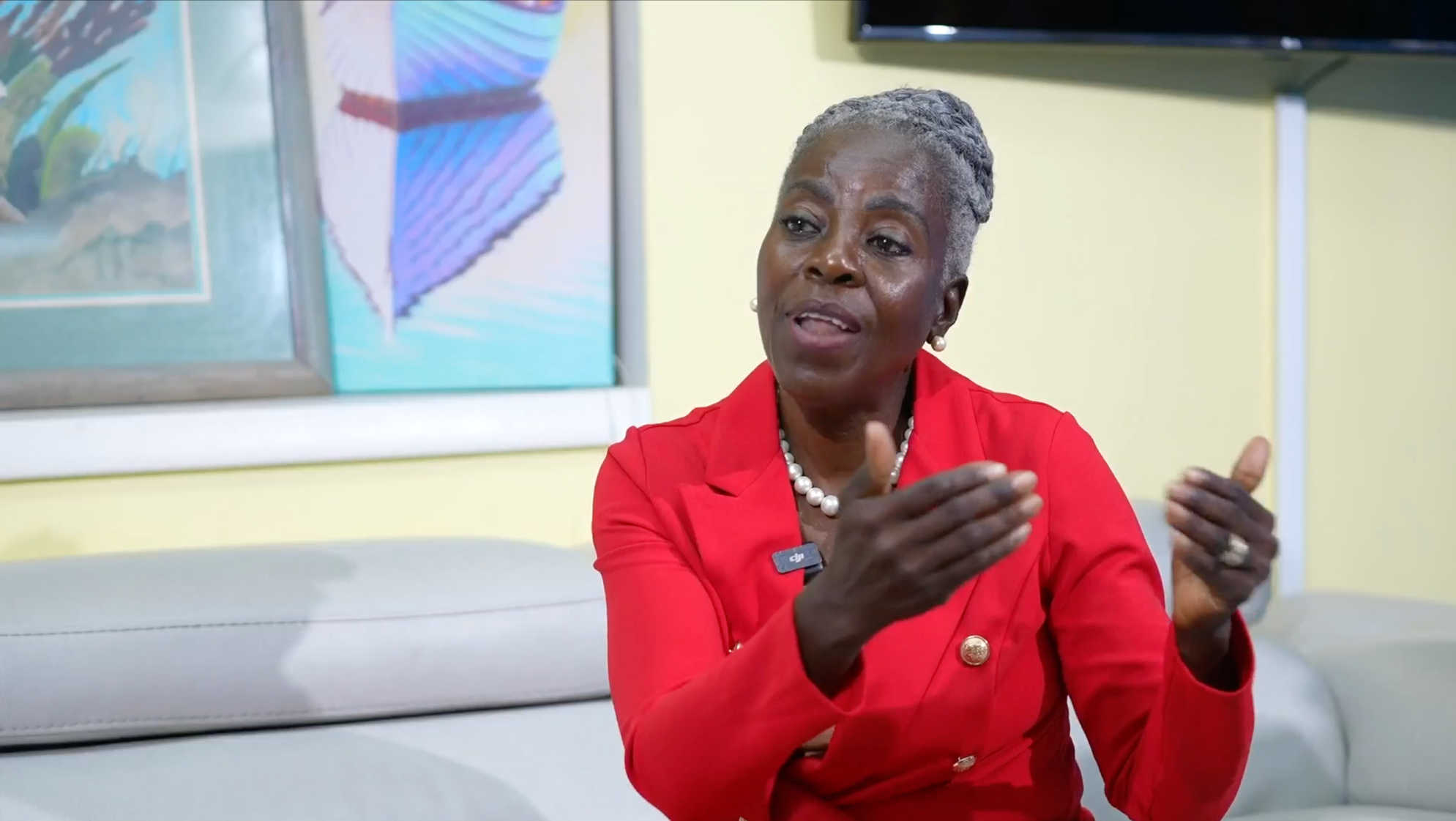
Candiate for Senate in the 2026 Democratic Primary, Ophelia “Nemmy” Jackson-Williams. Photo Credit: V.I. CONSORTIUM.
Ophelia “Nemmy” Jackson-Williams, a Democratic candidate for the 37th Legislature, said during Monday night’s V.I. Consortium Election Cycle interview that her revenue-generation focus would center largely on helping the South Shore Enterprise Zone become a stronger economic driver for St. Croix.

Pressed repeatedly for specifics on her economic development plan, Jackson-Williams said she would work with other senators and the administration to identify funding for infrastructure needed to attract investors and support port-related activity on the island’s south shore.
“I really like the South Shore Enterprise Zone bill,” Jackson-Williams said early in the interview. “It gives incentives, but we need to make sure that we can identify funding, and that is something I would look into to create the infrastructure that we will realize the revenues that we can generate from the South Shore Enterprise Zone.”
Jackson-Williams also pointed to sports tourism as an economic opportunity, saying she has supported that idea through several campaigns and believes the territory can use existing athletic organizations and facilities to host events. She cited the V.I. Olympic Committee and local sports federations as structures through which the territory could pursue events, referencing a past Caribbean Cup volleyball event that brought athletes from across the region to the Virgin Islands.
“We can build on event tourism using sports as a tool,” she said.
But when asked whether sports tourism could serve as a consistent, year-round revenue generator, Jackson-Williams returned to the South Shore Enterprise Zone and later agriculture as broader economic possibilities. Under additional questioning, she narrowed the South Shore idea to cargo movement, foreign vessels, storage needs and infrastructure to support maritime-related activity.
Jackson-Williams said she had spoken with the director of the Economic Development Authority and was told that investors were interested in the South Shore Enterprise Zone, but that infrastructure limitations remained a barrier.
She said her vision involved attracting foreign ships to St. Croix and using the territory’s legal and tax advantages to position the island as a place where cargo could be offloaded and moved onward.
“When I talk about building the South Shore zone, I’m really talking about getting foreign ships who want to come and with their produce, with their goods, and transition it to America, whatever it may be that they are transporting, invite the ships to dock at our port while they’re in transition,” she said.
The discussion later clarified that Jackson-Williams was speaking about a transshipment-type concept, where internationally flagged vessels could use St. Croix as part of the cargo movement process. She said some cargo vessels return to Florida empty, and that local shipping companies could benefit if foreign-flagged vessels offloaded goods in the territory for onward movement.
Asked what legislation would be needed to make that happen, Jackson-Williams said the South Shore Enterprise Zone legislation already exists. Her role, she said, would be to help ensure funding is identified and appropriated for infrastructure requested by the administration and potential investors.
“Basically, we already have the Enterprise Zone legislation,” she said. “The legislation that I am speaking to, so that I will be a senator who supports and advocate for the South Shore zone is actually funding infrastructure development.”
She continued, “So working with the administration and making sure, as a legislator, I give them the money they need in order to construct the infrastructure, the infrastructure necessary, or the infrastructure that the vessel, the investors are talking about.”
Jackson-Williams said the Legislature’s role would be to appropriate and legislate, while the administration would be responsible for implementation.
Her answers provided a clearer economic priority than broad references to small business support and good-paying jobs, but the interview also exposed limits in the level of detail she was prepared to provide. When asked what infrastructure beyond warehouses would be required, Jackson-Williams said warehousing was the example given to her by the EDA director and that she would not speculate beyond what had been shared.
Jackson-Williams tied the South Shore discussion to broader concerns about the government’s revenue base, saying the territory must identify new ways to meet its financial obligations, including tax refunds and retroactive wages owed to public workers.
“We have to get new revenues here so the government can position itself to take care of its obligations financial obligations,” she said.
She said the South Shore Enterprise Zone represents an opportunity to build on something already in place rather than start from scratch.
“So my thing is the South Shore, that’s already begun. Why do I have to go in there and try to start something,” she said. “No, let me work with the law that’s already there, and help, and join, and collaborate with the other senators, and seeing how we can work as senators to help the South Shore Enterprise Zone take off.”
By the end of the exchange, Jackson-Williams’ South Shore position had become more defined: she would support and advocate for appropriations to build the infrastructure needed to attract cargo-related investment and maritime activity. But her proposal remained dependent on administration priorities, investor interest and further definition of what infrastructure, beyond storage and warehouse capacity, would be required.