


 77°F
77°F


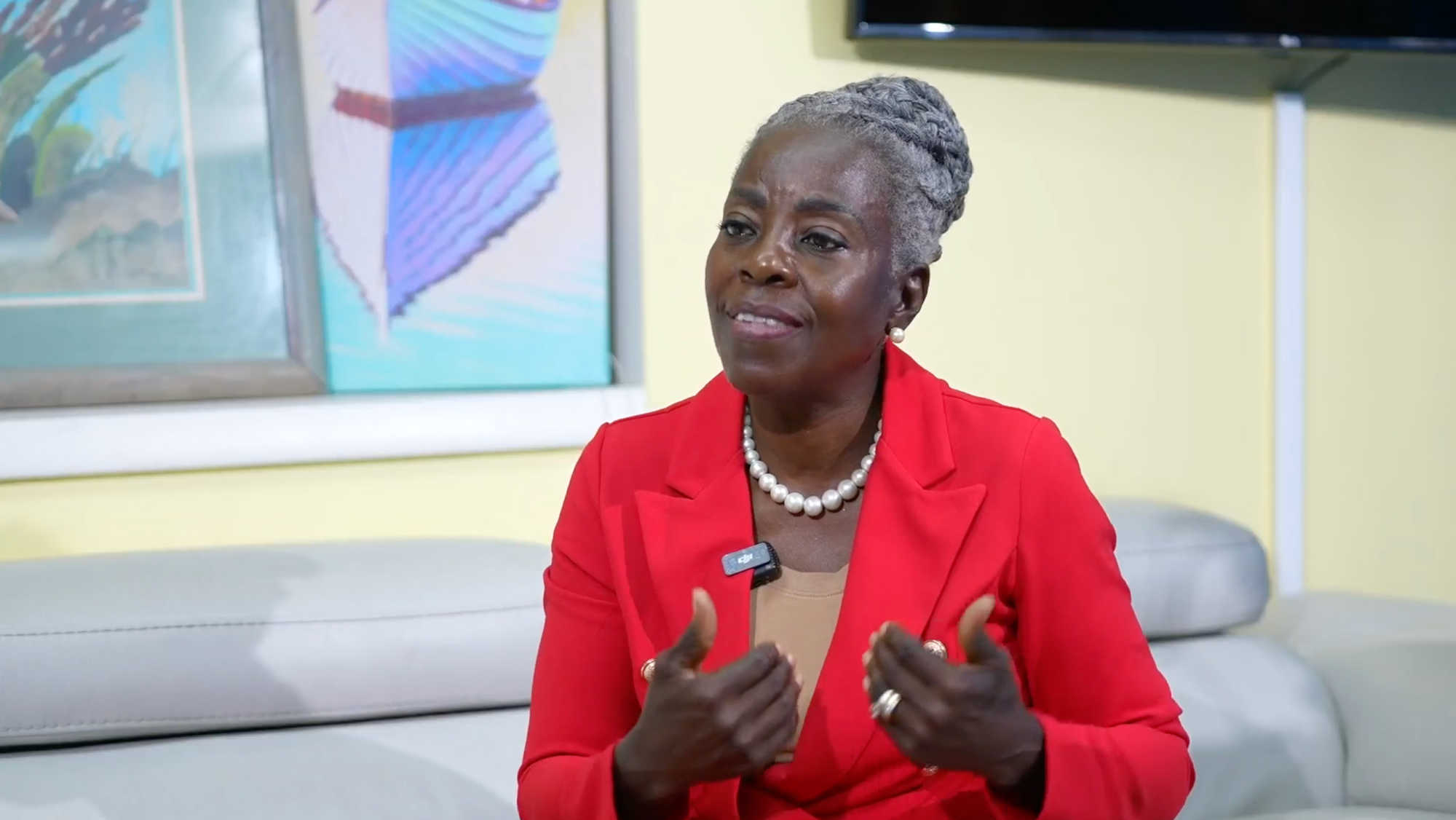
Candiate for Senate in the 2026 Democratic Primary, Ophelia “Nemmy” Jackson-Williams. Photo Credit: V.I. CONSORTIUM.
Ophelia “Nemmy” Jackson-Williams, a Democratic candidate for the 37th Legislature, acknowledged during Monday night’s V.I. Consortium Election Cycle interview that she had not deeply studied the latest public explanations surrounding the V.I. Water and Power Authority, even as she described WAPA as one of the territory’s biggest issues.

Pressed on what she would do as a senator to address the utility’s long-running failures, Jackson-Williams said she would seek firsthand information from the authority’s board and technical experts before determining how she could help from a legislative standpoint.
“Because I am not the expert in that area, and I would definitely want to sit down with those individuals who are experts in that area and find out how can I be of service from a senator’s standpoint to help them rectify that problem,” she said. “So I would stand by that. I am not the expert, the board and the members of the board, they are the experts.”
The exchange came after Jackson-Williams was asked why WAPA did not appear prominently in her campaign platform, despite the authority’s central role in the territory’s cost of living, business climate, household finances and public frustration.
She initially responded by saying agencies such as WAPA have boards with experts, and that her approach as a senator would be to determine the authority’s needs and how the Legislature could assist.
“You need to understand that these agencies have boards that have that with experts, and as a senator, I would definitely find out from the board what exactly is the challenge,” Jackson-Williams said. “Yes, and how can we serve you and help you fix this problem?”
Asked whether she had listened to WAPA’s recent press conference, where officials spoke at length about the utility’s current challenges, Jackson-Williams said she had not.
“No, I didn’t. Unfortunately, I didn’t,” she said.
When asked whether she had a general understanding of what is happening at WAPA, Jackson-Williams pointed to generation problems and transformer failures, while saying she was aware the territory is expecting to receive generators. But she said she did not know the full scope of the authority’s challenges.
“Well, I know they have generation generator issue relative, and then at times it will be a transformer blowing, but the major problem that I’m hearing is the generator,” she said. “However, I’m also hearing that we’re expecting to receive generators, but like you said, we have been experiencing this here for decades. So, besides the generator, I would want to know exactly what is the challenge. Why we continue to experience the outage, I don’t know. The experts will have to tell me.”
Jackson-Williams was then pressed on whether she should have been better researched on WAPA before seeking a Senate seat, given the authority’s longstanding impact on residents and businesses.
“I would agree, it cannot help to know more,” she said. “The educator I am, I would. It is a huge issue, probably the biggest, but like I said, when I am elected, what I would do is find out from the experts how we can collaborate... to make it better for our people.”
Asked whether more information would better prepare her to question WAPA officials and understand their responses, Jackson-Williams said she would be prepared when such a meeting occurred.
“And if I am going to meet with them, you rest assured that I will be very prepared,” she said.
The exchange underscored one of the central tests of the Consortium’s Election Cycle interviews: whether candidates can move beyond general concern and demonstrate readiness to write laws, vote on budgets and hold agencies accountable.
Jackson-Williams did not offer a legislative plan for WAPA during the interview. Instead, she repeatedly said that her role would be to consult with the authority’s experts, understand the problems firsthand and determine how the Legislature could assist.
Asked directly whether WAPA is the territory’s biggest issue, Jackson-Williams said it is among the biggest, but she did not place it above all others.
“It’s one of the biggest issues,” she said. “Another big issue is our lack revenues here for the government to fulfill its obligation to its people. So, yes, WAPA is a big issue, but the government not being able to pay tax returns, not being able to pay retroactive pay to its people who, after they have worked, is another issue. So, I wouldn’t say WAPA is the biggest or the only issue, but only it is a big issue.”
Jackson-Williams’ response came after the discussion had touched on the authority’s long history of problems, including outages, business disruptions, high utility costs, equipment failures and past generation decisions. She maintained, however, that because she is not a technical expert, the board and authority officials would have to explain the root causes before she could determine a legislative response.
Her answer stood in contrast to other portions of the interview where she was more specific, particularly on education, physical education, youth programs and the role she believes the Board of Education should play in school leadership.
On WAPA, however, Jackson-Williams presented herself as willing to learn and consult, but not yet prepared with a detailed reform agenda for one of the territory’s most persistent and consequential public-sector challenges.