
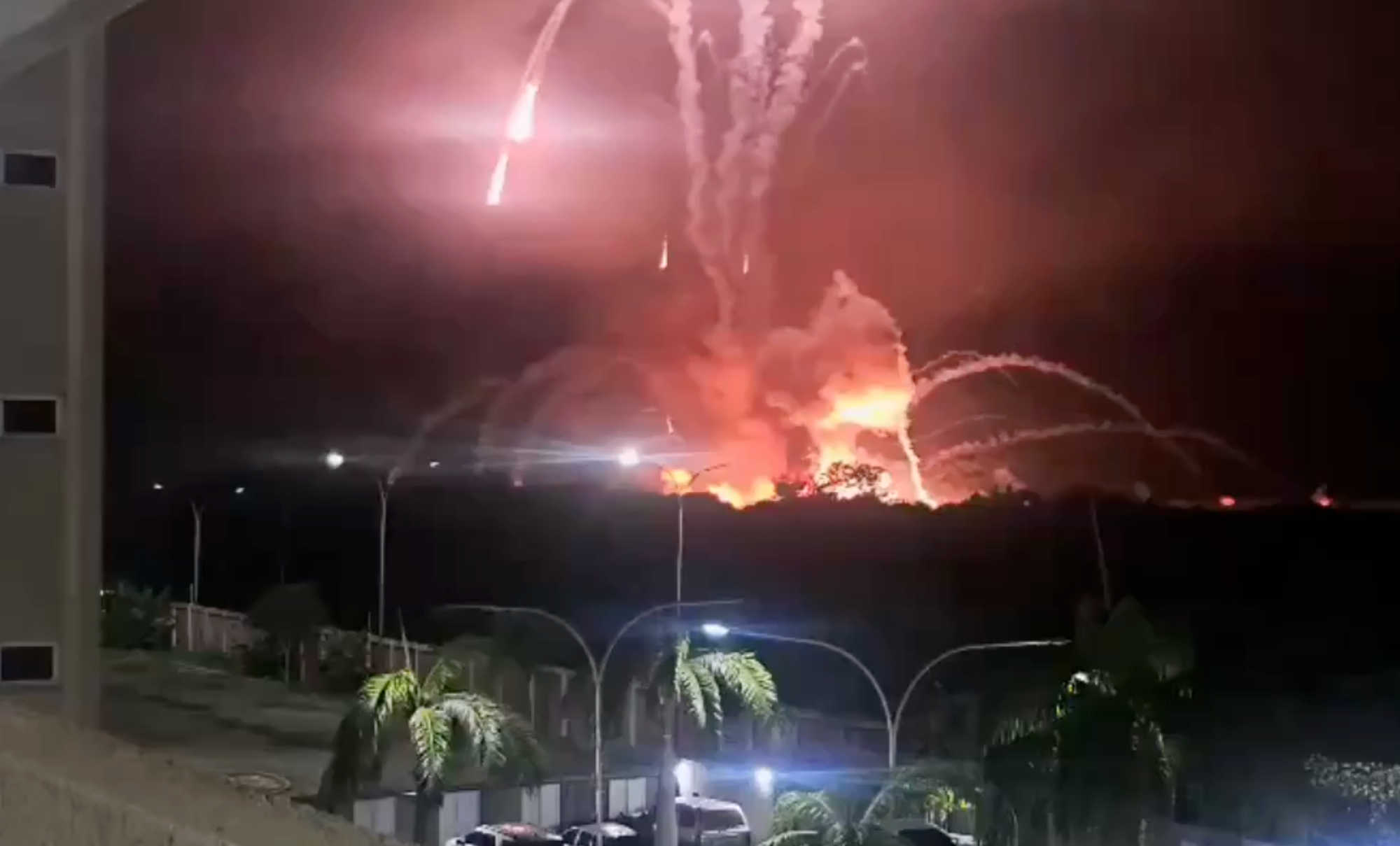
President Donald Trump announced in the early hours of Saturday, January 3 that U.S. forces carried out what he described as a “large-scale strike” inside Venezuela, resulting in the capture of President Nicolás Maduro, who he said was being flown out of the country along with his wife, Cilia Flores. (See footage here and here.)
The announcement was made in a post on Truth Social, where Trump declared the operation successful and said it dismantled Maduro’s government. Trump accused Maduro of harboring narco-terrorists and enabling drug trafficking into the United States.
White House officials subsequently confirmed the account to CBS News, saying Nicolás Maduro and Flores were en route to an undisclosed location in the United States for processing.
The announcement followed reports overnight of explosions and gunfire in Caracas. Venezuelan state media initially characterized the incidents as unrelated but later stopped issuing updates, according to international reporting.
Sources cited by Reuters and The New York Times said U.S. military assets were involved in the operation, including special operations forces deployed to the Caribbean under Operation Southern Spear. The raid reportedly targeted Maduro’s compound and led to the detention of the Venezuelan leader and several key aides, though official details regarding casualties or resistance have not been confirmed.
The capture follows months of escalating pressure by the Trump administration against Maduro, including economic sanctions, regional military deployments, and the designation of certain Venezuelan entities as terrorist organizations. Trump had previously issued public ultimatums demanding Maduro step aside, at times offering safe passage, while citing allegations of election fraud and human rights abuses.
The operation also comes after U.S. actions that included a blockade of Venezuelan oil tankers and airstrikes on suspected drug-related facilities—moves that drew international condemnation and warnings of broader conflict.
Venezuelan officials did not immediately respond to Trump’s announcement. Opposition figures, including María Corina Machado, reacted cautiously on social media, calling for a peaceful transition.
International reaction was swift. Regional partners such as Colombia and Brazil urged restraint, while Russia and China—longtime supporters of Maduro—condemned the action as a violation of Venezuelan sovereignty, according to Reuters. The United Nations Security Council is expected to convene an emergency session.
The implications for Venezuela remain uncertain. Analysts have warned of potential instability stemming from a power vacuum, while others have raised the prospect of a U.S.-backed interim authority. Legal experts have questioned whether the operation complies with international law in the absence of United Nations authorization, though U.S. officials have argued it was justified as self-defense against narcotics-related threats.
In the United States, reaction has been divided. Supporters praised what they described as decisive action, while critics warned of overreach. Congressional leaders from both parties requested briefings, and Marco Rubio, chairman of the Senate Foreign Relations Committee, endorsed the strike as necessary to counter regional threats.

The administration has not provided details on next steps regarding Maduro’s detention or the future governance of Venezuela.