




During an interview with the Consortium this week, V.I. Water and Power Authority (WAPA) CEO Karl Knight outlined a comprehensive plan to modernize the utility’s billing system, reduce errors, and eliminate its dependence on estimated billing — a long-standing source of frustration for Virgin Islands residents.

Knight’s comments came as part of a broader discussion in which he also addressed a recent customer dispute involving billing irregularities. However, he said the deeper issue extends far beyond any single case, pointing to structural weaknesses that have undermined accuracy and customer confidence for years.
“We’ve had our challenges with the billing system, and I think we are trying to rectify many instances. In many, we’ve been successful in rectifying them,” Knight said. “We became too dependent on the estimating process, and the estimating process is not a smart process.”
He explained that the current system often relies on computer-generated estimates that extrapolate from previous usage data, even when a customer’s circumstances have changed — an approach that can produce wildly inaccurate bills.

“Without human intervention, the computer will continue to estimate based on historical data,” Knight said. “When you take an estimate of an estimate, your accuracy starts to be skewed. It always requires some human intervention to say, ‘Hey, does this make sense? Is this legitimate? Does this pass the sniff test?’”
Knight said he has made it a priority to instill that accountability into WAPA’s billing culture. “If it doesn’t look right, then at least question it. Maybe it’s right, maybe it’s not, but if it stands out and looks egregious, we ought to take a closer look and not assume the customer is wrong,” he explained.
He acknowledged that past billing practices have at times led to inflated or inaccurate charges, which the authority has had to reverse. “Sometimes we’ve had to make the necessary adjustments because we do recognize that there are issues we’re still resolving,” Knight said. “We’re not quite where we need to be with billing accuracy, but we’re working on it.”
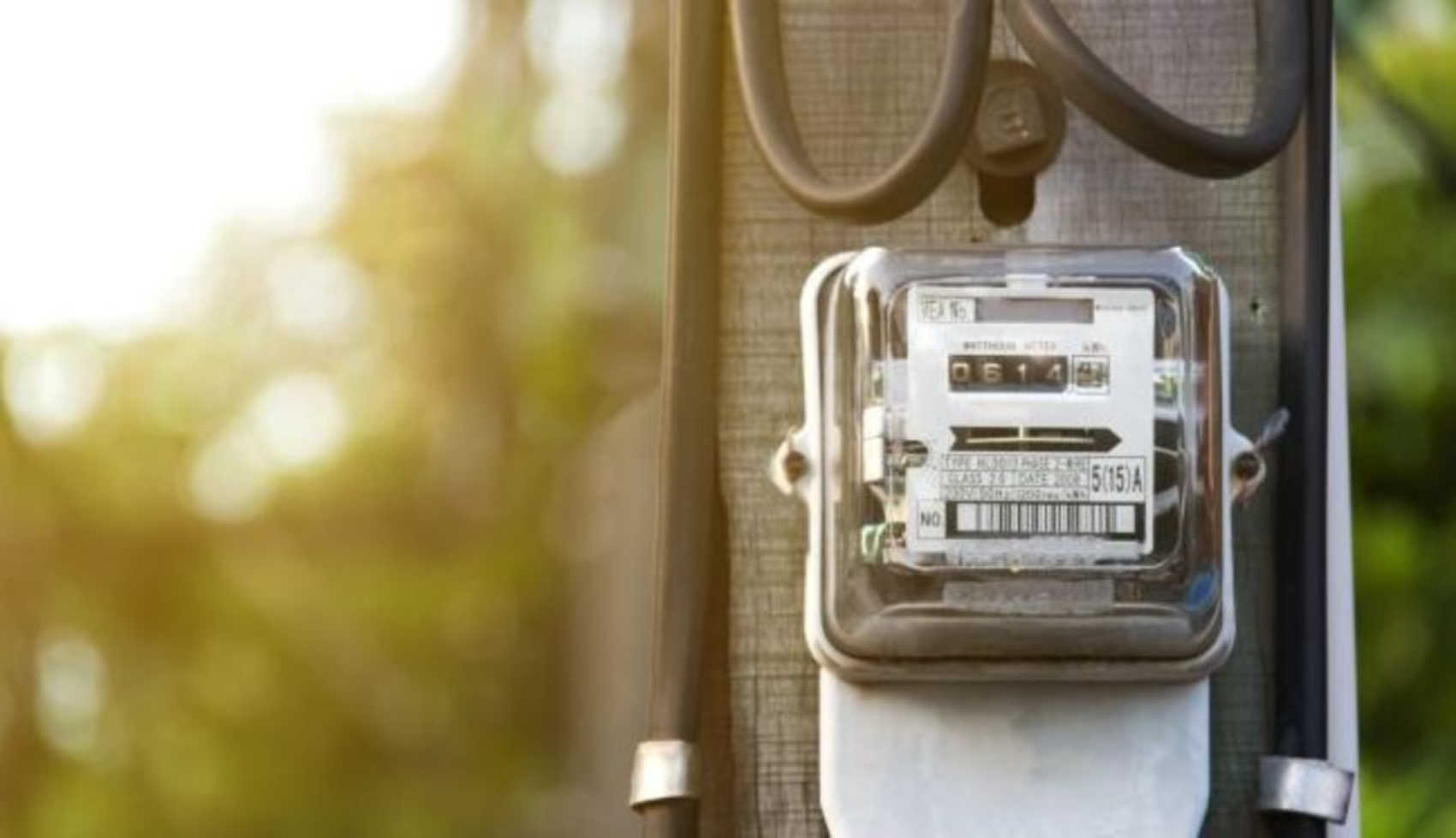
Knight said WAPA has already launched a new Advanced Metering Infrastructure (AMI) initiative — commonly referred to as the smart metering system — that will fundamentally change how customer usage is measured and billed.
The initiative will replace manual meter readings and estimated usage with automated digital readings transmitted directly to WAPA’s billing system. This will allow for near real-time tracking of consumption, quicker identification of irregularities, and more transparent billing.
“We do have a new smart metering system that we’re rolling out — the advanced metering infrastructure — and that contract has actually kicked off already,” Knight said. “We are looking forward to hopefully by the end of the year starting meter installation on St. John, and we’re hoping that over a two-year period to start to install these meters and get back to a point where every meter is read every month and every bill is accurate.”
The CEO noted that the system’s long-term goal is not only accuracy but also customer trust. “Once we get to that point, we can put a lot of these questionable bills behind us,” he said. “I want it to be a high bill if it’s truly high — but I want to make sure that I can tell you it’s an accurate bill.”
Knight said improving WAPA’s billing process goes beyond technology. It also requires cultural reform and stronger internal controls to ensure accountability when discrepancies arise.
He said staff are being retrained to critically evaluate billing anomalies rather than rely solely on system outputs. “If something stands out and looks wrong, we have to take that extra step to verify it,” he said, describing a new emphasis on human oversight in the authority’s billing department.
The goal, Knight said, is to create a system where accuracy and fairness are the default, and customers are no longer forced to question whether their bills reflect actual consumption.
Knight acknowledged that restoring public confidence will take time, but he stressed that WAPA’s leadership is committed to lasting change.
“We have to rebuild trust through consistency and transparency,” he said. “We’ve already begun implementing the technology and the procedures needed to get there, and we’re going to keep doing the work until every customer can have confidence that what they’re billed is exactly what they used.”

The CEO added that he hopes to bring an end to years of public skepticism surrounding WAPA’s billing operations. “We’re making progress,” he said. “This is about creating a modern, accountable utility that serves the people of the Virgin Islands the way they deserve to be served.”