

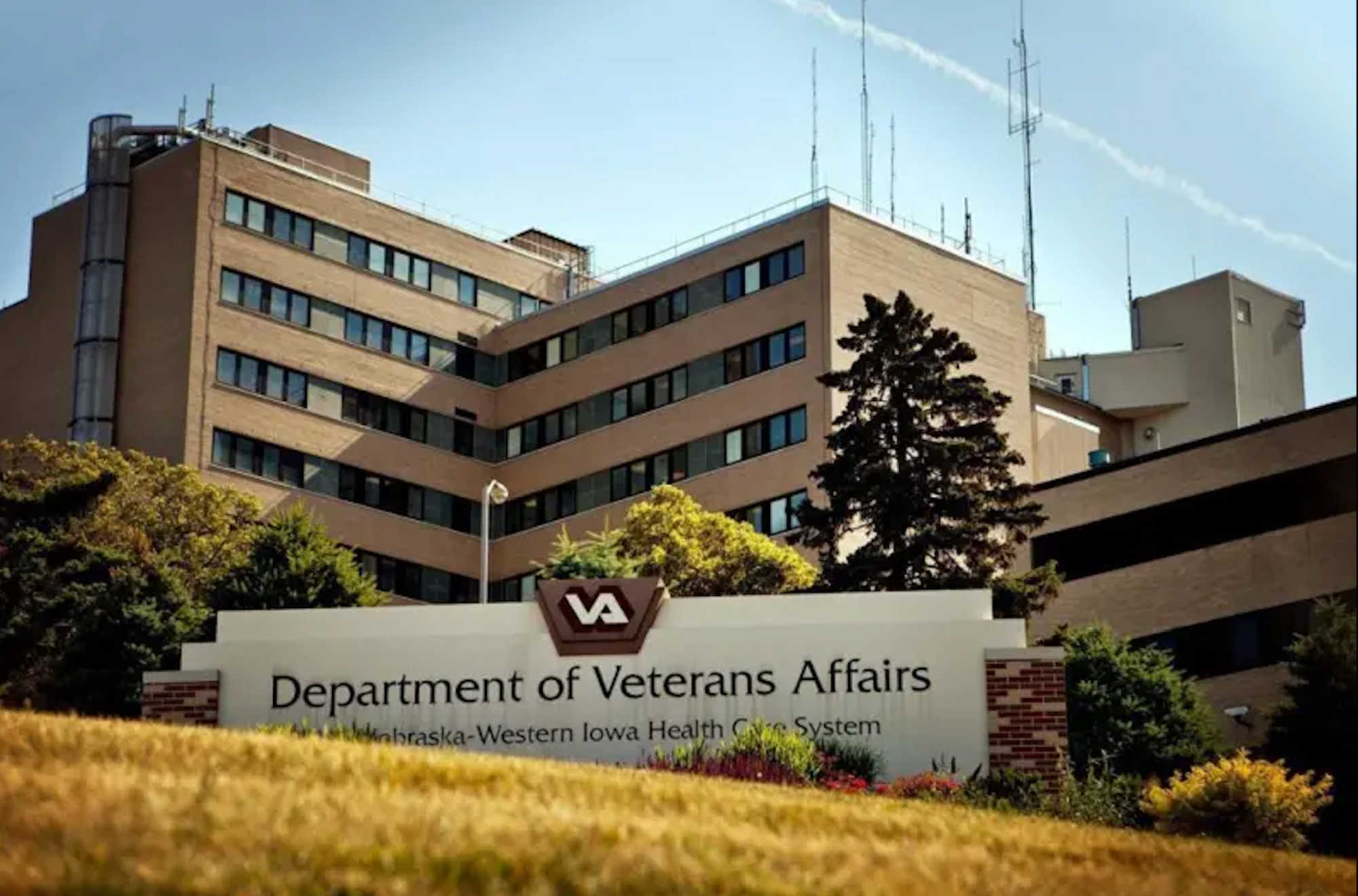
Department of Veterans Affairs building in Iowa.
The Office of Veterans Affairs is asking the 36th Legislature to take another look at recently amended legislation related to the reimbursement of costs for veterans who have traveled to the mainland for medical care. That request came from Patrick Farrell, VA director in the Virgin Islands, when he appeared before the Committee on Budget, Appropriations, and Finance last Monday.

The amendment, part of the non-germane amendments to Act 8991, authorizes the Office to make these reimbursements to “cover all or part of the cost associated with transporting veterans of United States Armed Forces residing in the Virgin Islands to and from Veterans Administration hospitals located outside of the territory.”
It is Mr. Farrell’s argument, however, that “while this piece of legislation may have good intent,” it risks shifting a large portion of the cost of medical transportation for veterans from the federal government to the local VA.
He explained that currently, the U.S. Department of Veterans Affairs pays for the transportation of “any qualified veteran experiencing a medical condition which requires emergency medical transportation from the territory.” In most cases, the veteran is transported to the San Juan Hospital in Puerto Rico for care. “It is important to note that a 15 to 20 minute flight may be the flight that would save the life of that veteran,” Mr. Farrell told lawmakers. Veterans Affairs also pays 100% of the cost of air ambulances for “eligible veterans with eligible situations” to either Puerto Rico or the mainland.
“I humbly ask that you relook this piece of legislation,” pleaded Mr. Farrell, saying that the local VA office would not be able to meet this cost. “In its current form, authorizing emergency medical transportation to the mainland is not financially sustainable.” He testified that in the 18-month period between October 2023 and June 2025, the Office of Veterans Affairs has paid “$611,085 for the life-saving emergency transportation of 26 Virgin Islands veterans.” Per Mr. Farrell’s testimony, the cheapest trip cost $17,500 while the most expensive cost $58,615. The new legislation covers 100% reimbursement.
“Is this a resource that we want to lose? More importantly, is this something that we can afford?” he asked of the Legislature. He also noted that the amended legislation “authorizes the office of Veterans Affairs to pay for two trips per year,” but “most medical conditions require more than two visits per year.”
“It does not make any sense to start seeing a doctor you can only see twice per year,” Mr. Farrell said. “This will end up hurting our veterans financially,” he warned.
Asked by Senator Angel Bolques Jr. whether the Office was “consulted during the drafting of 8991”, Mr. Farrell replied “no.” He told the senator that his recommendation is to further amend the law to “remove emergency travel,” because the U.S. Department already covers that cost.
Mr. Farrell is fearful that the U.S. Department of Veterans Affairs will realize that the USVI has a “law subsidizing or paying for emergency medical travel” and may decide that since local funding exists, “we will step aside and allow you at the state level to handle your business.”

“I wouldn’t want to see that happen,” agreed Senator Bolques. “I’m hoping that the bill sponsor has heard what you mentioned and hope that we could work together to try to fix that.”


Advertisements