




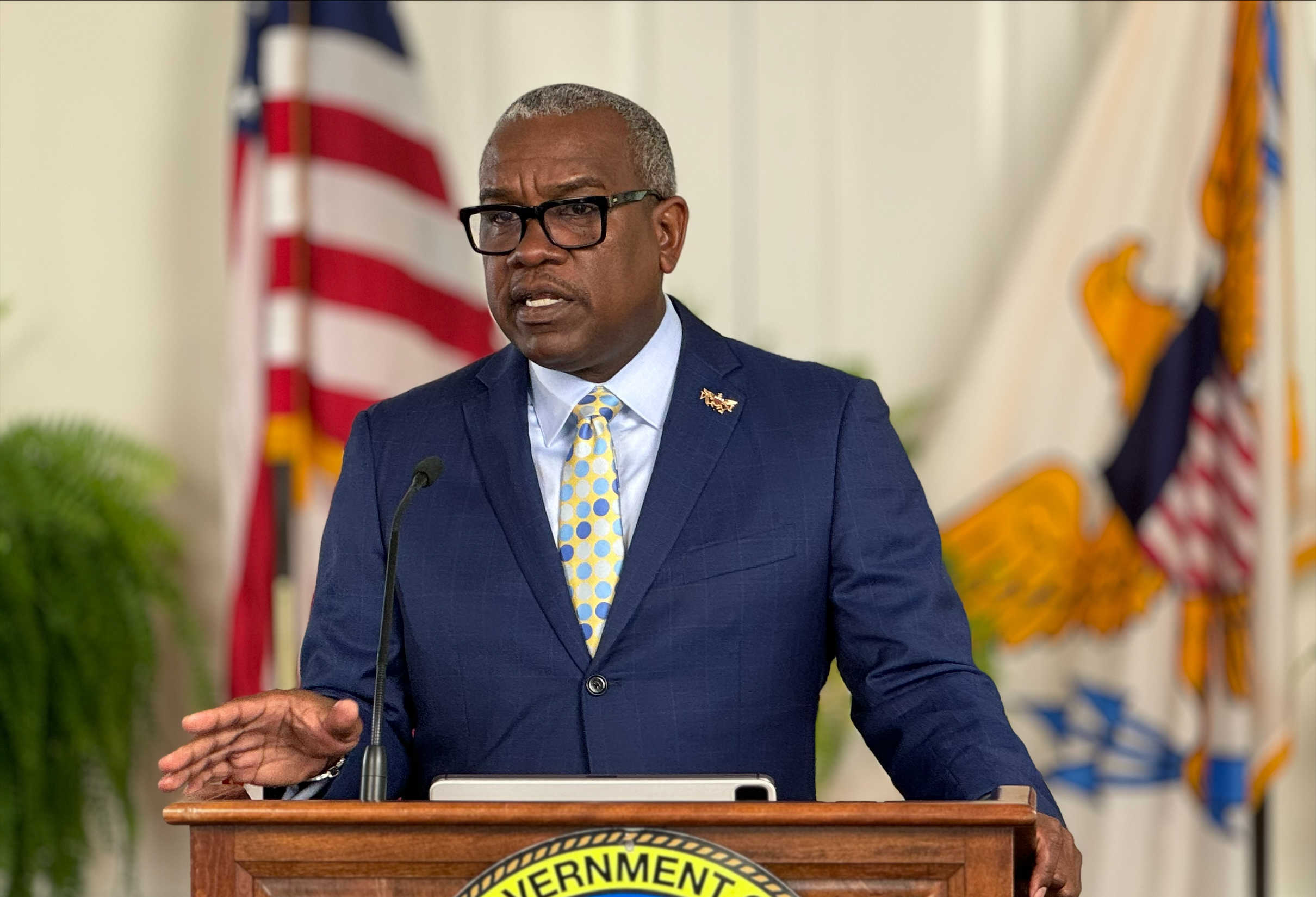
Governor Albert Bryan Jr. says he is encouraged by the enthusiasm of newly elected senators preparing to enter the 37th Legislature of the Virgin Islands, but expressed uncertainty about the policy priorities of the incoming independent lawmakers and urged them to embrace compromise rather than resistance when working with the next administration.

Speaking during Monday's Government House press briefing, the outgoing governor was asked for his assessment of the Legislature's incoming membership, which includes several political newcomers and an expanded group of independent senators.
“It always is of concern to me when we have a lot of independents,” Mr. Bryan said.
The governor half-jokingly suggested that he had grown accustomed to the political positions of Democratic senators, who could be counted on to “gang up and vote against me.” With the independents, however, he said their policy objectives were less familiar.

“I don’t know where they’re coming from,” he remarked.
Despite his reservations, Mr. Bryan welcomed the arrival of new lawmakers and expressed hope that their enthusiasm would translate into effective governance.
“I’m encouraged by the amount of fervor that we have, and hope that is matched by diligence, knowledge, and willingness to compromise in order to bring the Virgin Islands forward,” the governor said.
The 37th Legislature is expected to include five independent senators, according to the Elections System's November 3 unofficial results. Franklin Johnson secured reelection in the St. Croix District, while Alma Francis Heyliger retained her seat in the St. Thomas–St. John District.
They will be joined by newly elected independent senators Imani Daniel and Dr. Sennai Habtes, both representing St. Thomas–St. John, and Dr. Hadiya Sewer, who defeated incumbent Angel Bolques Jr. in the territory-wide senator-at-large contest.
The victories of Daniel, Habtes and Sewer represent a major breakthrough for TheFuture, the political movement established in April 2025 that campaigned on government accountability, affordable housing, electricity reform and greater public participation.
The movement also supported Democratic candidate Rudel Hodge Jr., who won a St. Thomas–St. John Senate seat.
As previously reported by the Consortium, Daniel emerged as the leading vote-getter in the St. Thomas–St. John legislative race, finishing ahead of incumbent senators and fellow newcomers.
In a subsequent exclusive interview with the Consortium, Daniel and Habtes outlined their priorities, including stronger legislative scrutiny of government spending, structural reform, improved public services and greater accountability across the executive branch.
Daniel said she hopes TheFuture will bring “a new level of scrutiny” to the Legislature, arguing that senators must take their budgetary responsibilities seriously rather than simply approving proposals submitted by the executive branch.
Habtes similarly emphasized the need for greater fiscal transparency and legislative oversight of government departments.
During Monday's briefing, Governor Bryan stressed that enthusiasm alone would not be sufficient to address the territory's longstanding challenges.
He encouraged incoming lawmakers to recognize the complexities of public administration, which he said operates differently from private enterprise, and to appreciate the importance of experience, institutional knowledge and collaboration.
The governor also pointed to the territory's difficult economic circumstances, including inflation and the substantial financial needs of public institutions, as issues that will require lawmakers to make challenging policy decisions.
Drawing on his experience dealing with the Legislature during his administration, he said “there’s a lot of reluctance to do and make the hard decisions.”
With the incoming Plaskett-Potter administration preparing to assume office in January, Mr. Bryan said he hopes the new Legislature will approach its responsibilities with a willingness to work constructively with Government House rather than allowing political disagreements to impede progress.

“I just hope that we don’t have an exercise of resistance, and I hope that we have one of progress,” the governor concluded.