




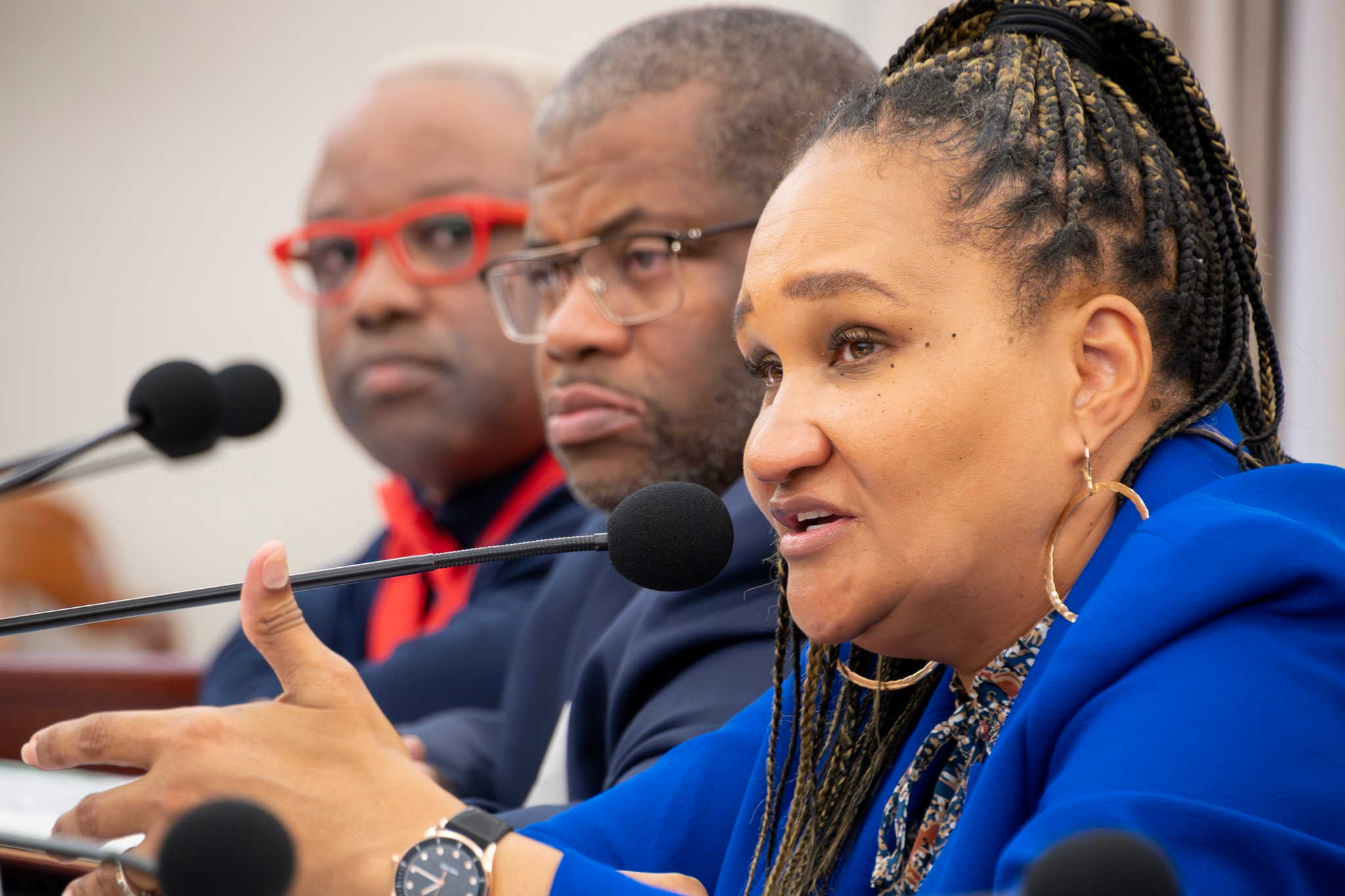
Despite the re-opening of the John H. Woodson Jr. High School on Monday, infrastructural woes plaguing the territory’s learning institutions are far from over, according to V.I. Department of Education representatives who testified before the Senate Committee on Education and Workforce Development on Monday.

Temporary modular units installed after the passage of the storms now pose a “significant challenge” to the department, admitted Commissioner Dionne Wells-Hedrington. The five-year warranty on the units has expired, making it the department’s responsibility to contend with their “rapid deterioration.” Among the problems are “detachment issues” with joints connecting the roofs and floors of the structures, creating air quality concerns. Ms. Wells-Hedrington told lawmakers that several HVAC systems have already been replaced, and complete replacement of wall paneling is necessary for some units. The DOE intends to use American Rescue Plan Act (ARPA) funds to open bids on rehabilitation projects for the units.
“While modular classrooms often start out as temporary solutions, they often become a permanent fixture on campuses,” lamented Kyza Callwood, chair of the Board of Education. It is this conversion from temporary to permanent use that makes them “more likely to develop structural problems such as water leaks or cracks,” he noted.
The condition of school bathrooms remained a pressing issue for several senators including the Committee’s chair, Sen. Marise James. In November, several students told committee members that they refused to use bathroom facilities at both high schools in the St. Croix district. After their passionate testimony, additional ARPA funding was used to initiate a “comprehensive renovation project” that Mrs. Wells-Hedrington says will “transform our bathroom facilities into safe, clean and welcoming spaces for all.”

Thus far, Lightning Construction has been tapped to renovate 14 restrooms at Central High School, the education commissioner said. Roof leaks at that school are also expected to be addressed while the facility awaits a full replacement, the contract for which has already been awarded to MCM Build.
Meanwhile, bathroom renovations at the St. Croix Educational Complex have “taken a different path,” according to Mrs. Wells-Hedrington. The department “has opted for a consolidating contract encompassing all remaining restroom renovations across the district,” she explained. That contract is currently in the bidding process, while the department’s maintenance unit attends to “daily issues” with bathrooms in the district’s schools.
In his summation of the multiplicity of challenges, Mr. Callwood told lawmakers that the “learning environment, student safety and overall well-being” were all being impacted. “Diligent attention and meticulous upkeep” is necessary to maintain “continued safety, functionality and scholarly ambience,” he said. He told lawmakers that “repairs and upkeep are postponed, exacerbating existing issues and potentially causing further damage over time.”
Speaking specifically to concerns over restrooms, Mr. Callwood noted that “basic needs such as toilet paper, paper towels, soap and hand sanitizers should always be available in restrooms.” Senator Diane Capehart would later agree, reminding education officials that ensuring there is soap and running water in the school’s bathrooms is “low-hanging fruit” that will contribute to a “safe and clean bathroom environment.”

Even as students at John H. Woodson return to the classroom, Mrs. Wells-Hedrington shared that “persistent moisture issues” created by the school’s location and “water table issues” mean that the department must carry out regular monitoring for any signs of poor air quality while it awaits the obligation of Federal Emergency Management Agency funds for a full replacement of the facility.