


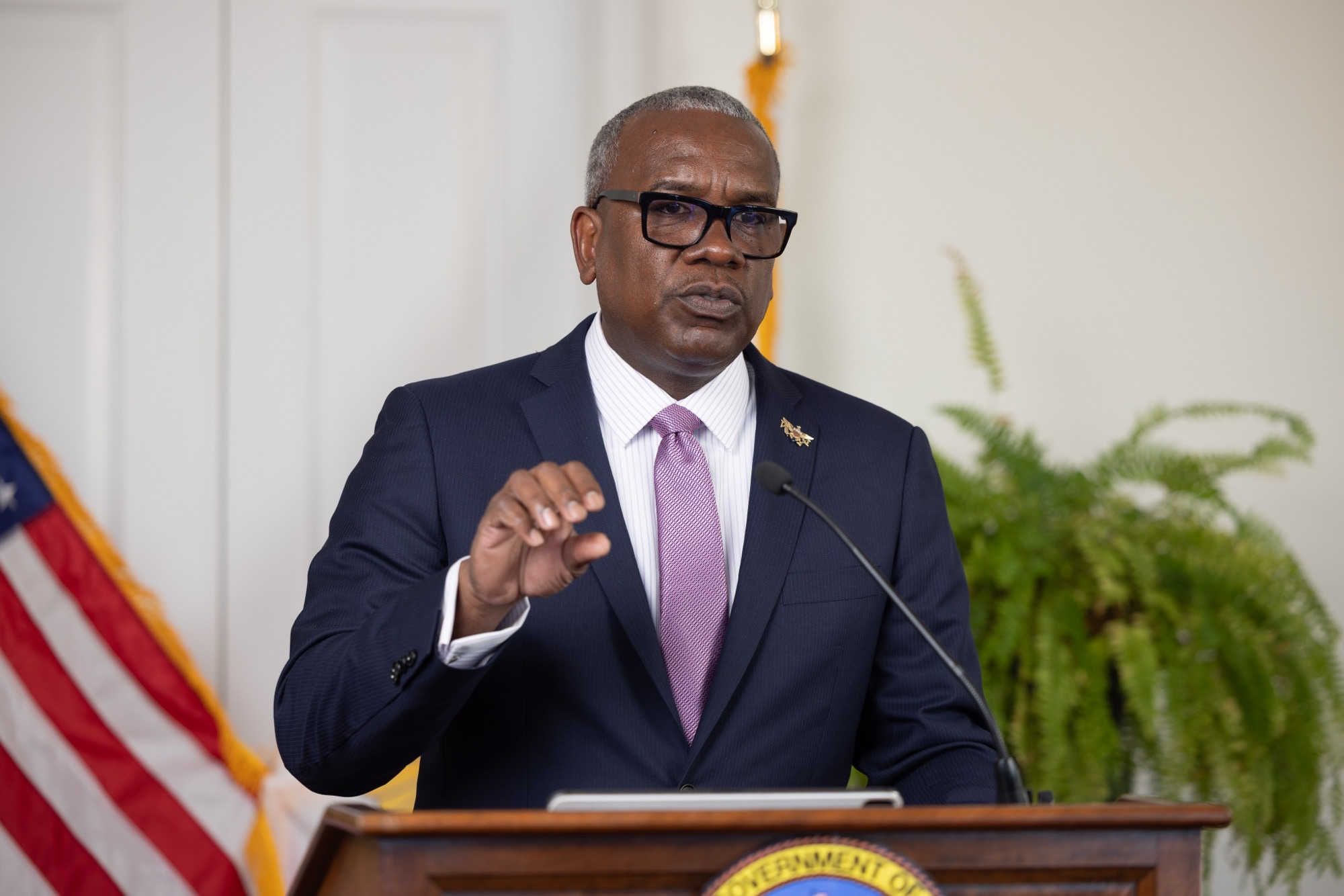
A proposed summit in Washington, D.C. to tackle the marine sector fee dispute between the U.S. and British Virgin Islands has been met with tepid support from Governor Albert Bryan Jr.
“We think we could get this matter resolved on a local [level]," Governor Bryan said during a press briefing on Monday. “We really don’t want the interference of the feds, but they seem very eager to resolve this matter.”
The federal government has already been alerted to the difficulties local maritime businesses face since the BVI imposed steep fees on local charter yacht operations that operate in their territorial waters. In February, the Small Business Administration indicated that the federal government was mobilizing a “whole of government approach” in response to what is seen as a major threat to USVI marine small businesses and the territory’s overall economy.
The issue came up again during recent discussions with the U.S. State Department, Governor Bryan disclosed. “We had several discussions there on that issue of the right to enter into their waters, and their right to enter into our waters.”
According to the governor, “we’re setting up a meeting with the BVI, hopefully this month March, we’ll be able to get with that.”
The news of State Department interest in facilitating the discussion was welcomed by Project Fair Waters, a coalition of marine, tourism, and small-business stakeholders in the USVI convened to restore “fair, reciprocal access” in the waters surrounding the British and U.S. Virgin Islands, and to protect USVI marine tourism jobs.
In a press release issued on Tuesday, lead representative for PFW Kosei Ohno said that the coalition is “ready, willing, and able to be in Washington within 48 hours as a stakeholder” to the meeting. "Our small businesses cannot absorb further delay, and any durable resolution requires federal coordination and industry participation from the outset,” Mr. Ohno continued.
He argued that the dispute is not merely about charter fees, but relates to “federal trade, currency, aviation, immigration, and foreign policy frameworks.” A meeting convened by the U.S. State Department that includes other federal agencies along with relevant stakeholders would be “the fastest path to a fair, reciprocal, rules-based solution,” Mr. Ohno said.
He cast doubt on the ability of local officials to successfully address the thorny issue. Local negotiations thus far “have not delivered reciprocity,” Project Fair Waters argued.

The coalition is advocating for a solution it has dubbed the “Triple One Program” as a starting point for discussion. The program would establish a common maritime zone with one fee structure that governs businesses on both American and British operators, with a similar unitary regulatory framework for all operators in the Greater Virgin Islands Sailing Zone. The program would be developed and implemented via a joint USVI-BVI commission, PFW envisions.