




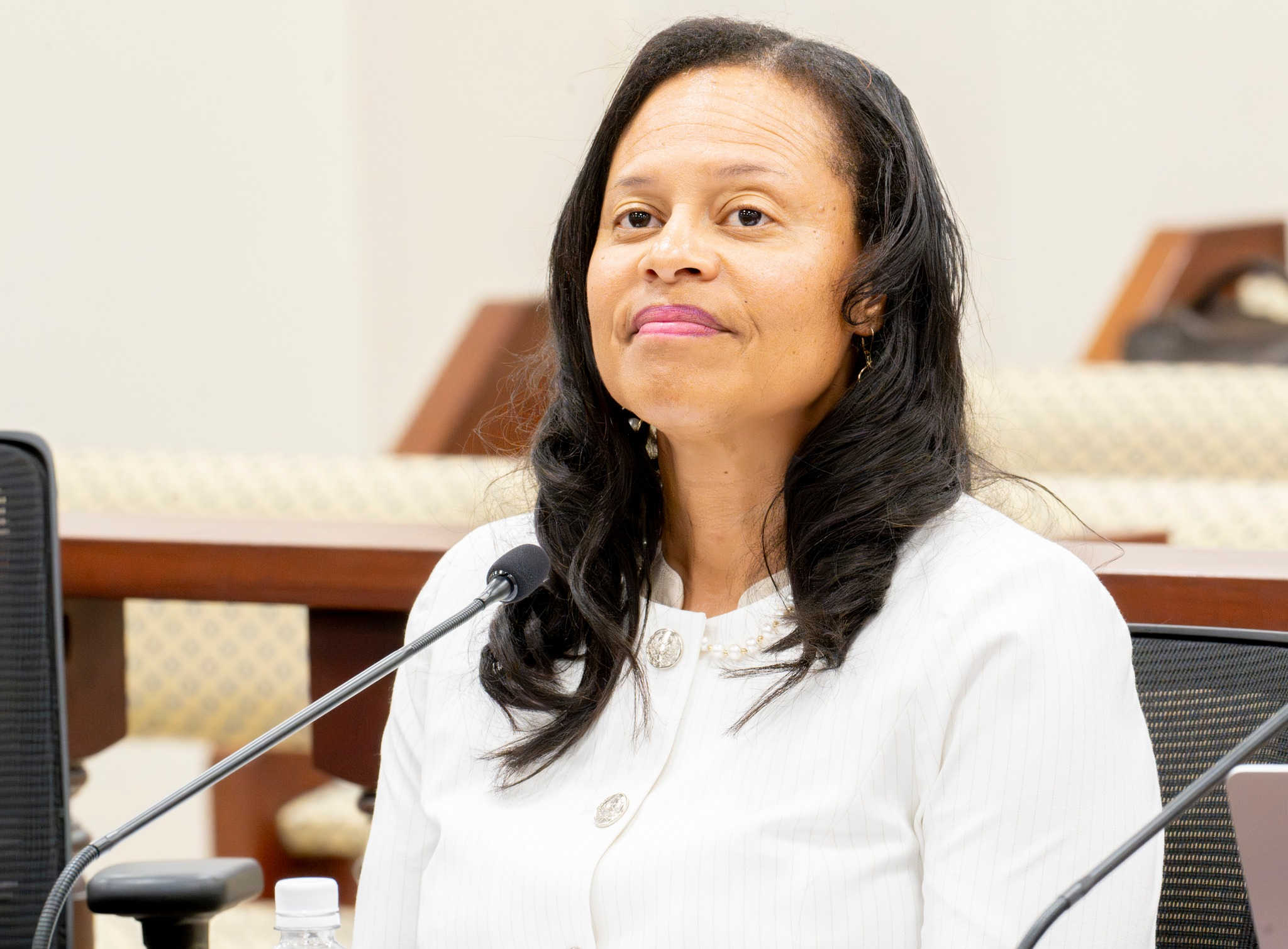
Full-time undergraduate tuition at the University of the Virgin Islands will rise by roughly 56 percent beginning in the Spring 2027 semester for students attending traditional on-campus classes, with UVI President Dr. Safiya George acknowledging that the change should have been communicated to students and their families sooner.

For in-territory students, full-time tuition will increase from $2,650 per semester this fall to $4,125 in Spring 2027, an increase of $1,475, or approximately 55.7 percent.
Caribbean students will see tuition rise from $4,638 to $7,218.75, an increase of $2,580.75, or approximately 55.6 percent. Out-of-territory tuition will climb from $7,950 to $12,421.95, an increase of $4,471.95, or approximately 56.3 percent.
The increases apply to full-time undergraduate students taking traditional, on-the-ground courses below UVI’s overload threshold. The university emphasized that its currently established per-credit tuition rates will not increase again for Spring 2027.

Undergraduate per-credit rates will remain $275 for in-territory students, $481.25 for Caribbean students and $828.13 for out-of-territory students. Graduate tuition will also remain unchanged at $500 per credit for in-territory students, $875 for Caribbean students and $952.47 for out-of-territory students.
UVI said the published full-time tuition figures do not necessarily reflect what individual students will ultimately pay out of pocket. Financial responsibility will vary depending on residency classification, course enrollment, scholarships, grants, financial aid and other forms of assistance.
The university attributed the higher Spring 2027 full-time tuition rates to increasing instructional and operating expenses, saying additional revenue is needed to maintain academic programs, student services and other institutional resources.
George acknowledged concerns surrounding the size of the increase while also apologizing for how long it took the university to clearly communicate the impact of the Board’s earlier action.
“We understand that any increase in the cost of a college education can create real concerns for our students and their families,” George said. “We recognize that the June 2026 Board action clarifying the full-time, on-the-ground tuition rates for Spring 2027 should have been communicated sooner, and we apologize for the delay.”
George said UVI had spent much of the intervening period focused on its accreditation process, completing required financial audits and providing weekly updates to students while simultaneously preparing for the Spring 2027 semester.
UVI remains accredited while operating under a Show Cause status issued by the Middle States Commission on Higher Education. The university submitted its required Show Cause Report on September 1 as part of its effort to demonstrate compliance with standards related to financial planning, resources, governance and oversight.
Against that backdrop, UVI said it is attempting to increase the financial assistance available to students affected by the new tuition rates.
The university is encouraging students to complete UVI’s scholarship application by November 1, with additional institutional and local scholarship funding expected to be made available. Eligible U.S. students are also being encouraged to complete the 2026-2027 Free Application for Federal Student Aid, or FAFSA, by UVI’s November 1 priority deadline.
FAFSA workshops are planned, with dates to be announced through university communication channels.
UVI’s scholarship committee is also being convened to identify available financial resources and determine how assistance can be better matched with students based on need and eligibility.
“We recognize that the tuition increase will affect students differently, and we want to be proactive in helping them identify resources that can ease the financial burden,” said Dr. Pamela Moolenaar Wirsiy, vice president for Student Success and Innovation.
She said the committee will bring together university representatives to identify scholarship resources, coordinate assistance and connect students with opportunities that could help them remain enrolled.
Vice President for Institutional Advancement Ivo Philbert said UVI is similarly attempting to better align existing scholarship funding with individual students.
“Our goal is to make the best possible use of the scholarship resources available to UVI and ensure that students are aware of opportunities for which they may qualify,” Philbert said.
Student government leaders on both campuses acknowledged the financial concerns while encouraging students to pursue available assistance.
Shandley Raphael, president of the Student Government Association on the Orville E. Kean Campus, said he understood the impact an increase of that magnitude could have on students but also recognized the university’s need to sustain its operations.
“I understand the concerns of students and how an increase of this size can affect them financially, but sometimes necessary changes have to be made to sustain an institution like ours,” Raphael said. He encouraged students to complete the FAFSA, seek scholarships and speak with the Financial Aid Office as early as possible.
R'daejah Milligan, SGA president on the Albert A. Sheen Campus, similarly urged students to stay informed and take advantage of available financial-aid workshops, scholarships and payment resources.
“Your education matters, and SGA will continue advocating for you every step of the way,” Milligan said.
The Spring 2027 tuition change follows a series of Board actions dating to 2025.
On June 27, 2025, the Board’s Executive Committee approved increases affecting UVI Online, part-time, summer, overload and other per-credit tuition categories. UVI publicly announced those changes on August 1, 2025, but that announcement did not establish the new full-time, on-the-ground tuition amounts now scheduled to take effect.
The Board’s Executive Committee took additional action in October 2025 clarifying certain tuition calculations, after which UVI notified out-of-territory students about revised undergraduate and graduate per-credit rates.
Then, on June 27, 2026, the full Board approved a resolution clarifying full-time, on-ground tuition rates to make them consistent with previously approved tuition actions. UVI disclosed in a June 29 news release that the Board had approved that clarification, but the release did not spell out the new Spring 2027 full-time tuition amounts.
Those dollar figures are now being communicated as the Spring semester approaches.
George met with leaders from both Student Government Associations this week and held an information session with the broader student community on September 29 to discuss tuition, financial aid, scholarships and application deadlines.
Students taking UVI Online courses, combinations of online and on-campus courses, or enough credits to trigger overload pricing are being advised to review the university’s Spring 2027 tuition schedule or contact Access and Enrollment Services because different rates may apply.

“Each student's circumstances are different, and we strongly encourage students to talk with our Financial Aid and Access and Enrollment Services teams early so they can understand their options and make informed decisions before the Spring semester begins,” George said.