
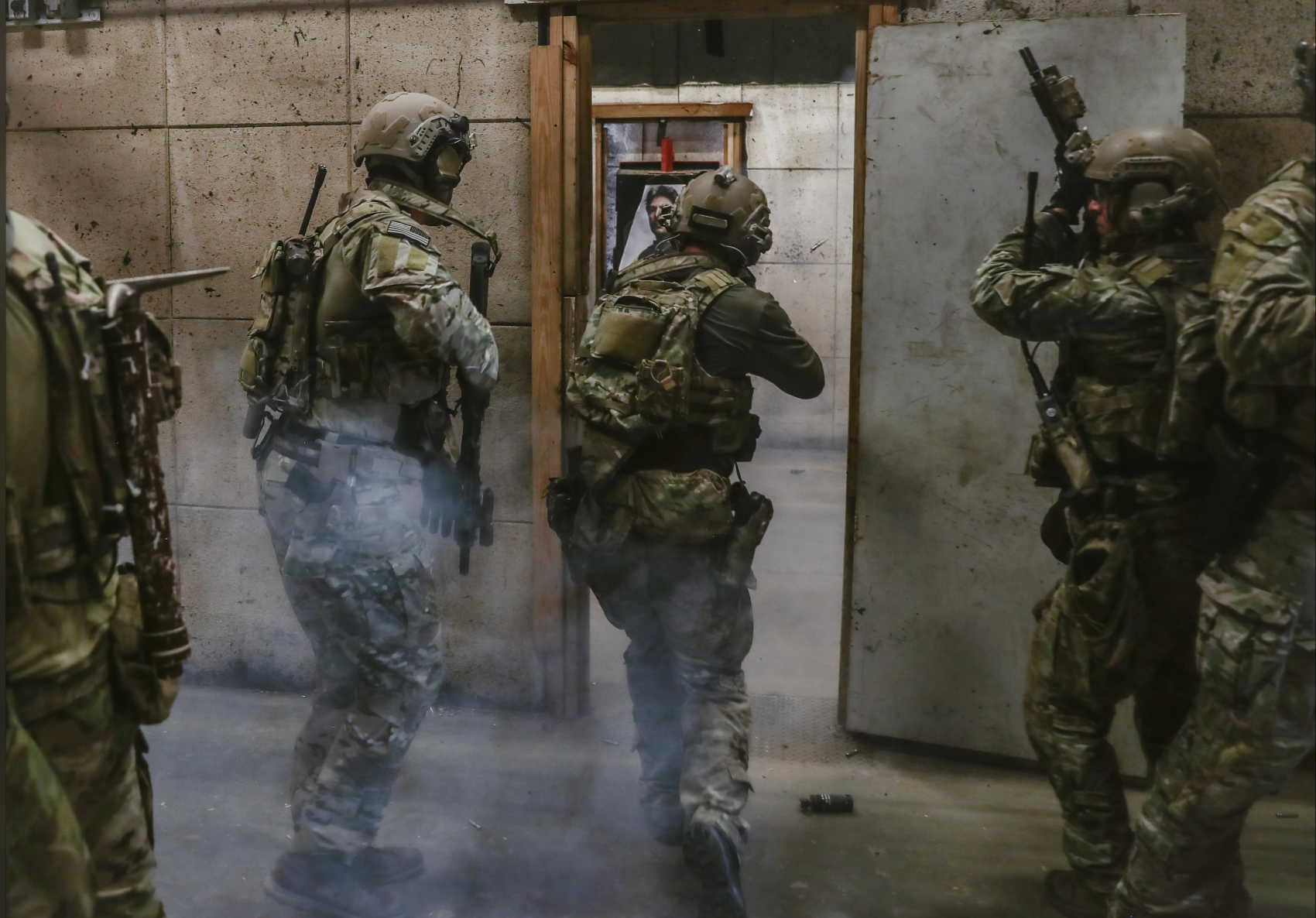
The Marine strike on Tuesday that destroyed small boat in the southern Caribbean Sea was the first of many more to come, said United States Secretary of State Marco Rubio on Wednesday.
Speaking during a press conference in Mexico City, Mr. Rubio declared that suspected drug traffickers linked with international narcotics and arms smuggling groups will be met with similar lethal force moving forward. “The president of the United States is going to wage war on narco-terrorist organizations,” Mr. Rubio said.
The strike came days after the massing of over 4,500 naval and marine troops on warships off the Venezuelan coast, supported by scores of troops stationed on St. Croix and elsewhere.The surge of military activity in the region has been welcomed by USVI Governor Albert Bryan Jr., who pointed to increased security and counter-narcotics capacity in the territory as well as a boost in economic activity as positives for the Virgin Islands. Trinidad & Tobago Prime Minister Kamla Persad-Bissessar has also praised the United States for its more aggressive stance. Following news of the strike, Ms. Persad-Bissessar expressed little sympathy for drug traffickers, saying that “the U.S. military should kill them all violently.”
Despite the support from some corners, critics have expressed concern. Shortly after his inauguration, President Donald Trump issued an executive order that designated drug cartels as foreign terrorist organizations. Months later, a secret order reportedly authorized the Pentagon to engage cartels with military force. Tuesday's strike, President Trump said, killed 11 people who were on a boat “positively identified” as being one used by the Tren de Aragua gang out of Venezuela.
Professor Luke Moffett of Queens University in Belfast, Ireland, told the BBC that "labeling everyone a terrorist does not make them a lawful target and enables states to side-step international law.” However, the U.S. government has designated these groups as terror organizations negatively impacting the country.
"The president of the United States has determined that narco-terrorist organizations pose a threat to the national security of the United States. I don't need to explain to you why," Rubio said, who added that the group is not only known for trafficking drugs, but arms and humans as well.
"These are not stockbrokers. These are not real estate agents who, on the side, deal a few drugs. These are organized, corporate, structured organizations who specialize in the trafficking of deadly drugs into the United States of America," Rubio said. "They pose an immediate threat to the United States. Period."
"Because these drug cartels, what they do is they know they're going to lose 2% of their cargo — they bake it into their economics," he said. "What will stop them is when you blow them up, when you get rid of them."
Apart from Trinidad & Tobago, whose prime minister recently said would not be consulting with the wider Caribbean Community to determine a joint position on the matter, CARICOM member states have largely remained silent in the face of escalated military action in the region. However, a letter from CARICOM foreign ministers to Mr. Rubio has been drafted, reportedly requesting consultation and advance notice of any military action against Venezuela or suspected narco-terrorists.


Advertisements