




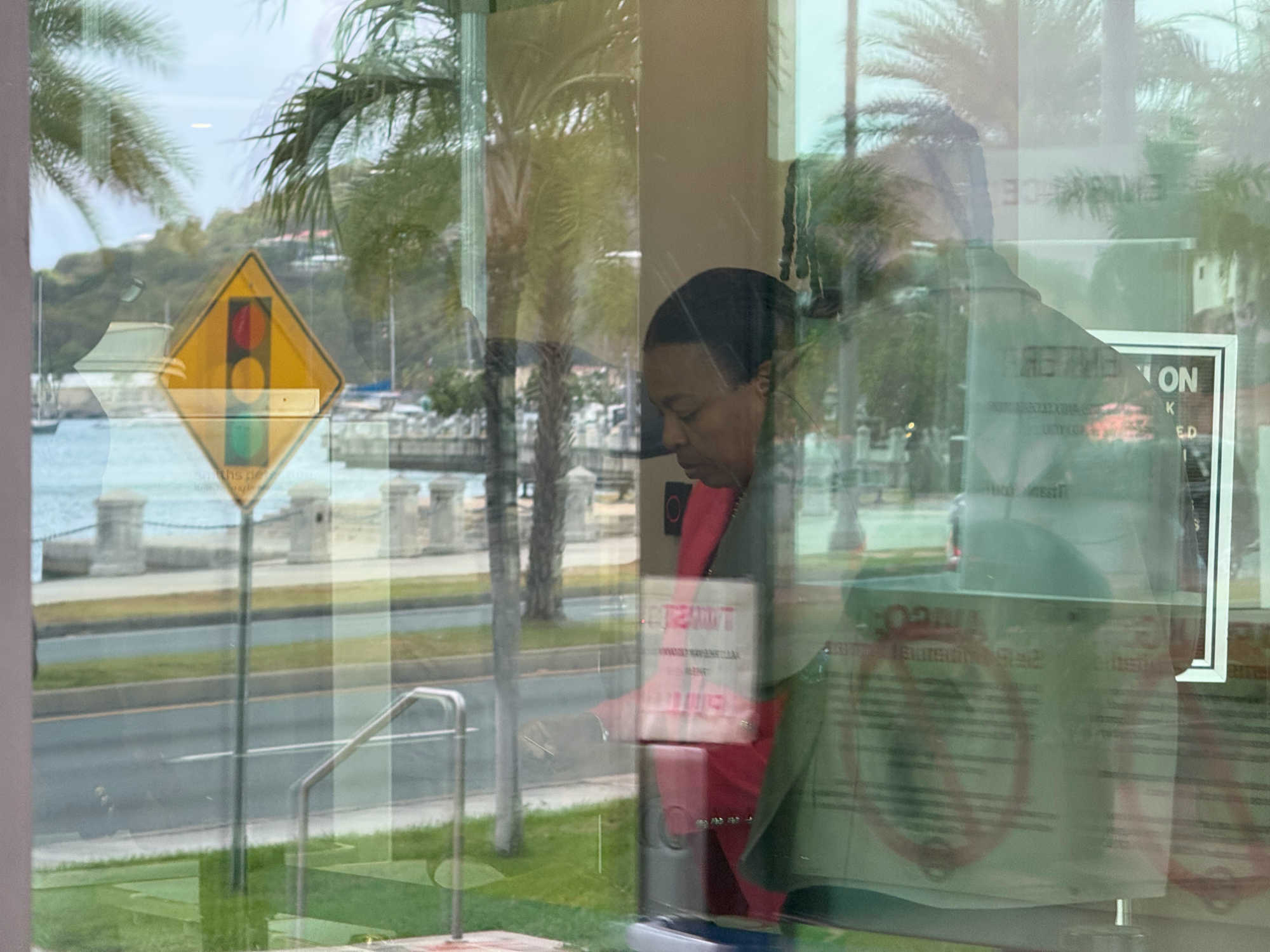
Former Office of Management and Budget Director Jenifer O’Neal declined to address the court Thursday before U.S. District Judge Mark Kearney sentenced her to seven years in federal prison, saying she had shown no respect for the law and had “traded [her] integrity for cash” in a corruption scheme involving emergency federal funds meant to help the Virgin Islands recover from the pandemic.

O’Neal, convicted alongside former V.I. Police Commissioner Ray Martinez in the Mon Ethos corruption case, was also sentenced to three years of supervised release and ordered to pay $34,000 in restitution. Unlike Martinez, who wept and apologized during his sentencing, and David Whitaker, who cried while accepting responsibility, O’Neal did not speak before the sentence was imposed. No witnesses addressed the court on her behalf, though letters of support had been submitted. She was ordered to surrender within two weeks to begin serving her sentence.
Judge Kearney said this was a day O’Neal feared for the past two years. But as he prepared to impose sentence, he said the gravity of the offense required punishment that reflected her position, her choices and the public funds involved.
The sentence matched the 84 months prosecutors had requested. O’Neal’s defense had sought a far lower sentence, but the court rejected that request after prosecutors argued that O’Neal used her position at OMB for personal benefit and participated in what they described as deliberate public corruption.

Federal prosecutor Cherrisse Amaro, who led much of the government’s argument during the sentencing hearing, said O’Neal’s conduct was motivated by greed, not need. She argued that O’Neal was not manipulated and did not stumble into the scheme, but understood what was happening and allowed public funds to move through the approval process while accepting benefits connected to Whitaker and Mon Ethos.
The government’s argument focused heavily on the nature of the money involved. Prosecutors said the funds at the center of the scheme were tied to COVID-19 recovery and were supposed to help the Virgin Islands recover from the global pandemic. Instead, they argued, O’Neal helped move public money in a way that advanced private interests and illegal gains.
Amaro told the court that O’Neal understood the requests were not legitimate, yet treated them casually. Prosecutors again pointed to trial evidence involving a $216,000 VIPD invoice, a $70,000 inflated amount, and a message from Whitaker stating that “Ray may never speak to us again” if he did not get the $70,000 for his food shop. O’Neal’s response, according to the evidence referenced in court, was “lol” before saying she would check with her staff.
Prosecutors argued that response showed O’Neal understood the nature of the request, did not reject it, and did not try to stop it. Instead, they said, she allowed the matter to move through the approval process while knowing the funds were not being handled for a legitimate public purpose.
The government also returned to evidence involving O’Neal’s planned Java Grande coffee shop at Yacht Haven Grande, including the $17,730 lease payment made by Whitaker. Prosecutors argued that O’Neal knew the money trail mattered, pointing to evidence that she did not want payments handled in a way that could be traced. Judge Kearney echoed that point, saying that for someone who knew she did not want money paid through a wire transfer, O’Neal understood what was happening and allowed it to happen for her personal benefit.
O’Neal’s attorney, Dale Lionel Smith, attempted to challenge aspects of the government’s presentation and revisit issues connected to the trial. Judge Kearney repeatedly reminded him that the jury’s verdict stood and that the court could not change the outcome of the trial during sentencing. The judge urged counsel to stop relitigating matters already decided by the jury.
The judge also drew a distinction between Whitaker, the cooperating Mon Ethos contractor, and O’Neal, who held public office. Judge Kearney said Whitaker would have faced more time had he been a public official like O’Neal. The court made clear that O’Neal’s position at OMB made her conduct especially serious because she had direct responsibility over public money.
Judge Kearney also referenced what he described as a broader “culture of corruption,” taking aim at the environment in which the Mon Ethos scheme unfolded. His comments came after Martinez, once the territory’s top law-enforcement officer, was sentenced to 10 years in federal prison earlier in the case.
O’Neal did not appear visibly emotional as the judge delivered his remarks. She did not cry and appeared to be taking in the proceeding.
No witnesses spoke in court on her behalf. The judge instead had letters of support, which had been filed publicly earlier in the day after a morning dispute over whether they could be considered.
Thursday’s sentencing came after a delay in the morning session, which began at 9 a.m. but was continued to 1 p.m. over disputes involving defense filings, financial disclosures and support letters. O’Neal told the court during the morning hearing that she was dissatisfied with Smith’s handling of the matter and requested a postponement, but prosecutors objected.
U.S. Department of Justice Trial Attorney Alexandre Dempsey called the request another attempt to delay sentencing and said the government would only agree to a continuance if O’Neal were remanded to custody Thursday. Judge Kearney instead continued the hearing to 1 p.m., allowing the issues to be addressed before sentencing proceeded.

O’Neal was convicted in December alongside Martinez. Whitaker’s testimony became central to the government’s case against the two. He was sentenced earlier this week to 22 months in prison, three years of supervised release, and $600,000 in restitution after cooperating with prosecutors.