




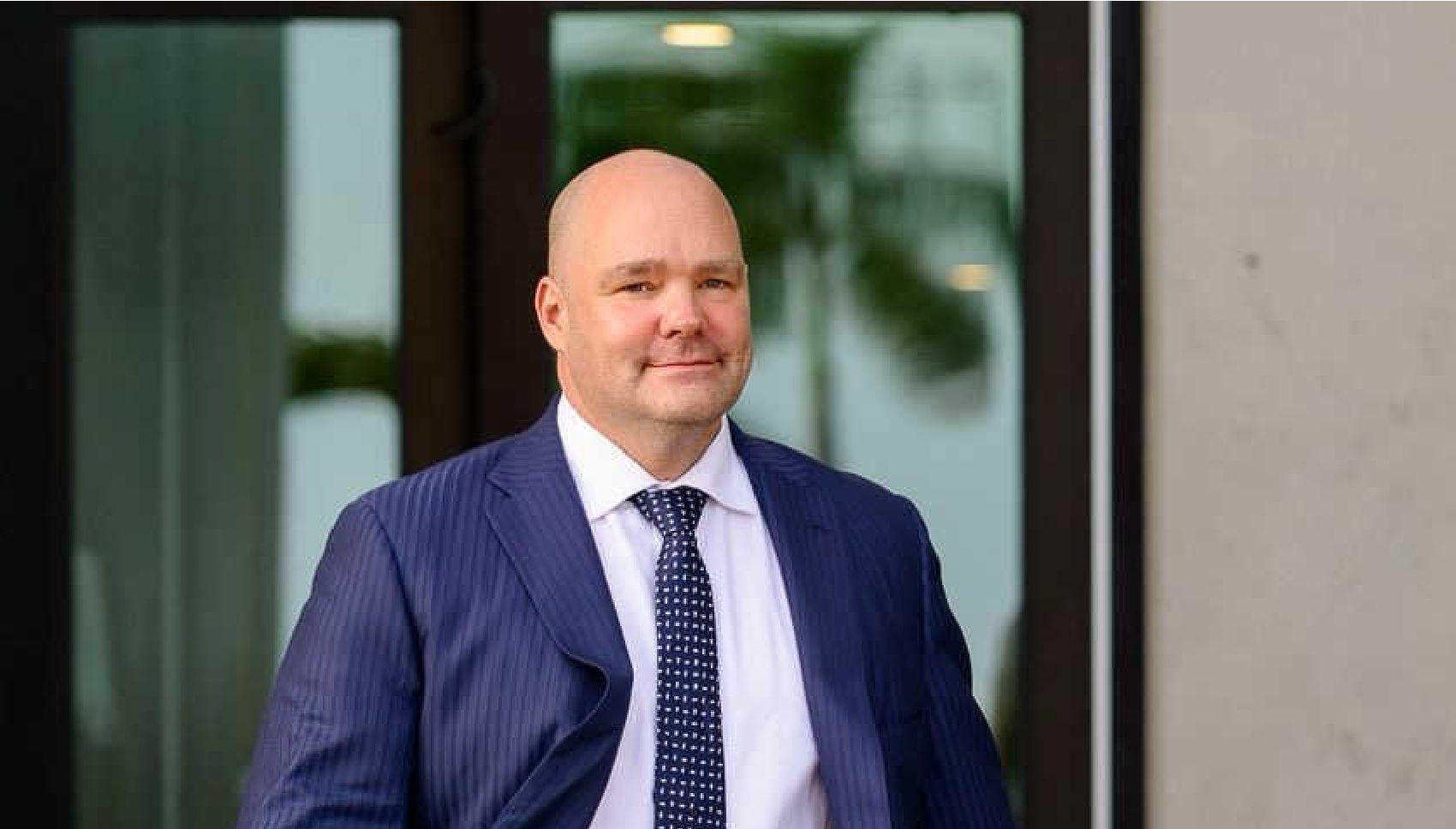
David Whitaker, the Mon Ethos contractor who became a central government witness in the federal corruption case against former V.I. Police Commissioner Ray Martinez and former Office of Management and Budget Director Jenifer O’Neal, was sentenced Monday to 22 months in prison after prosecutors and the court drew a sharp distinction between Whitaker’s crimes and the larger scheme they said was led by Martinez.

Whitaker was also ordered to pay $600,000 in restitution and serve three years of supervised release. His prison sentence is scheduled to begin on January 2, 2027.
But the central theme of Whitaker’s sentencing hearing was not simply the length of his prison term. It was the court’s recognition that while Whitaker knowingly committed fraud and violated public trust, he also quickly accepted responsibility, cooperated with federal authorities and provided testimony that helped prosecutors secure convictions against Martinez and O’Neal.
Federal prosecutors had recommended a 22-month sentence. Whitaker’s defense team requested home confinement, arguing that his cooperation, remorse, medical issues and personal circumstances warranted a sentence without additional prison time.

The court ultimately sided with prosecutors, finding that incarceration was still necessary. But Judge Mark Kearney also credited Whitaker’s cooperation, noting that he would have faced a longer sentence had he not come forward, acknowledged his role and assisted the government.
During the hearing, prosecutors described what they called two versions of David Whitaker. One was the contractor who knowingly and willingly committed fraud. The other was the defendant who, when confronted, accepted responsibility in short order, confessed to his role and became a substantial cooperator.
The government made clear that Whitaker’s cooperation did not erase his wrongdoing. Prosecutors said he participated in criminal activity and helped violate the public trust. But they also described him as a “great cooperator” who performed the actions asked of him during the investigation and prosecution.
Prosecutors also addressed public claims that Whitaker came to the Virgin Islands to commit fraud and launch the scheme. According to courtroom notes, the government said it believed the scheme started with Martinez, not Whitaker, and described the former police commissioner as the criminal “mastermind.”
That argument became central to how the court viewed Whitaker’s role. Judge Kearney said he had initially viewed Whitaker differently, but the evidence and proceedings changed his understanding of the case. According to notes from the hearing, the judge apologized to Whitaker, not simply as a defendant but as a person, after concluding that Martinez was the central figure behind the scheme.
The judge also questioned how Martinez, as the territory’s top law-enforcement official, could have believed the conduct was acceptable for the Virgin Islands. The court’s comments came earlier the same day that Martinez was sentenced to 10 years in federal prison for his role in the Mon Ethos case.
Whitaker’s defense team argued that his decision to cooperate reflected his character. They said he accepted his involvement when approached by authorities and that others implicated in the case could have chosen the same path but did not. His attorneys said cooperation came with risk and required courage.
The defense also urged the court to consider Whitaker’s medical issues and personal responsibilities. The judge acknowledged those concerns, including Whitaker’s role as a caretaker for someone in Georgia. Judge Kearney said he understood the demands of caregiving, noting that he had once served as a caretaker himself.
Anthony Thomas also addressed the court on Whitaker’s behalf. He said he was not there to argue that public trust had not been violated, but to ask the court for leniency. His statement acknowledged the seriousness of the offense while asking that Whitaker’s actions after being confronted be considered.
Whitaker then gave an emotional statement to the court. He cried as he acknowledged his wrongdoing and accepted responsibility. He said he knew better but did the crime anyway, according to notes from the hearing.
The court’s sentence reflected both sides of Whitaker’s role: a contractor who participated in a public corruption scheme, and a defendant whose cooperation became central to the government’s case. Judge Kearney determined that prison time was warranted, but not the far greater punishment Whitaker could have faced without cooperation.
Whitaker’s testimony played a major role in the prosecution of Martinez and O’Neal. Prosecutors relied on his cooperation to explain the structure of the scheme, the role of public officials, and the flow of money and benefits tied to Mon Ethos Pro Support.

Martinez was sentenced earlier Monday to 10 years in federal prison. O’Neal, who was convicted alongside Martinez, is scheduled to be sentenced separately.