

The Environmental Protection Agency (EPA) has drafted a proposal that could fundamentally alter the United States’ approach to combating climate change, with far-reaching implications for industries, communities, and environmental policy nationwide, including the U.S. Virgin Islands.
The plan, submitted to the White House on June 30, 2025, seeks to repeal the 2009 “endangerment finding,” a landmark scientific determination that greenhouse gases like carbon dioxide and methane threaten human health and welfare. This finding, rooted in the Clean Air Act, has been the legal cornerstone for regulating emissions from vehicles, power plants, and industrial facilities, including oil refineries like the long-shuttered facility on St. Croix. As the EPA prepares to release the draft for public comment, the move has sparked intense debate over its potential to reshape energy markets, environmental protections, and economic prospects from St. Croix to the mainland United States.
The 2009 endangerment finding, prompted by the 2007 Supreme Court ruling in Massachusetts v. EPA, established that six greenhouse gases—carbon dioxide (CO2), methane (CH4), nitrous oxide (N2O), hydrofluorocarbons (HFCs), perfluorocarbons (PFCs), and sulfur hexafluoride (SF6)—endanger public health by contributing to climate change. This declaration, finalized on December 15, 2009, empowered the EPA to regulate emissions from major sources, resulting in seven vehicle emissions standards costing over $1 trillion and rules targeting power plants and industrial facilities. The EPA’s draft proposal, as reported by The New York Times and The Washington Post, argues that the agency overstepped its authority under the Clean Air Act by issuing a broad finding, claiming its regulatory power is limited to specific circumstances.
The draft, led by EPA Administrator Lee Zeldin and influenced by Jeffrey Clark, acting administrator in the Office of Information and Regulatory Affairs, avoids challenging the science of climate change directly. Instead, it focuses on legal arguments, asserting that greenhouse gases do not “significantly” contribute to dangerous pollution. “Since 2009, I’ve consistently argued that the endangerment finding required a consideration of downstream costs imposed on both mobile sources like cars and stationary sources like factories,” Clark said in a March statement released by the EPA. If finalized, the repeal would eliminate the EPA’s ability to regulate greenhouse gas emissions, halting existing rules and preventing future ones.

Implications for St. Croix’s Refinery
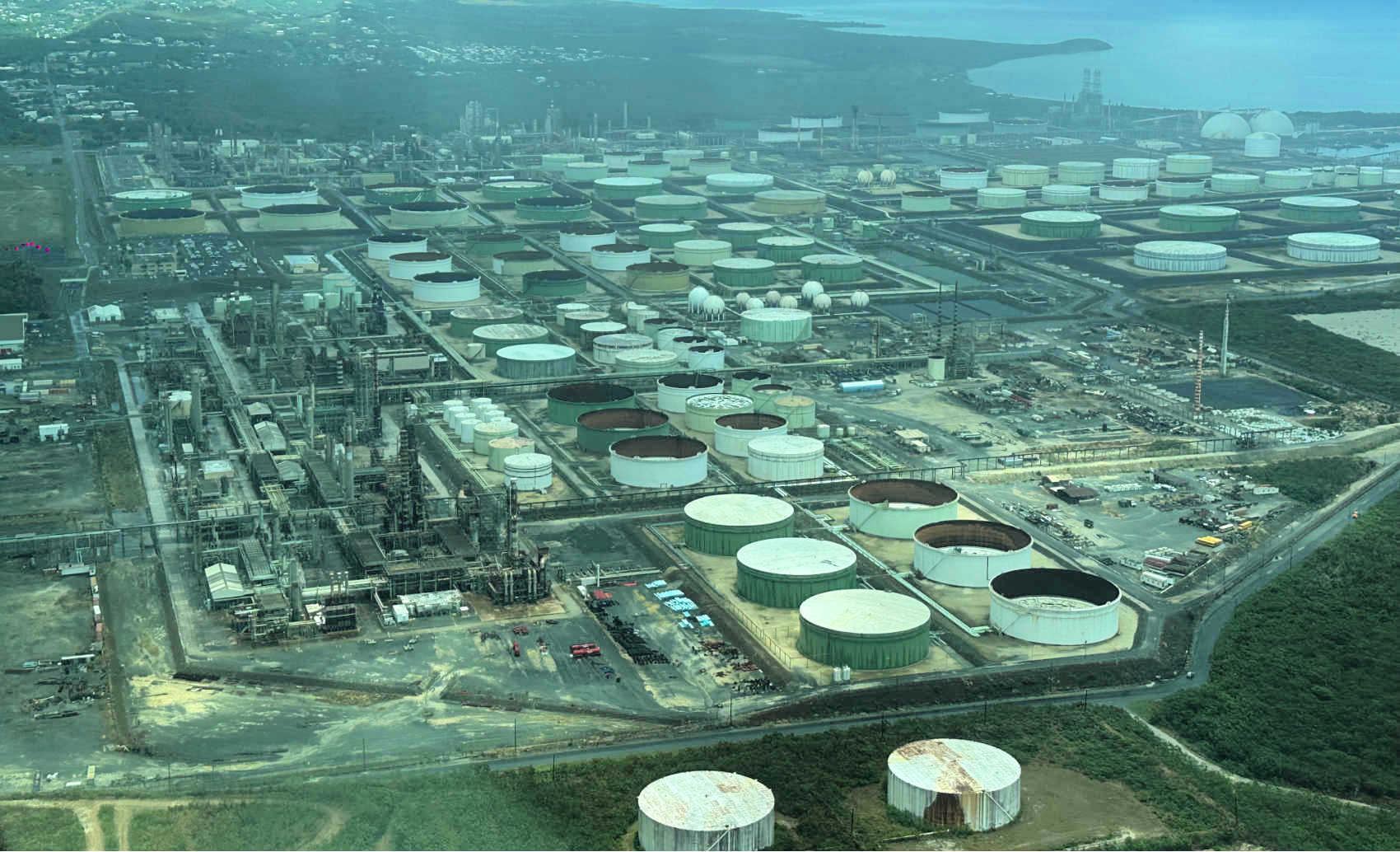
In the U.S. Virgin Islands, the proposed repeal could have profound effects on the St. Croix refinery, formerly operated by Limetree Bay and now owned by West Indies Petroleum Limited and Port Hamilton Refining and Transportation. The facility, one of the world’s largest oil-processing sites, has been shuttered since 2021 after an emissions incidents prompted an EPA-ordered pause and subsequent bankruptcy.
The 2009 endangerment finding underpins the EPA’s oversight of the refinery, requiring a Prevention of Significant Deterioration (PSD) permit for any restart, as outlined in a March 2022 EPA letter to the new owners. This permit mandates modern pollution controls to limit greenhouse gas emissions and other pollutants. Repealing the finding would remove these requirements, potentially easing the path for buyers to restart operations without costly upgrades.
Across the United States, repealing the endangerment finding would dismantle the EPA’s ability to regulate greenhouse gas emissions from vehicles, power plants, and industrial sources, which account for significant portions of the nation’s emissions—transportation at 29% and power plants at 25% in 2021. This would nullify existing standards, such as tailpipe emissions rules promoting electric vehicles and power plant regulations requiring carbon capture technologies, and prevent future administrations from enacting new ones. “The White House is trying to turn back the clock and re-litigate both the science and the law,” said Vickie Patton, general counsel for the Environmental Defense Fund, calling the evidence of climate harm “overwhelming and incontrovertible.”
The proposal has drawn support from conservative advocates and fossil fuel interests. Myron Ebell of the Competitive Enterprise Institute called Biden-era regulations “pointless” and economically damaging, arguing that the repeal would restore consumer choice and reduce costs. Steve Milloy of the Heartland Institute urged a swift rulemaking process, stating, “Hopefully that will be done as quickly as possible.” However, environmental groups and Democratic lawmakers, like Sen. Sheldon Whitehouse, argue that the move defies scientific consensus and prioritizes industry profits over public health.
The EPA’s draft aligns with broader deregulatory efforts, including a June 2025 proposal to repeal greenhouse gas standards for power plants, arguing they do not “significantly” contribute to dangerous pollution. This follows Administrator Zeldin’s March 2025 announcement to reconsider 31 environmental regulations, signaling a systematic rollback of climate policies

The draft proposal awaits White House approval and is expected to be published for public comment soon, potentially within days of July 23, 2025. The rulemaking process, typically spanning years, could be expedited given the administration’s pace, as noted by policy analyst John Rylander. Legal challenges are inevitable, with experts like Richard Revesz, a former Biden official, arguing that the repeal is unlikely to withstand judicial scrutiny due to the Massachusetts v. EPA precedent.