




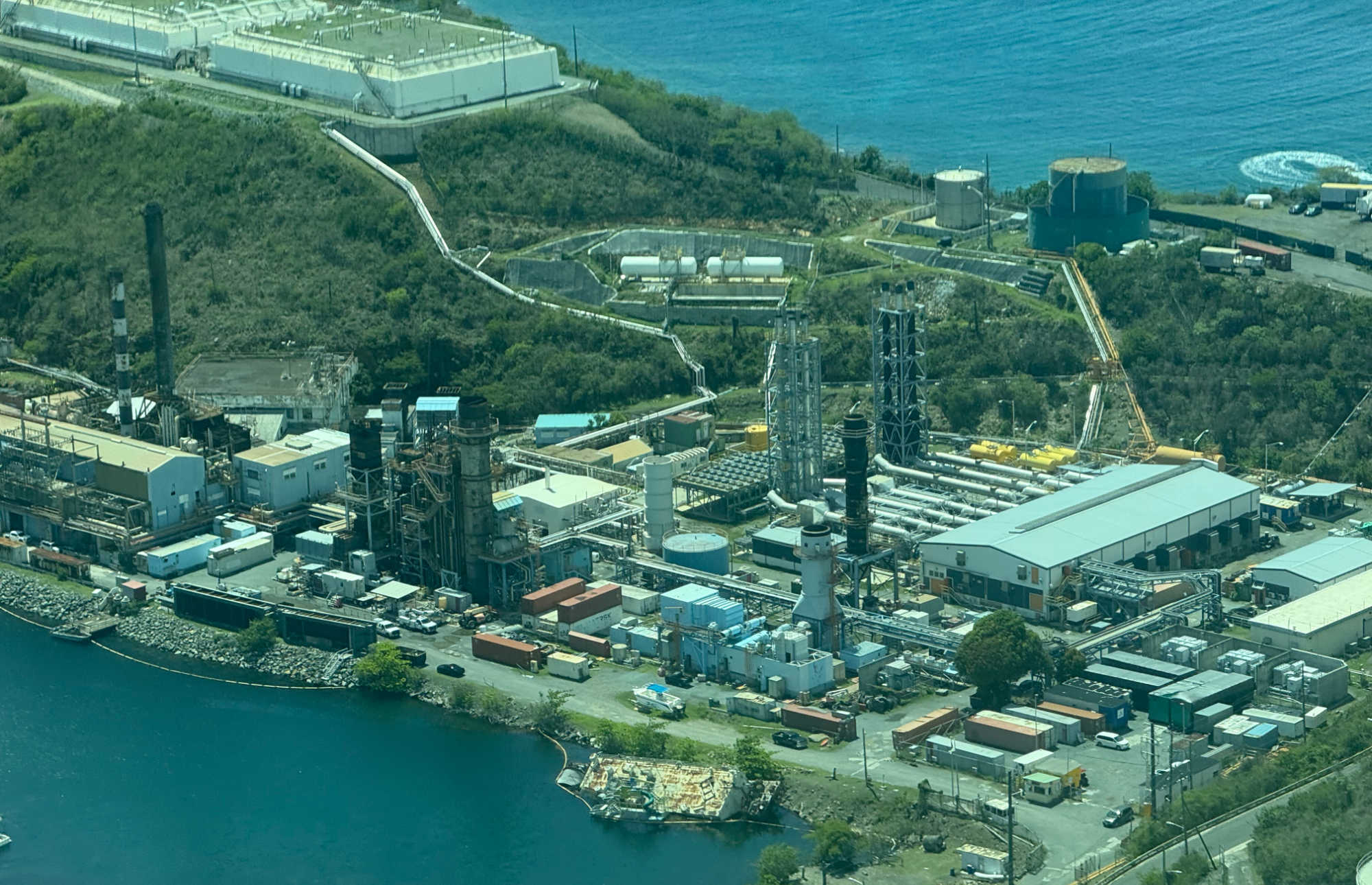
The V.I. Water and Power Authority is seeking an emergency three-cent-per-kilowatt-hour increase in the fuel charge on electric bills, saying it can no longer absorb higher fuel costs as pressure on the utility’s finances continues to build. WAPA estimates the proposal would add approximately $12 a month for a residential customer using 400 kilowatt-hours, if approved by the Public Services Commission.

The request, announced Monday, follows months of Consortium reporting on repeated oil-price spikes, WAPA’s constrained cash flow and the government’s diminished ability to shield ratepayers. WAPA said global fuel costs have risen sharply since it submitted its original fourth-quarter Levelized Energy Adjustment Clause (LEAC) filing in July, creating additional financial pressure that the authority cannot continue to absorb.
Brent crude futures were again trading above $100 a barrel Monday, with Reuters reporting a price of $102.30 at 9 a.m. GMT. The international crude benchmark provides context for the broader energy-market pressure, but it is not the price WAPA pays for delivered propane or diesel, and a movement in Brent does not automatically determine the utility’s LEAC.
The warning signs stretch back to the spring. On March 9, The Consortium reported that Brent had reached an intraday high of $119.50 before retreating, while highlighting Governor Albert Bryan Jr.’s warning that the government was less able than in earlier years to absorb major fuel-price shocks. In April, with Brent around $107, Consortium reporting examined the risk that higher fuel costs could accumulate behind an unchanged LEAC rather than immediately appear as a higher charge on customers’ bills.

The market subsequently eased, with Brent futures quoted at $77.68 during July 13 trading, before renewed attacks on Middle Eastern energy infrastructure helped push the benchmark back above $100 in September. The Consortium’s September 16 reporting put the previous day’s settlement at $108.75 and that Wednesday’s price around $107.92, documenting the renewed rise as the territory faced another period of fuel-cost pressure.
That volatility was unfolding while regulators continued holding WAPA’s fuel charge steady. In June, the PSC accepted the authority’s offer to retain the electric LEAC at approximately 22.22 cents per kilowatt-hour through September 30. Consultant Julius Wright cited the Iran conflict, increased fuel costs and WAPA’s cash shortages, warning against putting the utility in a position where it could not pay vendors and recover fuel expenses.
The PSC extended the same factor again on September 8, maintaining it from October 1 through December 31 while further review of WAPA’s filing and deferred-fuel calculations continued. WAPA had asked to keep the charge unchanged for the time being, even as it indicated that conditions could justify a modest increase.
As The Consortium reported after that meeting, the required review had been delayed by insufficient PSC funding to engage consultants, WAPA’s unpaid assessments and deficiencies PSC Chair David Hughes identified in the filing. WAPA Chief Executive Officer and Executive Director Karl Knight said the authority had been tracking deferred fuel costs since July 2025 and had a balance of approximately $14 million at the end of May 2026. He also said a worsening fourth-quarter fuel outlook was putting pressure on the utility’s liquidity.
The government’s ability to provide a cushion had also narrowed. At his September 28 briefing, Mr. Bryan said the administration was trying to avoid an electricity-rate increase but had exhausted the federal money used to help subsidize bills.
“I know this is hard because we will feel it, too,” said Mr. Knight in Monday’s announcement. He said WAPA must be candid about its financial circumstances and make the decisions needed to keep the system operating and serve customers, while continuing to work toward lower costs and a stronger utility. “This is not where we want to be.”
The LEAC is the fuel-cost component of an electric bill, calculated separately from WAPA’s base electric rate. It can rise or fall as fuel costs change and is not the customer’s total electricity rate. If the PSC approves the full three-cent increase on top of the existing approximately 22.22-cent factor, the fuel-charge component would rise to approximately 25.22 cents per kilowatt-hour.
The effect on individual bills would depend on consumption: the proposed three-cent adjustment equals $12 at 400 kilowatt-hours. WAPA acknowledged that higher electricity bills would be difficult for families, businesses and organizations, even if an increase were temporary.
The request remains subject to PSC review, with the commission able to approve, modify or reject it. Monday’s announcement did not specify a proposed effective date or how long the emergency adjustment would remain in place.

The authority said its longer-term work to reduce power costs includes generation improvements, fuel diversification, renewable energy, battery storage and other infrastructure investments. Those efforts remain part of WAPA’s stated strategy as it seeks regulatory approval to recover more of its current fuel costs from customers.