




Fuel prices remain sharply divided across the U.S. Virgin Islands, with regular gasoline averaging $4.33 per gallon on St. Croix, $5.26 on St. Thomas and $5.54 on St. John in the Department of Licensing and Consumer Affairs’ latest survey. But the numbers arrive at a potentially more consequential moment for motorists: the survey covers the week of September 7 and therefore predates one of the most serious new disruptions to the global oil market — the September 10 attacks that forced Saudi Arabia to shut down its critical East-West oil pipeline.
Brent crude, the international benchmark that helps shape petroleum prices around the world, has surged back above $100 a barrel as the Iran war and widening attacks on Middle Eastern energy infrastructure squeeze global supplies. Brent settled Tuesday at $108.75 a barrel, its highest close since May 19, before slipping to about $107.92 Wednesday as Saudi Arabia moved to offer additional crude through Oman and unexpectedly large U.S. inventories provided some relief. Even after Wednesday's retreat, Brent remains roughly 36 percent above the $79.28 level reported by the Consortium on July 9, when renewed fighting between the United States and Iran was already raising concerns about fuel, freight and electricity costs in the Virgin Islands.
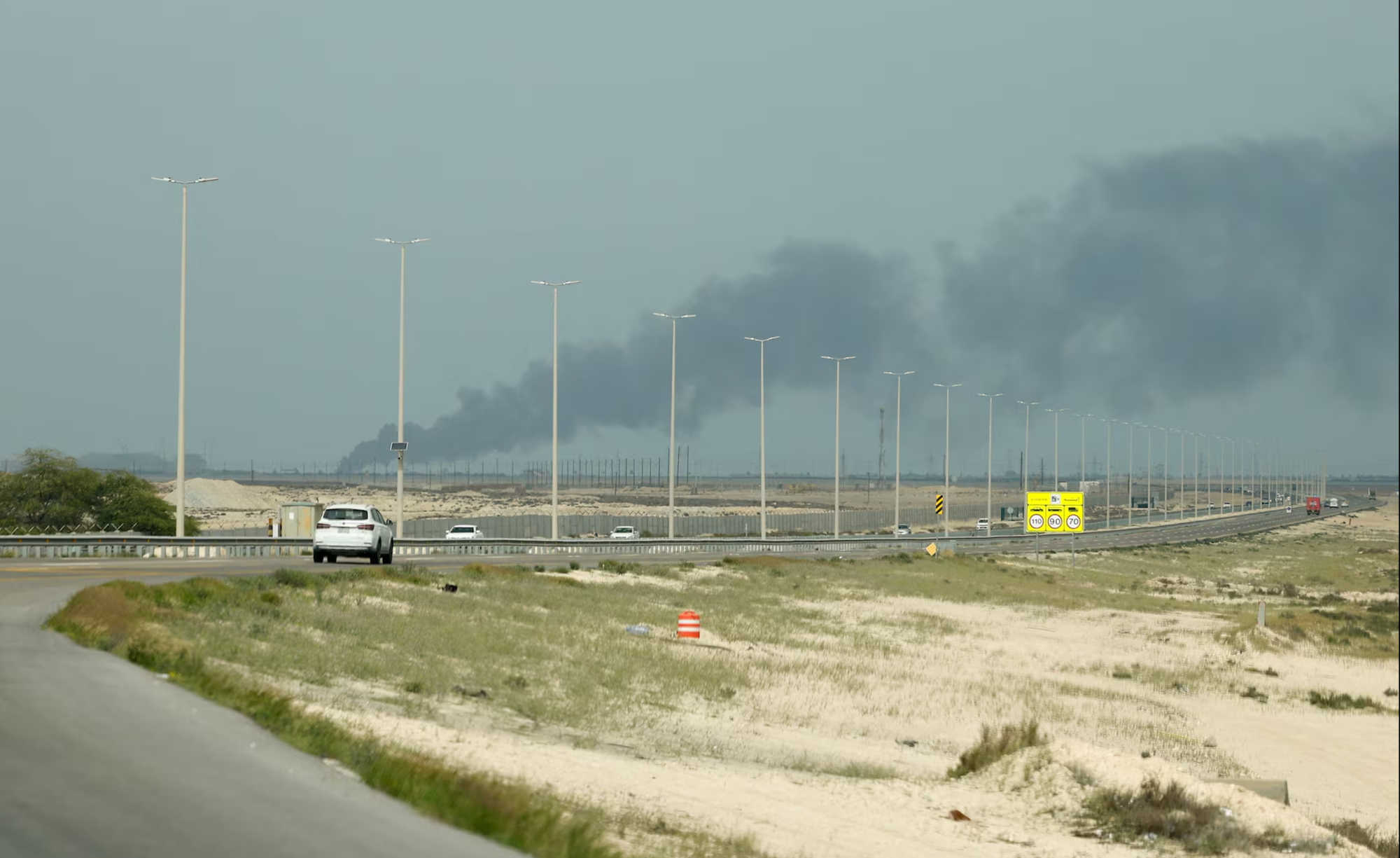
The latest surge followed a rapid escalation against Saudi energy infrastructure. On September 8, Iran-aligned Houthi forces launched coordinated attacks against Saudi cities and energy facilities, including Saudi Aramco installations in Jizan, where satellite imagery showed smoke around the refinery. Saudi authorities said 73 people were wounded in the broader attacks. Brent rose toward $100 as markets assessed the potential damage.
Two days later, Saudi Arabia's East-West Pipeline was struck in multiple attacks in the Riyadh and Madinah regions. The Saudi Ministry of Energy confirmed that the pipeline was shut down as a precaution while technical teams assessed the damage. The 1,200-kilometer route has become particularly important during the war because it allows Saudi crude to travel from the kingdom's eastern oil fields to the Red Sea port of Yanbu without relying on the Strait of Hormuz, where traffic has been severely constrained by the conflict.

The disruption has since moved beyond the pipeline itself. Crude loadings at Yanbu have been suspended, Saudi Aramco has canceled or delayed some shipments to European customers, and the kingdom is attempting to move additional crude through ship-to-ship transfers off Oman. Reuters reported Tuesday that some physical crude cargoes in Europe had climbed above $130 a barrel as buyers competed for alternatives to disrupted Middle Eastern supplies.
There is already evidence of that global pressure in DLCA's own Virgin Islands numbers.
In an August 24 report examined by the Consortium, Sol Petroleum's published wholesale rack rates stood at $3.34 per gallon for regular gasoline, $3.52 for premium and $4.60 for diesel after wholesale prices had fallen between roughly 7 percent and 8 percent over the preceding month. DLCA's newest survey lists those rates at $3.65 for regular, $3.90 for premium and $5.04 for diesel.
That represents an increase of 31 cents per gallon for regular gasoline, or approximately 9.3 percent; 38 cents for premium, or about 10.8 percent; and 44 cents for diesel, or approximately 9.6 percent compared with the rates cited August 24. The reversal is particularly significant because the newest DLCA survey was compiled before the full market impact of the September 10 Saudi pipeline shutdown and subsequent suspension of Yanbu loadings could be reflected locally.
Retail prices, meanwhile, have moved much more slowly on St. Croix and St. Thomas. On August 24, regular gasoline averaged $4.317 on St. Croix; the newest average is $4.327, an increase of only one cent. Premium actually declined from $4.638 to $4.607 and diesel from $5.446 to $5.404. On St. Thomas, the averages are unchanged from the August report at $5.261 for regular, $5.837 for premium and $6.936 for diesel.
St. John has moved more noticeably. Regular gasoline increased from $5.384 to $5.539, a rise of 15.5 cents per gallon. Premium climbed 17 cents, from $5.569 to $5.739, while diesel increased from $6.286 to $6.422.
That separation between movements in international oil, wholesale acquisition costs and prices displayed at local pumps is important when considering what may happen next. The Consortium previously reported that Virgin Islands prices can lag broader oil-market movements because fuel already in storage was purchased at earlier prices, while replacement inventory, shipping charges and the territory's relatively small market affect when changes eventually reach consumers. When crude prices fell earlier this year, that structure meant relief was not necessarily immediate. The same lag can operate in the opposite direction when oil and wholesale fuel prices rise.
The territory also begins from a higher-cost position. During an August Senate hearing, DLCA Assistant Commissioner Horace Graham said the Virgin Islands' geographic isolation, imported-fuel dependence and limited economies of scale contribute to prices that were already substantially above mainland levels before the Iran conflict intensified.
“When global prices rise, the Territory absorbs the same wholesale increases as mainland markets, but does so from a baseline that is already significantly elevated by transportation costs…” Mr. Graham told lawmakers. DLCA said during that hearing that its investigation had also found retail fuel-price increases exceeding wholesale acquisition-cost increases across all fuel categories, while emphasizing that it had not concluded that any retailer engaged in unlawful pricing conduct.
There are also structural differences among the islands. DLCA Commissioner H. Nathalie Hodge previously told lawmakers that most fuel sold on St. Croix is held in an on-island terminal, while St. Thomas and St. John rely on smaller shipments arriving more frequently — a logistics difference the department has cited as one contributor to the persistent district-to-district price gap.
That gap remains pronounced in DLCA's newest numbers. Average self-service regular gasoline stands at $4.327 per gallon on St. Croix, compared with $5.261 on St. Thomas and $5.539 on St. John. St. Thomas motorists are therefore paying about 93 cents more per gallon than the St. Croix average, while St. John's average is approximately $1.21 higher. Premium averages $4.607 on St. Croix, $5.837 on St. Thomas and $5.739 on St. John. Diesel averages $5.404, $6.936 and $6.422, respectively, putting the St. Thomas diesel average approximately $1.53 above St. Croix.
Motorists can still find prices below those averages. On St. Croix, DLCA identified regular gasoline at $4.289 per gallon at East End Gas, Fill & Chill, Five Corner Service Station, Gasaway and G-Max. Five Corner, Gasaway, G-Max and Titan's Service Station offered premium at $4.489, while Titan's had the island's lowest reported diesel price at $4.490.
On St. Thomas, Gasworks Inc. offered the lowest surveyed regular gasoline at $4.949 per gallon. Premium was available for $5.299 at Ali Baba Gas Station, Giant Gas, 1st Stop, 1st Stop East and Racetrack, while Gasworks also had the lowest reported diesel price at $6.499.
On St. John, Racetrack Gas Station posted the lowest surveyed regular price at $5.379 and premium at $5.579. Mid Way Gas had the island's lowest diesel price at $5.999.
The territory's marine-fuel market remains even more expensive. Green Cay Marina and St. Croix Marine Center each listed gasoline at $5.80 per gallon and diesel at $6.50. On St. Thomas, marina gasoline ranged from $5.89 at Oasis Cove Marina to $6.25 at Yacht Haven Grande, while diesel ranged from $6.49 at Saga Haven to $6.95 at Yacht Haven Grande. St. John's Cruz Bay Dock reported gasoline at $6.789 per gallon and diesel at $7.809.
DLCA says its continuing fuel surveys are designed to allow consumers to compare retail prices and wholesale rack rates and identify less expensive stations. The agency also reminded retailers that Virgin Islands law requires stations to continuously display the minimum octane rating, retail price per gallon and applicable tax for each fuel blend offered. Stations must also maintain a functioning air hose for public use during normal business hours, with violations carrying potential fines of up to $100 per offense.

For Virgin Islands consumers, however, the next DLCA surveys may now carry greater significance. The current numbers establish where the territory stood immediately before Saudi Arabia lost a major oil-export route and Brent moved toward $110 a barrel. With Sol's published wholesale rates already having risen roughly 9 percent to 11 percent from the levels reported in late August, the question is whether the latest global oil shock will push the territory's next round of wholesale replacement costs — and eventually pump prices — higher still if the disruption persists.