

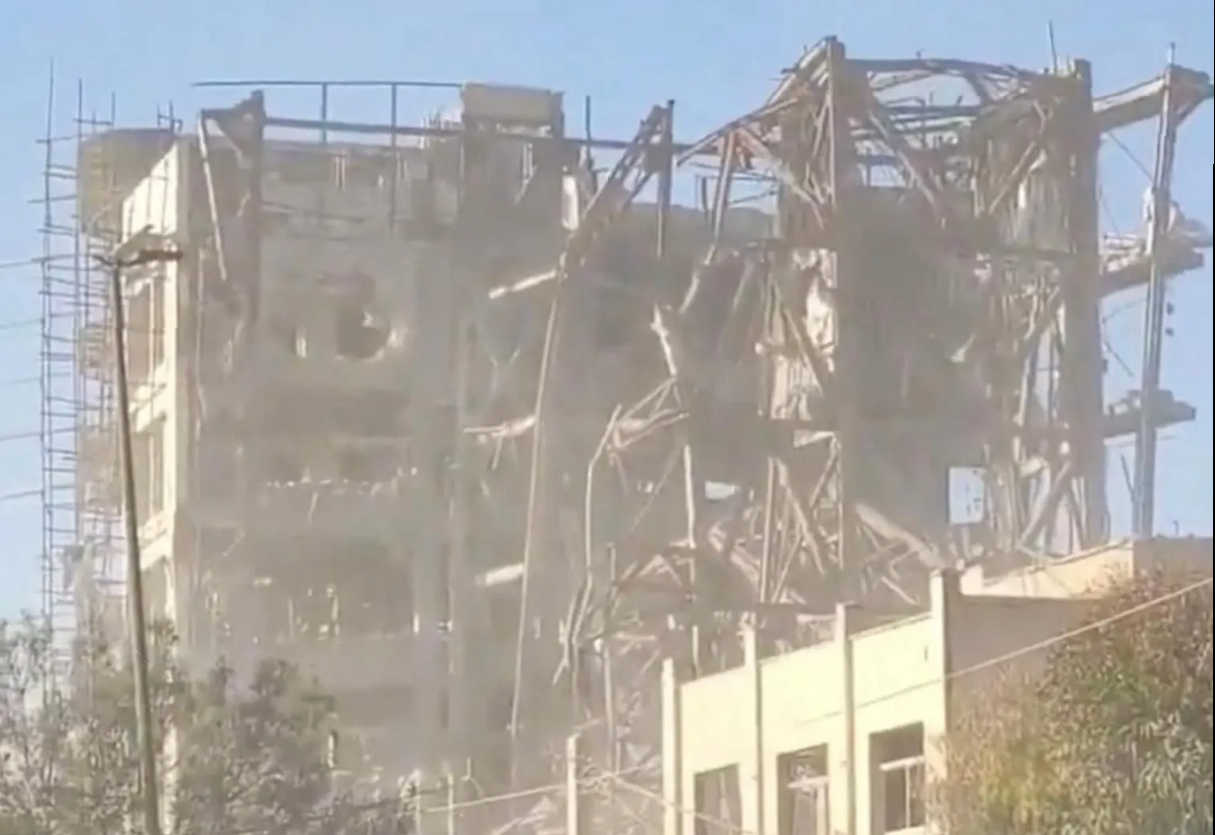
The United States and Israel say their joint military campaign against Iran is rapidly expanding, with senior U.S. officials declaring that allied forces are close to gaining uncontested control of Iranian airspace even as Tehran continues to mount retaliatory strikes across the region.

Speaking at a Pentagon briefing on March 4, Defense Secretary Pete Hegseth said the air campaign has reached a decisive stage. According to Hegseth, U.S. and Israeli forces are approaching complete dominance of Iranian skies.
“Iranian leaders look up and see only death and destruction from the sky all day long,” he said.
Hegseth described the operation as “winning decisively” and “accelerating, not decelerating,” adding that additional bombers and fighter aircraft were arriving in the region to sustain the campaign. He also asserted that the Iranian government would ultimately be unable to withstand U.S. military pressure, stating that the Iranian regime “is toast.”

While the air war intensifies, naval combat has also expanded. The U.S. Navy confirmed that an American submarine torpedoed the Iranian frigate IRIS Dena on March 4 while the vessel was in international waters off the coast of Sri Lanka. The warship was reportedly returning from a multinational naval exercise hosted by India at the time it was struck. The ship carried approximately 180 crew members, and at least 87 Iranian sailors were reported killed.
At the same time, the White House faced backlash over a social media post highlighting U.S. strikes. The official White House account on X released a video montage showing American military attacks on Iran, edited with Call of Duty “killstreak” animations and gameplay-style graphics alongside real combat footage. The post used music and rapid-cut imagery of explosions and missile launches, drawing widespread criticism for presenting active warfare in a video-game style format.
Inside Iran, authorities reported that civilian casualties continue to mount. Iranian officials said another 900 people were killed in the most recent 24-hour period, pushing the civilian death toll since February 28 beyond 1,000. According to Iranian state media, more than 180 children are among the dead. Broadcast coverage in the country has focused heavily on funeral processions for victims killed in strikes on civilian areas.
Despite sustained bombardment by U.S. and Israeli forces, Iran has continued missile and drone attacks against targets across the region. Iranian Shahed drones have reportedly struck several locations tied to U.S. and allied interests, including the headquarters of the U.S. Fifth Fleet in Bahrain, U.S. embassies in Riyadh and Kuwait, and multiple oil and gas installations. Those attacks indicate that Iran retains the ability to conduct retaliatory operations even as allied airstrikes continue.
The conflict has also disrupted global shipping routes. Tanker traffic through the Strait of Hormuz has dropped sharply after Iran declared the critical waterway a war zone and warned that vessels continuing to pass through it could be destroyed. Several maritime tracking services report an 80 percent decline in tanker transits through the strait. Iranian officials claim that at least ten tankers have already been struck after ignoring the warnings.
The widening conflict has drawn international reactions. Russian Foreign Minister Sergei Lavrov said Moscow “will do everything” possible to create conditions that would prevent continued U.S. and Israeli military operations against Iran. Lavrov called for an immediate end to hostilities.

The financial cost of the campaign is also mounting. Analysts estimate that daily operational expenses for the United States are approximately $59 million for major military assets deployed in the region. Some estimates place the first day of combat operations alone at roughly $779 million, while cumulative U.S. expenditures have already surpassed $5 billion. Comparable daily costs for Israel have not been publicly released.