
The U.S. military has significantly bolstered its forces in the Caribbean, with B-52 Stratofortress bombers conducting extended flights off Venezuela's coast and a substantial portion of the Navy's fleet now operating in the region, according to Pentagon officials. On October 15, three B-52s from Barksdale Air Force Base in Louisiana flew for several hours in international airspace south of the country, marking a rare show of strategic airpower in the southern Caribbean.
The deployment, part of a broader counter-narcotics operation authorized by President Donald Trump, includes approximately 10% of U.S. naval assets—encompassing eight surface warships, a nuclear-powered submarine, and support vessels—positioned to interdict suspected drug-trafficking routes. Defense Secretary Pete Hegseth described the maneuvers in a statement as "a clear demonstration of our commitment to regional security," noting their role in disrupting transnational criminal networks.
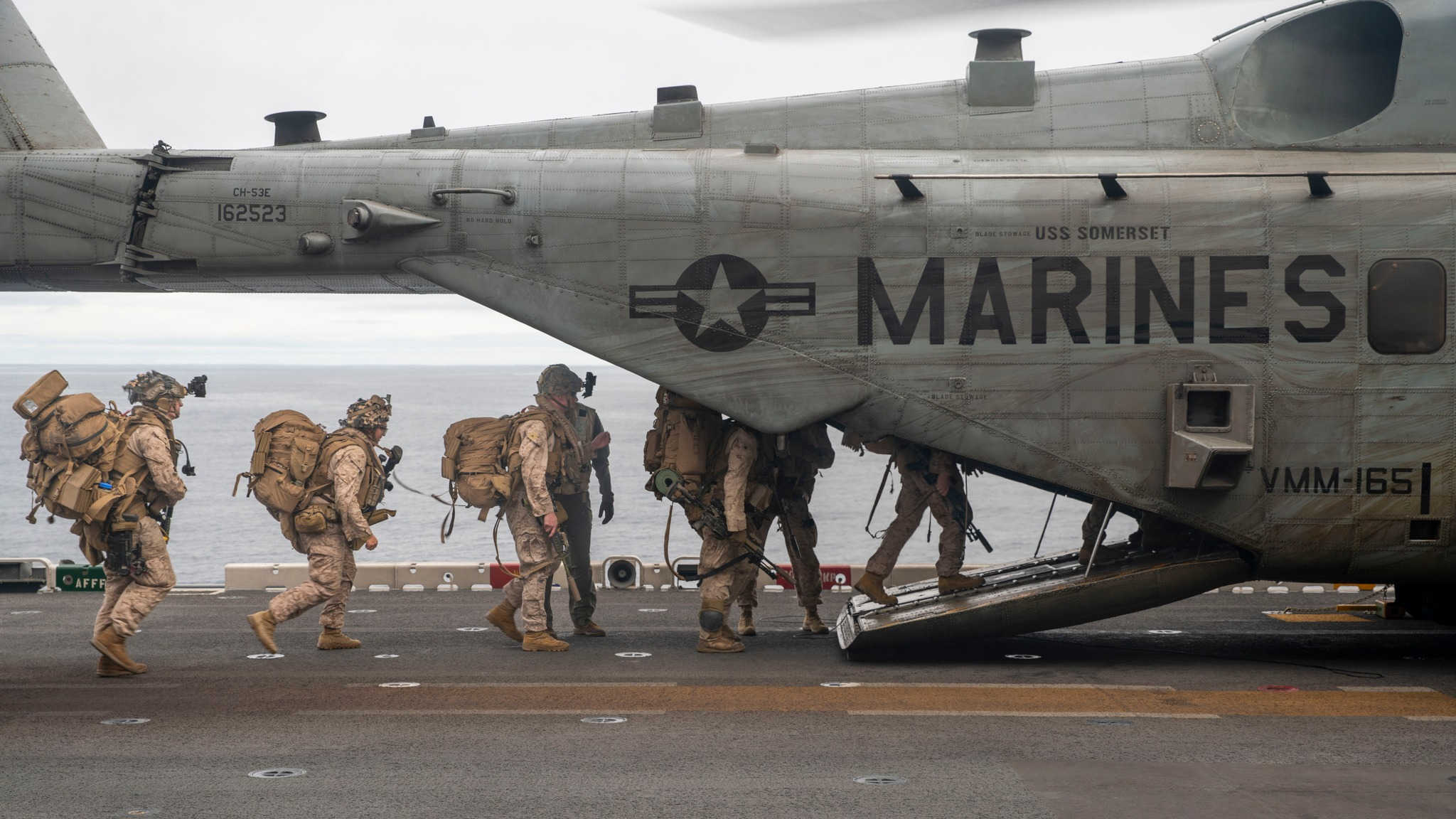
Complementing the aerial and naval buildup, U.S. Southern Command has stationed around 10,000 troops across the Caribbean, with the majority—about 5,500—based at facilities in Puerto Rico, some on St. Croix, and the remainder aboard amphibious ships and support vessels. The Iwo Jima Amphibious Ready Group, including the USS Iwo Jima — which recently spent a few days in St. Thomas, USVI, USS San Antonio, and USS Fort Lauderdale, carries over 4,500 sailors and Marines from the 22nd Marine Expeditionary Unit, capable of executing rapid amphibious operations. Additional assets include the guided-missile destroyers USS Gravely, USS Jason Dunham, and USS Sampson, each equipped with advanced Aegis radar systems and vertical launch cells for Tomahawk missiles, alongside the Los Angeles-class submarine USS Newport News for underwater surveillance. Ten F-35 Lightning II stealth fighters have been forward-deployed to Puerto Rico's air bases, enhancing air superiority and reconnaissance capabilities, as confirmed by Air Forces Southern.
Special operations elements have also been observed in the vicinity, with helicopters from the Army's 160th Special Operations Aviation Regiment conducting training exercises approximately 90 miles off Venezuela's northeastern coast near Trinidad and Tobago. Verified imagery shows at least six MH-6 Little Bird attack helicopters—light, agile aircraft suited for rapid insertions behind enemy lines—and three MH-60 Black Hawk utility helicopters maneuvering over open waters adjacent to oil platforms. A U.S. defense official clarified that these flights were proficiency exercises to maintain readiness, not rehearsals for imminent action, though they align with the administration's expanded authority for covert CIA operations inside Venezuela, disclosed earlier this week. The presence of these assets underscores the multifaceted nature of the deployment, blending conventional forces with elite units for potential high-risk missions.

Further amplifying the operation's stealth profile, the MV Ocean Trader—a converted cargo vessel known as the "Ghost Ship" for its unmarked hull and minimal electronic signature—has been confirmed operating in the eastern Caribbean since late September. Managed by the U.S. Military Sealift Command under Special Operations Command, the vessel can accommodate up to 159 personnel, host helicopters, and launch small boats for covert insertions, blending seamlessly with commercial traffic. Satellite imagery from September 20 placed it southwest of St. Kitts, and a U.S. Navy spokesperson verified its regional assignment without elaborating on specifics. This platform, previously deployed in the Middle East, supports the overall mission by enabling discreet logistics and intelligence gathering, as detailed in unclassified SOUTHCOM briefings.
The escalation follows Venezuelan President Nicolás Maduro's recent overtures to avert confrontation, offering the U.S. a dominant stake in Venezuela's oil, gold, and mineral sectors, alongside commitments to reduce ties with Russia, China, and Iran. Discussions, mediated indirectly through U.S. envoy Richard Grenell, spanned months and included proposals for preferential contracts to American firms and rerouting oil exports away from Beijing. However, Secretary of State Marco Rubio, a staunch advocate for regime change, rejected the terms, labeling Maduro a "fugitive from American justice" in a September statement. Trump echoed this stance during an October 10 Oval Office briefing, stating the proposals failed to address the leader's alleged narco-terrorism ties, effectively halting talks last week, per State Department records.

Maduro's government has responded with heightened defenses, mobilizing over 4.5 million militia members and conducting coastal exercises, while condemning the U.S. actions as "imperialist aggression" in a UN Security Council complaint filed October 12. Regional neighbors, including Colombia and Trinidad and Tobago, have voiced concerns over spillover risks, with Trinidad's Prime Minister Keith Rowley affirming support for U.S. counter-drug efforts but urging restraint. With the buildup persisting—now framed by the Pentagon as a "non-international armed conflict" with designated terrorist groups—analysts from the Council on Foreign Relations note the operation's dual purpose: immediate interdiction of five drug vessels since September, resulting in 27 deaths, and sustained pressure on Caracas. Official updates from SOUTHCOM and the State Department remain the primary sources amid the fluid dynamics.