




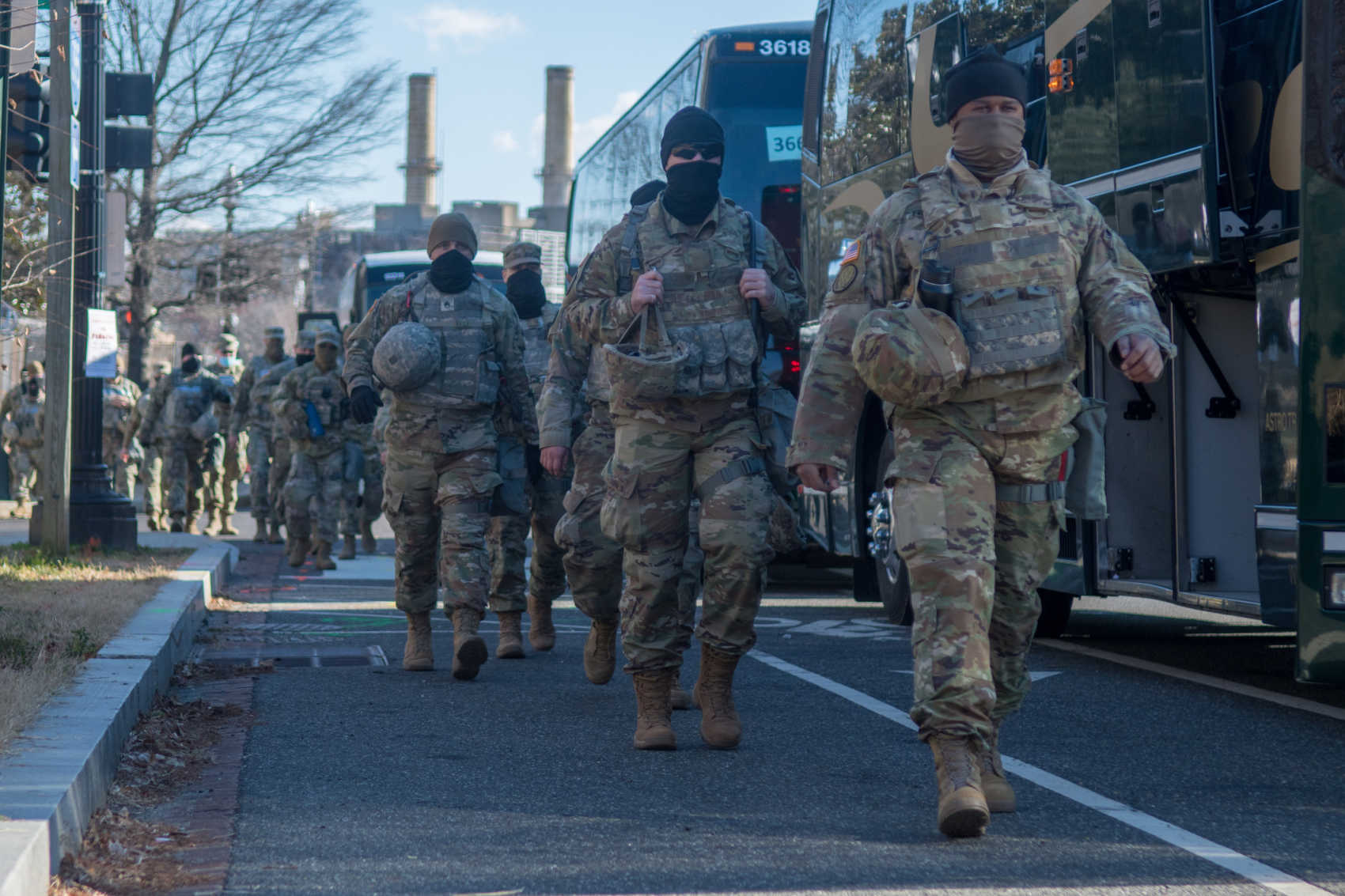
WASHINGTON — The Trump administration has authorized the deployment of up to 1,700 National Guard troops across 19 states to support a nationwide crackdown on illegal immigration and crime, according to multiple verified reports from sources including The Independent and The Economic Times.

The mobilization, set to begin in late August and continue through mid-November, aims to assist U.S. Immigration and Customs Enforcement (ICE) with administrative and logistical tasks, escalating the administration’s immigration enforcement efforts. The State Department also announced a review of over 55 million active U.S. visas to identify violations that could lead to revocations and deportations, targeting issues like overstays and national security threats. “Should such information be found, the visa will be revoked and, if the visa holder is in the United States, he or she would be subject to deportation,” the department told the Associated Press. Exemptions apply to lawful permanent residents, dual nationals traveling on passports from non-restricted countries, refugees, asylees, and immediate family of U.S. citizens (spouses, minor children, or parents with clear proof of identity).
Despite these exemptions, the visa review’s scope has created uncertainty for many visa holders, including students and professionals.The National Guard deployments, authorized under Title 32 authority, keep troops under state control while supporting federal missions, avoiding violations of the Posse Comitatus Act, which limits military involvement in domestic law enforcement. The states involved include Alabama, Arkansas, Florida, Georgia, Idaho, Indiana, Iowa, Louisiana, Nebraska, Nevada, New Mexico, Ohio, South Carolina, South Dakota, Tennessee, Texas, Utah, Virginia, and Wyoming, with Texas slated for the largest contingent.
Guard members will perform non-law-enforcement tasks such as data collection, fingerprinting, DNA swabbing, photographing detainees, and clerical work to support ICE’s processing of a record 59,000 detainees, 70% of whom have no criminal convictions, per Trac Reports. In Florida, 25 of 200 authorized Guard members are already active across nine ICE facilities, with Virginia planning to deploy 60 troops by early September and Iowa sending 20 for clerical support.

The Department of Homeland Security requested this support to manage increased detentions resulting from President Trump’s immigration policies, which include a June 2025 proclamation suspending visas for 19 countries with high overstay rates, such as Haiti and Iran. Social media vetting has also led to 1,500 student visa revocations, some later reversed after legal challenges.
Supporters, including administration officials, argue the deployments enhance public safety and immigration enforcement. A June 2025 CBS News/YouGov poll found 54% of Americans approve of the deportation program, with 93% of Republicans supporting it, particularly for removing dangerous criminals. “We’re going to make our cities very, very safe,” Trump said, signaling potential expansions to cities like Chicago and New York.
Critics, including the Brennan Center’s Joseph Nunn, express concern that using the Guard for immigration tasks diverts resources from disaster response and risks militarizing domestic spaces. “If you’re deploying the military domestically to assist with immigration enforcement, you are pulling personnel resources and attention away from the military’s core national security responsibilities,” Nunn said. A Pew Research Center poll from June 2025 shows 47% disapprove of the administration’s immigration approach, with 50% opposing its deportation methods, particularly among Democrats (81% disapproval). A July 2025 CNN poll found 55% believe the administration has gone too far, though 60% support deporting criminals, per a Harvard CAPS/Harris poll.

Legal challenges are mounting, with the ACLU blocking related policies like mass visa revocations. Logistical constraints, including the gradual rollout of deployments, may limit the operation’s scale, with only a fraction of authorized troops currently mobilized. Vermont has declined to participate, and states like Missouri and Utah are still reviewing ICE requests.