




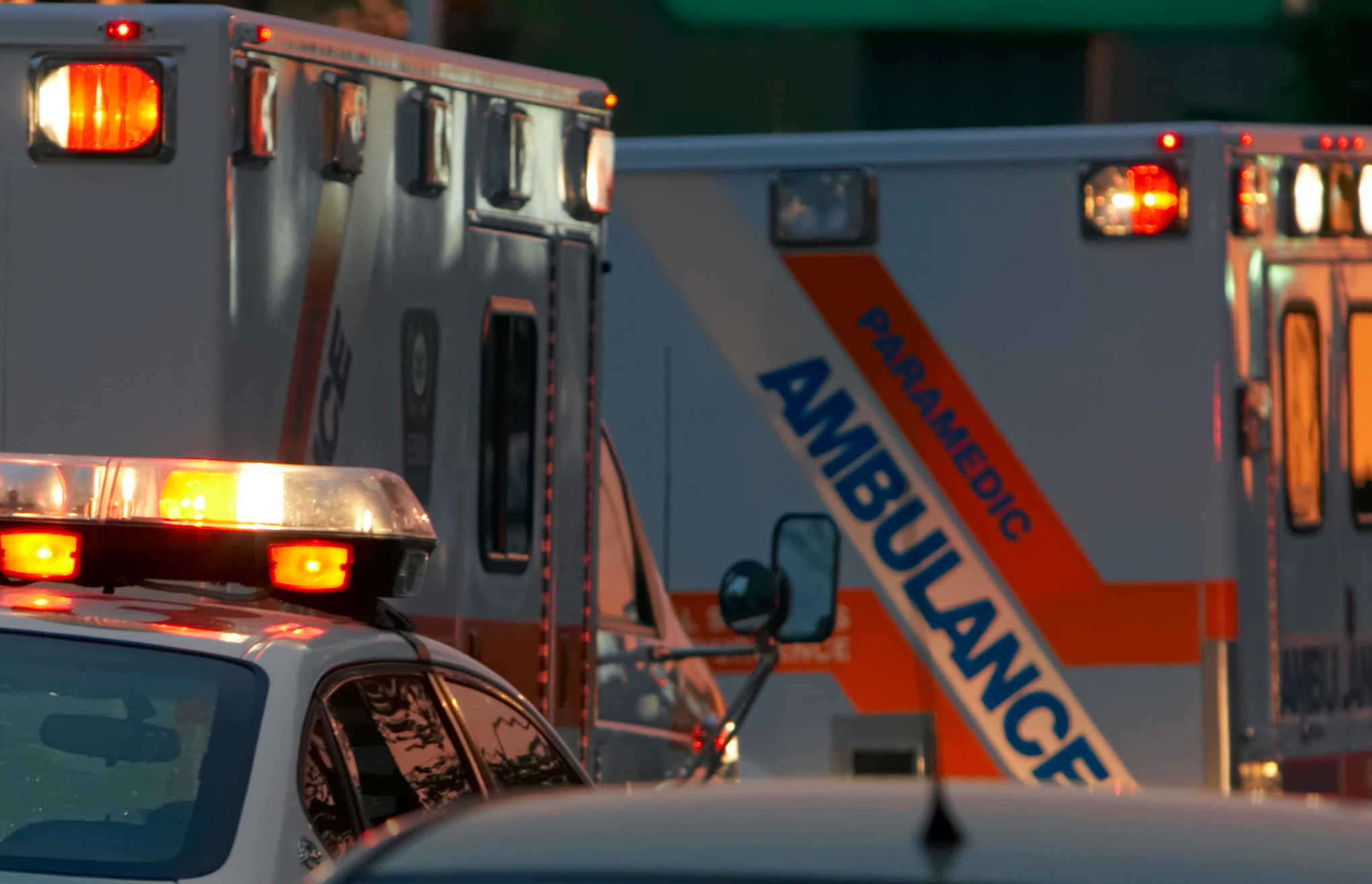
ST. CROIX — Legislation establishing comprehensive licensing, training, vehicle safety and medical oversight requirements for emergency medical services across the Virgin Islands advanced Thursday, with the Department of Health supporting the proposed regulatory framework while cautioning that additional personnel, technology and funding will be needed for implementation.

Bill 36-0346, introduced by Senator Marise James, would amend Title 19 of the Virgin Islands Code to establish the Emergency Medical Services System, giving the Department of Health clearer statutory authority to regulate EMS personnel, agencies, emergency response vehicles and related operations.
Ms. James told the Committee on Homeland Security, Justice and Public Safety that the legislation was originally drafted in 2019, when discussions about integrating fire and emergency medical services were underway. The proposal has since been revised to address changes in emergency medical care and the territory's healthcare needs.
According to the senator, the existing statutory framework dates to 1979 and “does not provide a comprehensive statutory framework necessary to govern the EMS system we have today.”

She explained that the complexity of emergency medical work requires personnel to undergo continuing education, maintain current certifications and meet professional standards that evolve with medical technology and patient needs.
The bill would establish requirements for personnel and agency licensing, education, clinical standards, vehicle certification, medical supervision, data collection, quality improvement and regulatory enforcement.
It would also require the Department of Health to continually assess the agencies, providers and other components under its oversight to improve patient care, adapt to changing needs and support the recruitment and retention of qualified EMS professionals.
Health Commissioner Justa Encarnacion supported the proposal, explaining that it would formalize several regulatory practices already being carried out by the department.
Responding to Senator Avery Lewis, Ms. Encarnacion said the legislation would give the department the authority to “complete that process” of regulation, rather than relying on memoranda of understanding between the Department of Health, Virgin Islands Fire and Emergency Medical Services and other agencies.
VIFEMS Director Antonio Stevens agreed with that approach.
Under the proposed legislation, the Department of Health would serve as the lead EMS regulatory agency, overseeing professional competency, agency compliance, vehicle and equipment requirements, medical direction, emergency preparedness and continuous quality improvement.
The measure would also require the development of a territorial EMS system plan assessing existing services, resources, performance objectives, implementation schedules and costs. The plan would be completed within one year, with updates required twice annually.
Jacqueline Greenidge-Payne, acting director of EMS, described the bill as “critical to the function of the office of EMS.”
She explained that the territory needs a comprehensive statutory framework to pursue participation in an EMS compact, an arrangement that is not currently available to the Virgin Islands. Ms. James also said the legislation could create additional opportunities to obtain grants supporting emergency medical services.
Implementation Will Require Additional Resources
Although the Department of Health supports the proposed framework, Commissioner Encarnacion cautioned that establishing and maintaining the regulatory system would require additional resources.
The bill authorizes regulatory fees associated with EMS agencies, emergency response vehicles, providers, training facilities and instructors to help recover the costs of oversight.
Those fees could help support ongoing operations, but the commissioner said startup expenses and recurring financial obligations must also be considered.
“Successful implementation will require adequate staffing, technology training, inspection capacity, data infrastructure, administrative support, and operating resources,” Ms. Encarnacion testified.
The department would need sufficient resources to carry out licensing, inspections, enforcement and data collection while maintaining oversight of emergency medical services throughout the territory.
Ms. Encarnacion confirmed the department's support for the legislation, “subject to appropriate technical and operational amendments.” Ms. James said she would consider the recommendations as the bill moves through the legislative process.
The senator also indicated that companion legislation establishing a board responsible for certification and related functions is expected to be introduced.
Senator Clifford Joseph, chairman of the Committee on Homeland Security, Justice and Public Safety, described the measure as “raising the bar” on EMS regulatory oversight.

The committee voted favorably on Bill 36-0346, sending it to the Committee on Rules and Judiciary for further consideration.