




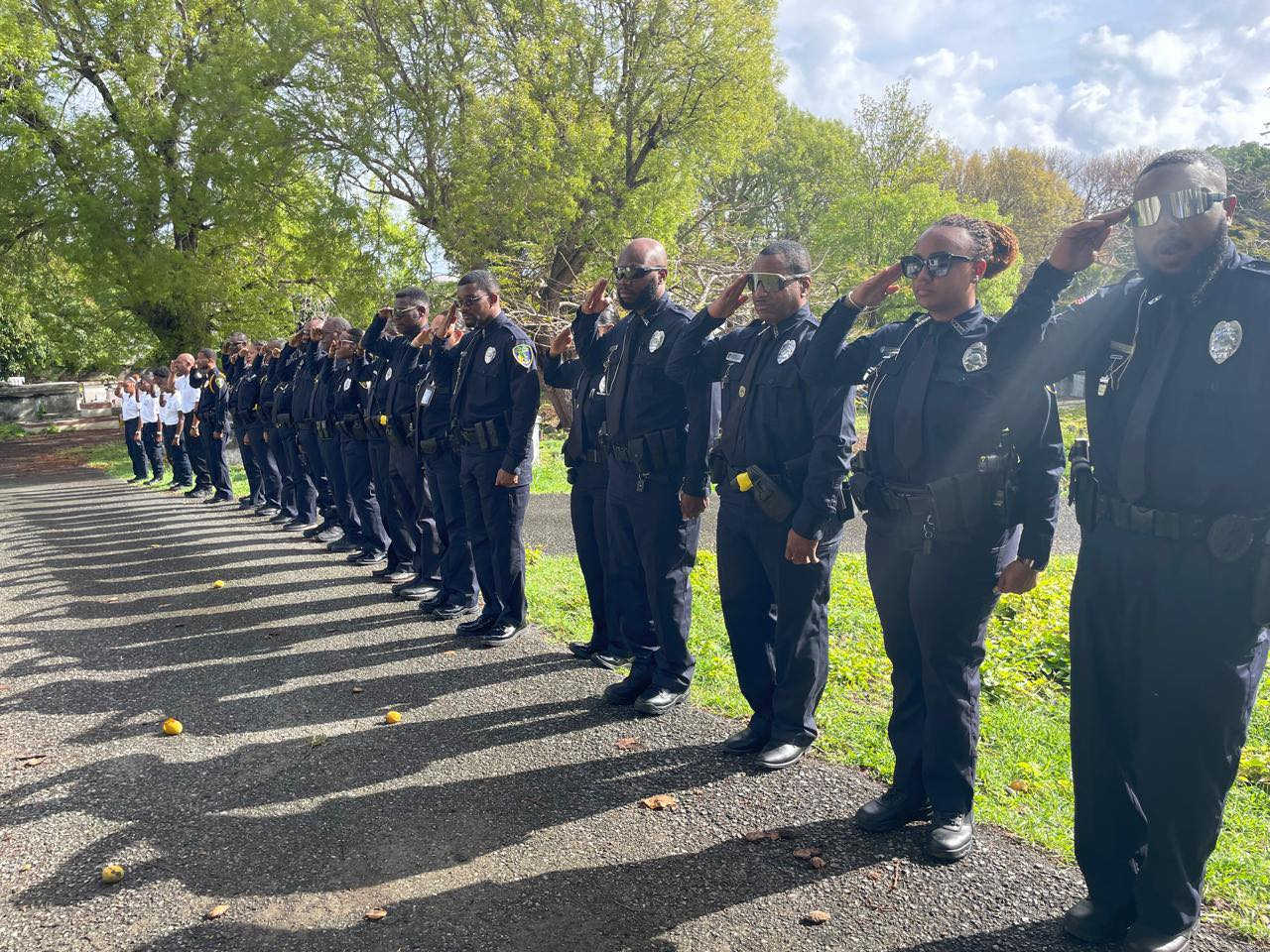
Legislation to establish a part-time police reserve unit within the V.I. Police Department advanced Thursday, with lawmakers and police officials agreeing that additional personnel could strengthen public safety while raising questions about how the program would be funded and whether reserve officers should be compensated.

Bill 36-0318, sponsored by Senator Kenneth Gittens, would amend Title 23 of the Virgin Islands Code to establish a reserve unit capable of providing additional personnel during emergencies, staffing shortages and major public events.
Mr. Gittens described the measure as one that “offers a practical approach to strengthening public safety and expanding the Virgin Islands Police Department's capacity to respond to the needs of our community.”
Unlike regular police officers, reserve personnel would not serve on a full-time basis. Instead, they would be available for deployment when additional assistance is needed. Officers would be required to obtain Peace Officer Standards and Training (POST) certification, complete refresher courses and undergo additional training where necessary.

The proposal received support from Dwayne Richards, VIPD's director of human resources, who told the Committee on Homeland Security, Justice and Public Safety that “public safety demands can fluctuate significantly, while permanent staffing levels cannot always be adjusted with the same speed or flexibility.”
Mr. Richards said the unit could include qualified retired officers, allowing VIPD to draw on their experience while providing mentorship to less experienced personnel. Their participation could also ease overtime demands and reduce fatigue among full-time officers.
However, he cautioned that the reserve unit should function as a “force multiplier, not a substitute for full-time police officers.”
Mr. Richards emphasized that reserve personnel must meet the same professional standards as regular officers, including background checks, training and established rules governing their conduct and authority.
“Reserve personnel must be subject to clearly established qualifications, background investigation, training requirements, policies, and standards governing their conduct and exercise of police authority,” he said.
For retired officers returning to service after an extended absence, VIPD would require updated background investigations, including checks for possible criminal activity outside the territory.
Glenston McIntosh, executive director of POST, also supported the proposal in written testimony. He emphasized that POST “must retain authority to determine certification and the equivalency of credentials from other jurisdictions,” and recommended joint implementation by VIPD and POST.
Funding and Compensation Remain Unresolved
Although the bill establishes a framework for the reserve unit, it does not provide funding for its implementation. No appropriation for the proposed program is included in VIPD's fiscal year 2027 budget.
Mr. Gittens suggested that the department examine whether some of its existing overtime expenditures could be redirected toward training, deployment and operating costs.
Mr. Richards acknowledged that funding would be necessary even if reserve officers served voluntarily. Background screening, certification, ongoing training, uniforms, equipment, supervision and applicable insurance or injury coverage would all carry costs.
If the department decides to compensate reserve personnel, those expenses would also have to be incorporated into its budget.
Mr. Richards said VIPD would work with the Office of Management and Budget and other stakeholders to “identify these costs and ensure sufficient funding to establish and sustain the program.”
Lawmakers differed on whether reserve officers should be paid.
Senator Ray Fonseca argued in favor of compensation “because they're performing a real public duty.” Mr. Richards explained that payments, if approved, could be calculated on a per-day basis.
Senator Novelle Francis, however, recommended a volunteer system, particularly for retired officers who might face changes to their tax obligations if they begin receiving additional income.
Mr. Francis suggested that reserve personnel could take on less demanding assignments, including desk duties, traffic control, parking enforcement and surveillance camera monitoring, freeing full-time officers to concentrate on frontline policing.
He described those assignments as “the mundane responsibility of law enforcement: holding a desk, traffic control, parking situation, monitoring, surveillance cameras.”
The senator acknowledged that additional planning would be necessary before the department could implement the program, saying “there's much work to be done on this particular measure as it gets to the police department in terms of exactly how they will be able to retrofit it.”
Mr. Gittens maintained that the legislation would give VIPD another means of strengthening its operations and responding to additional staffing needs.

Following a favorable committee vote, Bill 36-0318 advances to the Committee on Rules and Judiciary for further consideration.