

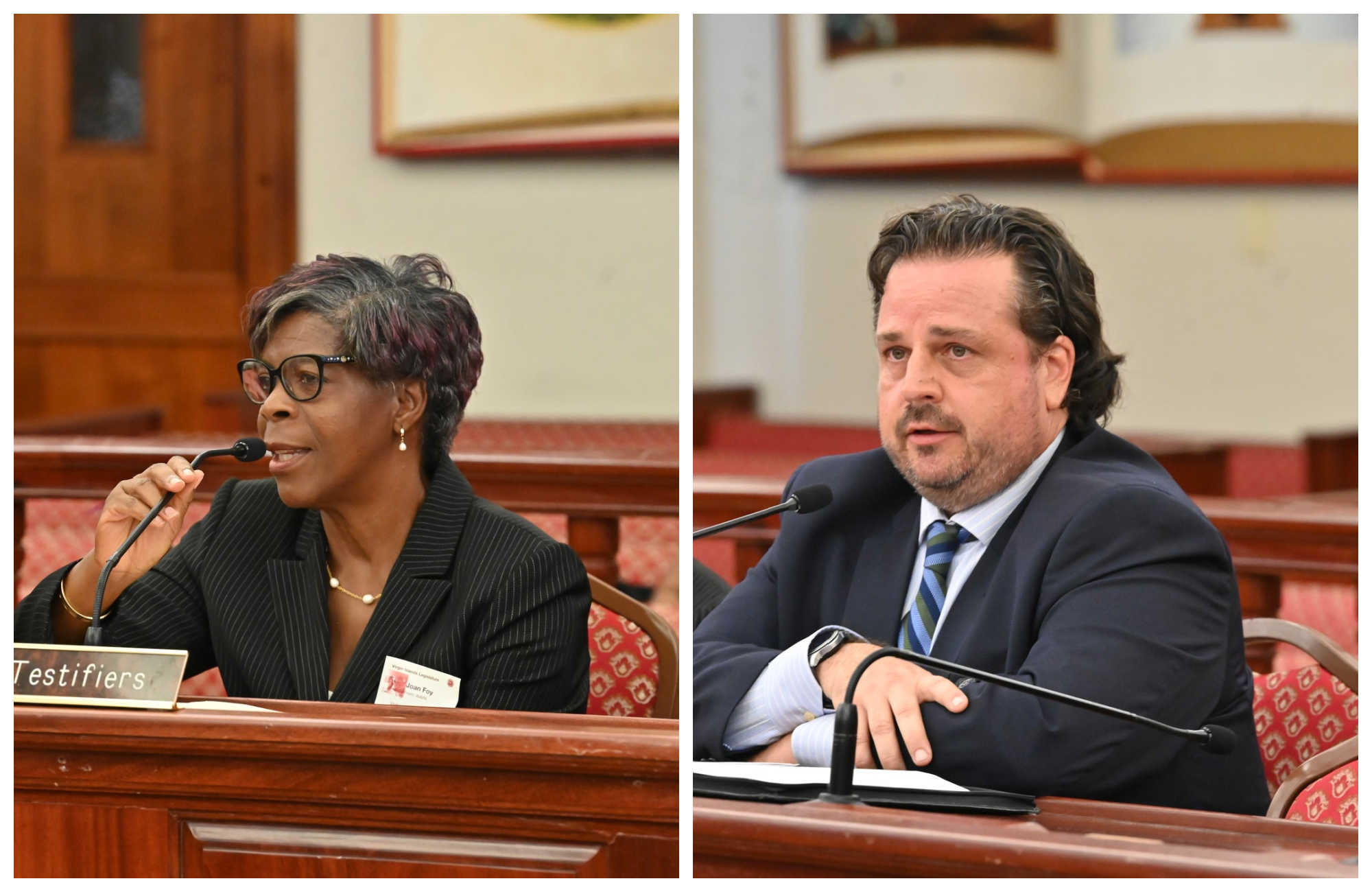
The Senate Committee on Rules and Judiciary on Thursday approved two nominations from Governor Albert Bryan Jr. for two boards that are critical to the territory’s development.

First up for consideration was Joan Foy’s nomination to the V.I. Water and Power Authority’s Board of Directors. A lifelong professional, Ms. Foy has served the Virgin Islands in numerous capacities. Most relevant to her nomination, however, was her tenure as WAPA’s financial analyst and later the manager of budget and cash. Ms. Foy testified that she was “instrumental in obtaining the authority's first line of credit with First Bank and Banco Popular.”
She also contributed to WAPA’s first strategic plan. Ms. Foy would later become the special assistant to the chief financial officer and was tasked with “identifying financial and production issues and finding workable solutions,” among other responsibilities.
If confirmed, Ms. Foy promised that she would “leverage my credibility…to influence positive changes that benefit both the authority and the Virgin Islands community.” She presented the Legislature with several goals, including assisting with “determining the most efficient use of the limited production power generation equipment available to the authority until new sources of generation are fully online.” Ms. Foy is also interested in adopting cost-benefit analyses for all projects over $1 million and reducing cost overrun on projects by “requiring monthly updates on projects approved by the Board.”

She also wants to “streamline the authority personnel to keep pace with declining sales and revenue, and acquire property for the construction of the authority’s own administration building.”
Lawmakers were impressed by Ms Foy’s experience and were confident that she would play a crucial role in ensuring the authority’s eventual viability.
Senator Alma Francis Heyliger encouraged her to be mindful of why she has been nominated to the Board. “We've had situations where the board just went along and signed off on documentation and didn't have an explanation as to how all these cost overruns happened when it was their responsibility,” she lamented.
Ms. Foy has affirmed that, although she is only one member, she will “try to make it as strong as possible.”
Second in line to defend his nomination was Mark Wiechnik, identified by the governor for the Virgin Islands Historic Preservation Commission. Having relocated to the territory approximately nine years ago, Mr. Wiechnik owns two historic properties in St. Thomas, including Hotel 1829, an “iconic” property that was shuttered for years. He told lawmakers that his family has done “much of the work ourselves to restore this historic gem” and works closely with the HPC to ensure the renovations are in line with local regulations. He affirmed that the HPC has not been a “hindrance to progress, but rather a guardrail that guides our renovations to ensure that it honors the history of the property and of downtown Charlotte Amalie.”
Mr. Wiechnik’s experience is not limited to simply owning historic properties. He informed lawmakers that on the mainland, he worked as an attorney specializing in “construction defect litigation.” Therefore, he is “familiar with building codes, architectural plans, reading and interpreting statutes and regulations.”
His priority is to “ensure that the upcoming significant work that is to be taken downtown over the next few years is done properly, efficiently and in a cost-effective manner.” Mr. Wiechnik noted that new technology “can and should be incorporated into our island construction.” He is also keen on rehabilitating HPC’s reputation. “Our goal should be to work with members of the public who are actually trying to do the right thing and renovate some of these damaged and derelict properties downtown,” he said.
Mr. Wiechnik informed lawmakers that there are “alternative building materials” that can be used to reduce the cost of rehabilitation. The Historic Preservation Commission often employs stringent regulations, including stipulating the materials that should be used to rebuild or rehabilitate properties. The perceived strict approach of the HPC has not always won it public favor, although the Commission has recently been vocal in noting the preponderance of approvals that result from applications.
Mr. Wiechnik told committee chair Senator Carla Joseph that he wants the Commission to be regarded as “not just a judgmental group; that we’re more of an advisory board to help them.”

With lawmakers sufficiently satisfied by the two individuals, their nominations were approved and have both been forwarded to the upcoming Legislative session.