



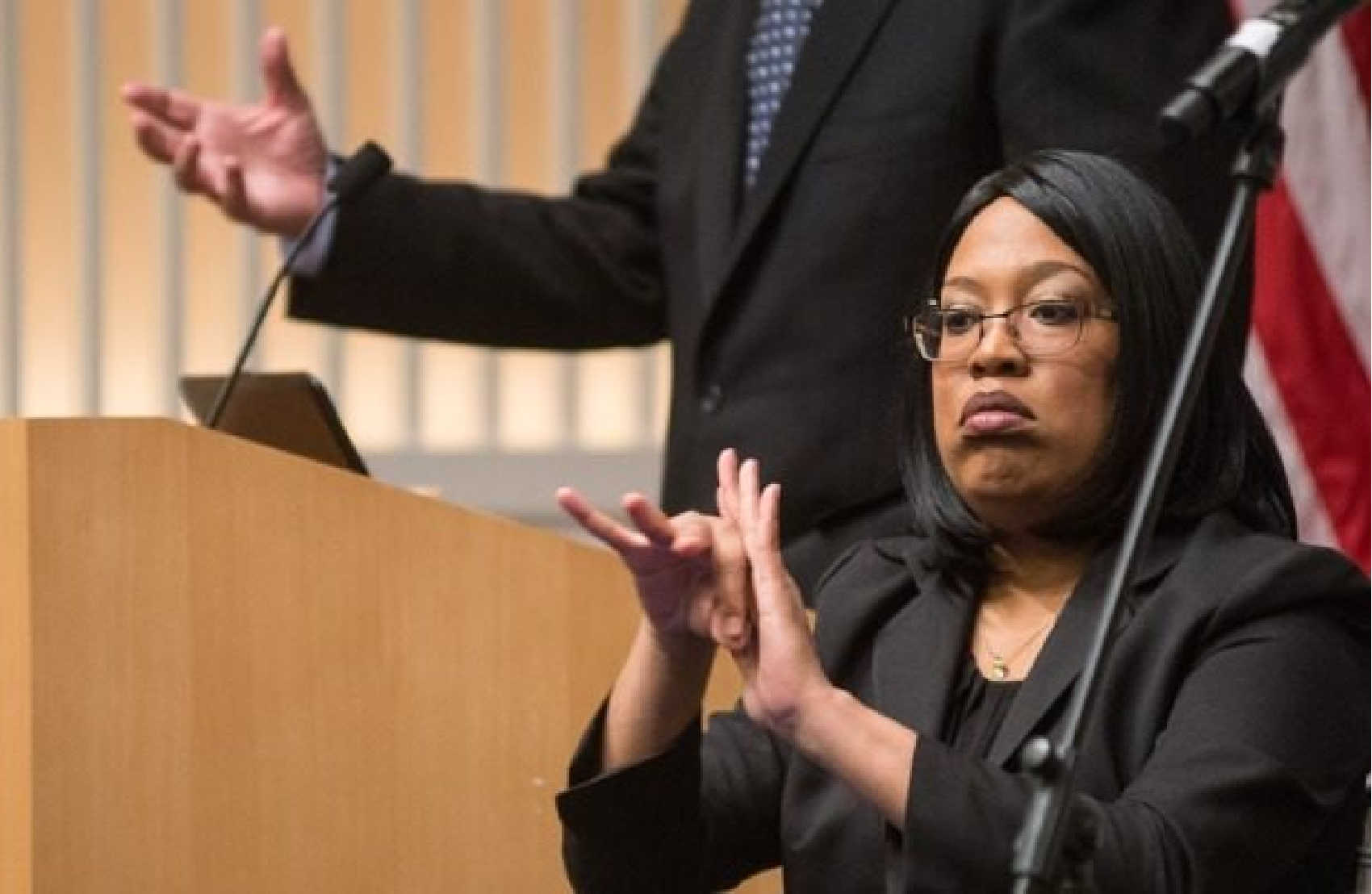
A proposal to require sign language interpretation at all official government functions and broadcasts was put on hold Tuesday as lawmakers examined the practical and financial challenges of implementing such a mandate. Bill 36-0190, sponsored by Senator Angel Bolques Jr., came before the Senate Committee on Government Operations, Veterans Affairs, and Consumer Protection, where senators expressed support for its intent but raised concerns about cost, staffing, and the bill’s readiness.

Senator Bolques said the absence of sign language services for deaf and hard of hearing Virgin Islanders has prevented full civic participation. “This exclusion harms civic engagement, undermines basic fairness, and denies equal participation in our democratic process,” he told colleagues. Citing data from 2010 indicating over 2000 Virgin Islanders had hearing disabilities, the senator said, “Now in 2025 I venture to say that those numbers are undoubtedly higher.” He argued that thousands are “missing crucial government information” because broadcasts lack American Sign Language interpretation, noting that “these are our family members, co-workers, elders, and students.”
Bolques also expressed concern that the lack of accommodation “leaving us all out of full compliance with federal standards,” pointing to the Americans with Disabilities Act requirement to “ensure effective communication for individuals with disabilities.” The measure calls for at least one interpreter per district.
Testimony in support of the bill came from Julian Henley, the senior territorial ADA coordinator for the Government of the Virgin Islands. He called the legislation “not only timely, but also essential,” saying that during disasters, when important warnings and bulletins are issued, “our deaf community often receives little or no information, leaving them vulnerable and uninformed.” Henley warned, however, that the bill does not specify how it will be funded. Without a clear financing plan, he said, the proposal “risks becoming an unfunded mandate and may face delays in implementation.”

Henley also noted the territory’s limited pool of interpreters—only six or seven—and said most work for the Department of Education or hold other jobs, limiting availability. Local interpreters, he said, are important to avoid “cultural communication barriers that out of state interpreters often misinterpret.” He suggested modifying the bill to permit the contracting of qualified interpreters even if they do not hold a business license.
Monique Magras-Butte, executive director of the Virgin Islands Association for Independent Living, supported the bill but questioned its long timeline. The measure would not take effect until September 30, 2027. “I would have liked to see it happen in the next year,” she told lawmakers, noting that “The ADA went into law in July 26, 1990. Here we are in 2025 still playing catch up.” She described the legislation as “a step towards a more inclusive Virgin Islands.”
Shamika Thomas, executive director of the Virgin Islands University Center for Excellence in Developmental Disabilities, said ASL benefits a broader range of residents, including individuals with medical conditions affecting speech, auditory processing, neurological function, or communication comprehension. Closed captioning alone, she argued, is insufficient. “Particularly for complex government communications, the inclusion of a certified ASL interpreter ensures that information is not just delivered, but is effectively received by all members of our community.”
Chanel Lawrence, a deaf resident who operates a tour guide company, described the assumption that deaf individuals can rely on lip reading or hearing aids as a “dangerous misunderstanding.” She said that at public events and government meetings she often encounters no interpreter or an unpaid volunteer. “The deaf community is excluded from vital information and opportunities,” she told senators through an interpreter.
VITEMA Director Daryl Jaschen supported the bill’s intent but offered an additional option for situations where a live interpreter is not available. He said real-time conversion of spoken words into captions, produced by a stenographer using specialized software, could provide “instantaneous speech to text translation.”
Throughout the hearing, lawmakers questioned whether the Virgin Islands has enough qualified interpreters to meet the requirements of the bill and how the services would be paid for. Henley said salaries can range from $63,000 to nearly $100,000 depending on skill and job duties. “We have not discussed budgetary constraints and how we would go about making sure that people are compensated for their work,” Senator Franklin Johnson noted.
Bolques responded that “accessibility is not an add-on, it is part of the cost of running this government,” adding that the federal government is currently being sued for failure to provide ASL interpreters. He said the cost in the Virgin Islands would fall under the Office of the Governor’s budget. Henley stated that Governor Bryan “is in full support” of the proposal, though Johnson requested that such support be provided in writing.
Committee Chair Senator Kenneth Gittens said the bill appeared insufficiently prepared for legislative review. “All that groundwork should be done before we get here in this setting,” he said, pointing out that cost analysis, staffing levels, and even the scope of interpreter requirements were still being debated. Some testifiers said each island would need a minimum of two interpreters—rather than one per district as written—which would further increase costs.

While senators expressed broad agreement with the bill’s intent and acknowledged the need to improve access for deaf and hard of hearing residents—not only during emergencies but across everyday government activity—they ultimately voted to hold Bill 36-0190 in committee until outstanding issues are addressed and the legislation is ready for further consideration.