




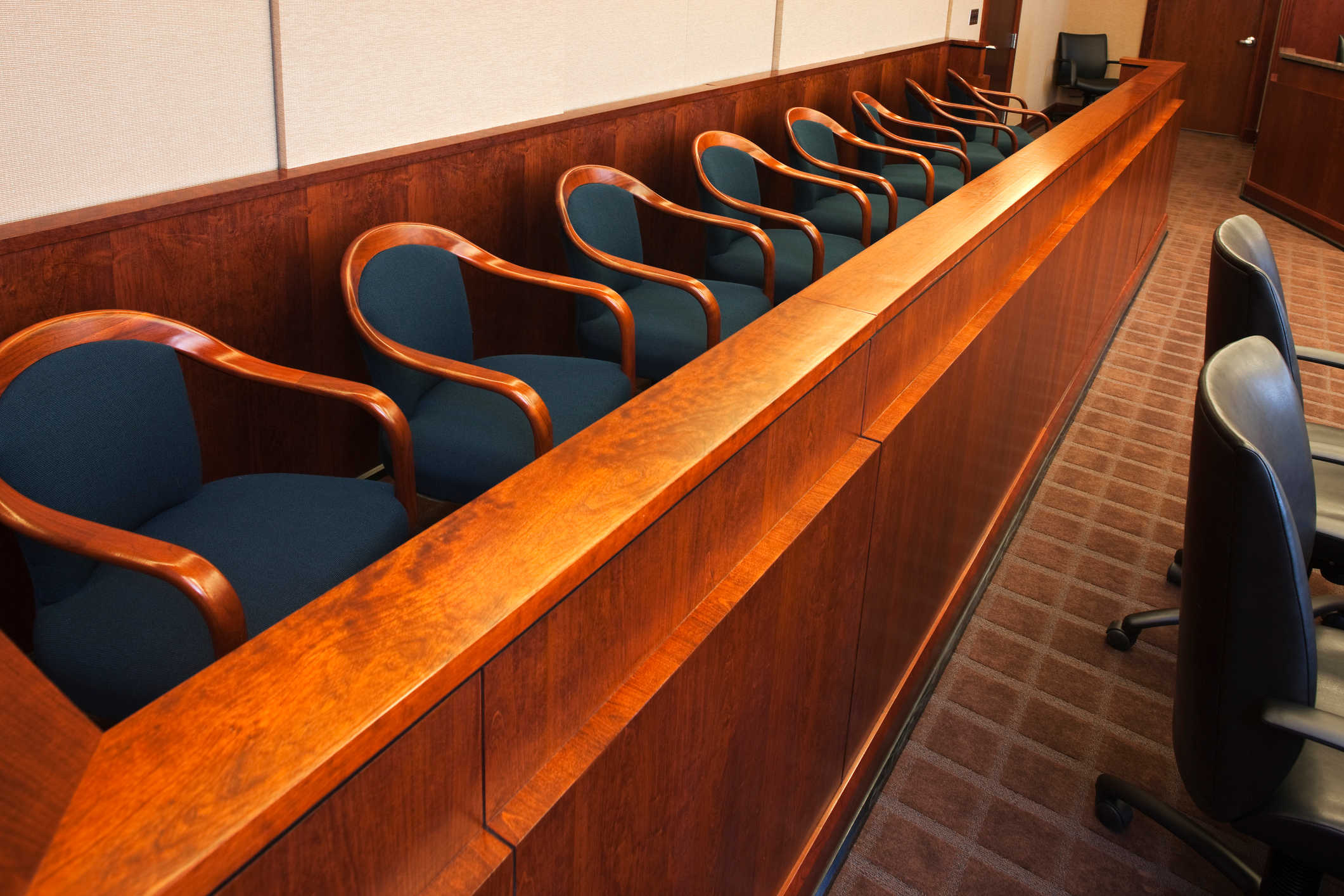
On Friday, members of the Senate Committee on Rules & Judiciary voted to advance a measure seeking increases in jury and witness compensation to the next stage in the legislative process.

Currently, federal law stipulates that jurors are offered $50 per day and witnesses $40, however under local statute, enacted in 1957, payments for witnesses were a mere $4 and $8 per day. Local courts, established in 1976, pay jurors $40 per full day of service, with $5 per day to defray transportation costs.
Bill 35-0121 would raise these rates to $80 per day for jurors impaneled for trial payable in $40 half-day increments. Those who participated in jury selection but were not ultimately chosen to serve will receive $20 for each day, a proposal later challenged by Senator Marise James. “Time is time,” she noted, arguing for jurors to be compensated the same whether or not they were ultimately impaneled.
The bill also proposes reasonable compensation for travel, parking, and a subsistence allowance covering meals and lodging as determined by the court.
Government employees will not be eligible for these payments.
Witnesses would also receive $80 for attendance at court proceedings, with an additional allowance of $100 available for subsistence, travel time, and inter-island travel costs for witnesses who do not live in the district in which the court proceeding is taking place.
“While jury service is described as the cornerstone of civic engagement, the costs associated with serving on a jury make it economically challenging for many throughout our community,” said Senator Novelle Francis, the bill's co-sponsor. These economic challenges make it more difficult for defendants to access a jury of their peers, the lawmaker explained. Both jurors and witnesses are integral parts of the judicial process, he said, but both face mounting financial difficulty in participating. “Essentially, Bill # 35-0121 is intended to support the ability of people to fulfill their civic duties,” Mr. Francis said.
Chief Territorial Public Defender Julie Todman testified in support of the measure, noting that “juries are the bedrock of our judicial system.” The fate of defendants, their life and liberty, depends on the jury's deliberations, she noted. “The Office of the Territorial Public Defender welcomes any effort to enlarge the pool of jurors and enhance the effectiveness of the jury system,” she said, noting that the American Bar Association has identified juror compensation “as one of its key principles for juries and jury trials.”
Jury compensation must at minimum defray “routine expenses such as travel, parking, meals and childcare,” Ms. Todman argued. The proposed measure would move the Virgin Islands up from among the lowest in the rankings for juror compensation to among the highest, “based upon a comparative cost of living and a level of poverty in our territory,” said Ms. Todman. “This legislative change has a greater chance of making a difference in our islands than in most jurisdictions.”
Deputy Attorney General Ian Clement testified that the V.I. Department of Justice supported the measure in principle, but noted some omissions in the language of the proposed legislation. “While one can assume the courts will be responsible for paying these fees, Bill # 35-0121 does not make this clear,” he noted. Additionally, the measure does not specify a funding source for these increased payments. Mr. Clement also expressed doubt about “the legal basis for denying payments to federal employees,” but said that local government employees, in addition to being barred from receiving payments for serving on juries, should also not receive witness payments “when testifying on behalf of the government and within the scope of their employment.”
Regina Peterson, administrator of Courts for the Judiciary of the Virgin Islands, suggested adding language to establish the new pay rate as a floor for jury and witness compensation, giving the court flexibility to increase the compensation in the face of inflation and cost of living increases. She also recommended removing reference to federal employees, as the territorial government is not able to regulate or intervene in activities at the federal level. She estimated that if passed into law, the proposed increases could result in a doubling of costs for jury service to approximately half a million dollars annually, and indicated that these increased costs would be reflected in the judiciary’s budget submission for the upcoming fiscal year. Ms. Petersen also clarified later in the discussion that the judiciary is only responsible for jury compensation. Payments to witnesses were the responsibility of the party that requires their testimony, she said, prompting Senator Francis to declare that further consideration would be given on that matter as the legislative process moved along.
The chair of the Legislation and Law Reform Committee of the Virgin Islands Bar Association, Jessica McKinney, noted that the draft legislation speaks to paying the current minimum wage, meaning that the base payments would need to rise to $84 per day for jurors for the bill to maintain internal consistency now and for future increases. She recommended considering altering the language further to enhance the flexibility of legislation that “may remain in place as is long after [it is] passed.”

Despite the desire for amendments to the language, Bill 35-0121 was unanimously approved by committee members in attendance when it was brought to a vote, with Sen Francis indicating that further discussions on this or additional measures to strengthen jury service and expand the jury pool would be welcome.


Advertisements