




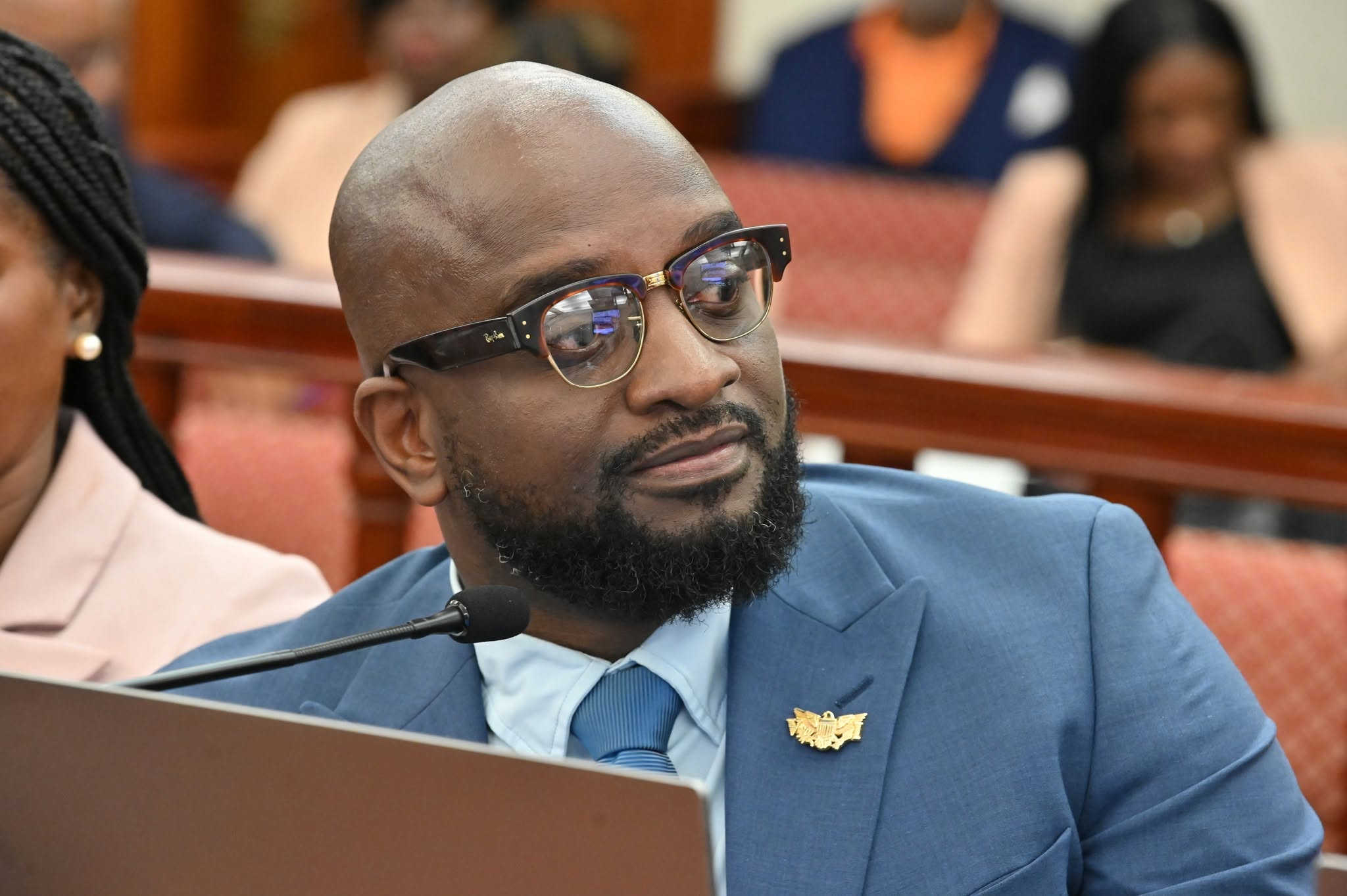
Outstanding vendor payments across the Government of the Virgin Islands total $36 million, but Department of Finance Commissioner Kevin McCurdy told lawmakers Tuesday that delays are not always caused by his department, citing late invoice submissions by vendors and agencies as a recurring problem.

Mr. McCurdy appeared before the Committee on Budget, Appropriations, and Finance to present the Department of Finance’s fiscal year 2027 budget request. During the hearing, questions again turned to tardy vendor payments, one of the persistent issues raised whenever the department appears before the Legislature.
According to Mr. McCurdy, $16 million of the $36 million in outstanding vendor payments is tied to invoices older than 90 days. However, he said a significant portion of the delay begins before those invoices reach Finance.
“49% of our invoices are submitted after 30 days,” Mr. McCurdy said. Invoices submitted after 30 days are considered “late.”

“It may come in today, and it's already at 120 days old,” Mr. McCurdy told Committee Chair Senator Novelle Francis. He said departments and agencies may tell vendors that invoices are at the Department of Finance awaiting payment, but “that's not always the case.”
Mr. McCurdy provided a “real-life example” of a vendor who publicly complained about delayed payment, but whose invoice was received by DOF “49 days after.”
“There is some effort that needs to be made. Vendors need to submit their payments timely,” the commissioner said.
While vendors may say they “did the work 70-plus days ago…what they're not including is when they submitted the invoice,” he added.
Senator Angel Bolques Jr. agreed that the government should not be penalized for delays tied to backdated invoices.
“The government should not be penalized by the receipt of an invoice that is backdated,” he declared. “We should be able to state when we received this invoice and have approximately net 30 days in order to process such said invoice and not be held in penalty.”
Commissioner McCurdy agreed.
Until policies and procedures are updated, late vendor payments are likely to remain a recurring challenge for the Department of Finance.
The department is requesting a $13,649,762 budget for FY2027, a 10.4% increase driven by mandatory audit activities, contractual obligations, healthcare cost increases, technology investments, compliance requirements and modernization efforts.
The proposed budget is $1,289,860 higher than the department’s FY2026 budget. Despite the increase, Mr. McCurdy said the Department “has continued to manage discretionary spending conservatively.”
The largest increase is in the “other services and charges” category, which rose by $1,172,219. That category includes audit services, cybersecurity projections, professional consulting services, compliance initiatives and other expenses.
Mr. McCurdy said the Government of the Virgin Islands “has made substantial progress in restoring timely financial reporting and audit compliance.” By September 30, 2026, the government expects to complete three fiscal year audits within nine months. He said that would position the territory to “maintain a current audit cycle moving forward.”
The Department of Finance is now focusing on “improving audit outcomes,” eliminating recurring findings, strengthening internal controls and establishing a framework for “sound financial management” across the GVI.
Audit-related requests include $2.6 million for the department’s audit services, $600,000 for accounting services, and $575,000 for “GASB compliance activities.”
Assistant Commissioner Clarina Modeste Elliot explained that the Legislature appropriated only $1.2 million for the audit services contract in FY2026. She said the perceived budget increase is because “we’re short that $1.4 million.”
Even with active work on audits and compliance, the Department of Finance could not guarantee that related costs will decline in future years.
“Next year, they may come up with something else that we need to improve on, and that may either keep the bill hopefully the same or decrease…,” Commissioner McCurdy said.
The DOF budget request also includes increases in personnel and fringe benefits, at $174,841 and $185,784 respectively. Mr. McCurdy attributed those increases to negotiated salary adjustments, staff retention efforts, rising healthcare costs, Medicare and Social Security. The supplies category increased by $24,016, while capital outlays decreased by $75,000.
Lawmakers also discussed the need for more consistent financial management across government departments, including stronger oversight of chief financial officers.
Senator Kurt Vialet said he is preparing legislation to “move all the CFOs under the Department of Finance” and formally assign oversight responsibility to the Commissioner of Finance.
“They're assigned to a department, but they work under the Department of Finance,” he explained.

The discussion tied back to a long-running concern among lawmakers: inconsistent financial practices across agencies, audit findings, delayed vendor payments and the need for clearer accountability within the government’s financial system.