




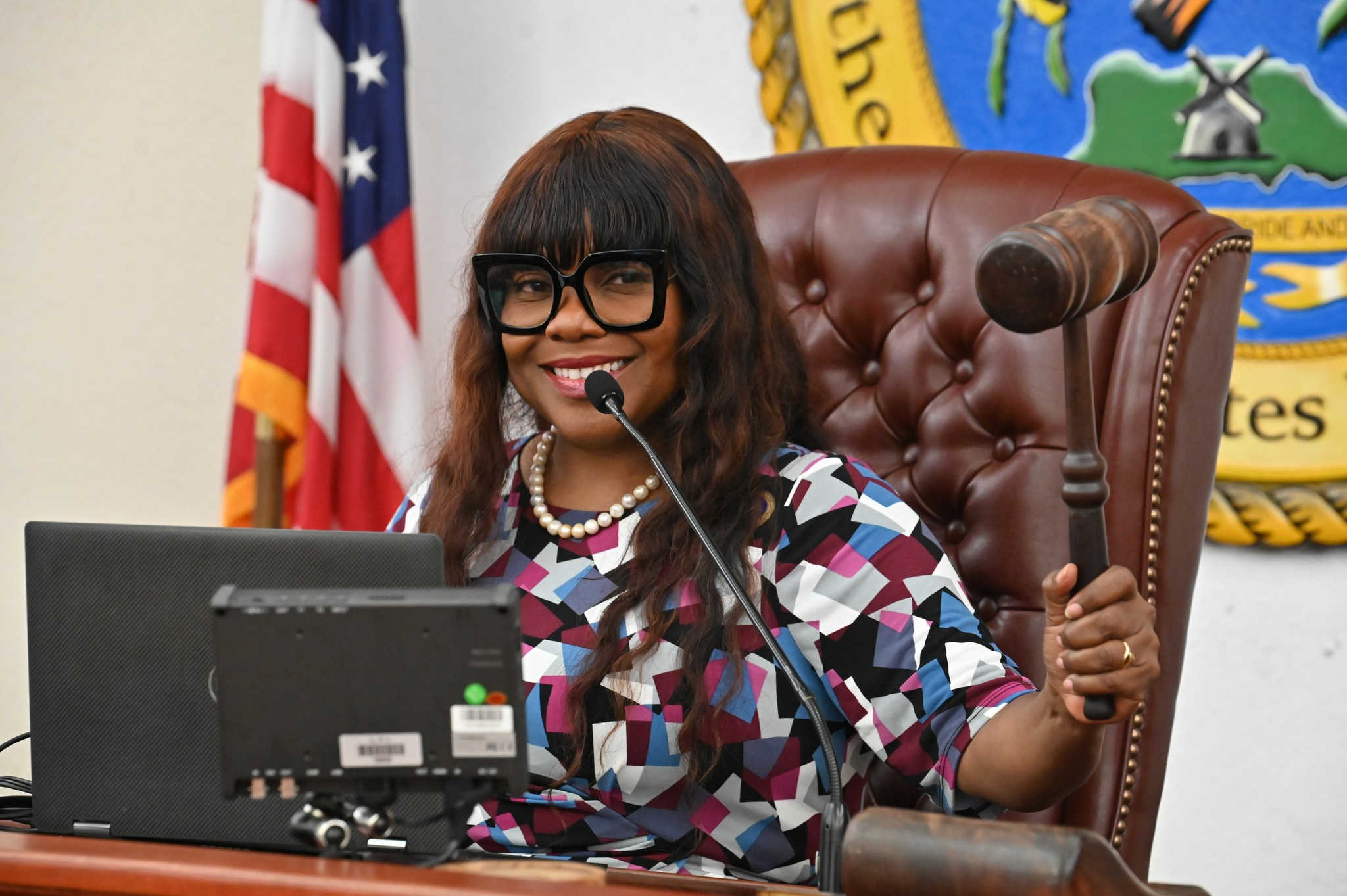
ST. THOMAS — Senator Carla J. Joseph is standing by her decision to convene a Rules and Judiciary Committee hearing last week that spiraled into a public clash with colleagues, despite clear indications that the measures on the agenda were not to be heard. Her insistence that “no rules were violated” has failed to quell controversy or address what critics describe as the central issue — that she proceeded with a meeting even after being formally notified that the bills in question should be withdrawn for revision.

In a press release issued October 11, Joseph rejected what she called “misrepresentations” by Senator Kenneth Gittens, who filed a formal complaint against her following the October 9 session. She accused Gittens of “distorting the facts” and maintained that her actions upheld legislative transparency, not defiance. “Senator Gittens’s assertion that the opportunity to hear from invited testifiers on Bill No. 36-0144 is a ‘waste of time’ is a denial of the democratic process,” she said.
But according to multiple lawmakers and correspondence cited in Gittens’s letter to Senate President Milton Potter, Joseph was already aware that the two bills were not to be heard. Bill Nos. 36-0105 and 36-0144 — one concerning restrictions on assault rifles and silencers, the other banning specific cannabinoid products — were slated to be returned to the Committee on Homeland Security, Justice, and Public Safety for redrafting and legal review. Gittens stated that this direction was provided to her in writing and verbally before the meeting took place.
Despite that knowledge, Joseph allowed testifiers, including representatives from the Office of the Attorney General, to assemble for what became a contentious hearing. When a motion was made to formally remove the bills from the agenda, Joseph used her point of personal privilege to sharply criticize colleagues, accusing them of “stifling the people’s voice.”

“Testifiers are here saying that they have not all been included. We cannot be a body where we are not including people who are affected by certain legislation,” she said during the session. “That’s hypocritical. We are their servants, and they have every right, and they shouldn’t be dismissed.”
Her defense, framed as a commitment to public inclusion, was viewed by several colleagues as a deliberate misrepresentation of the legislative process. Gittens and other committee members argue that her decision to move forward with the hearing directly contradicted the sponsor’s explicit request and violated the professional norms expected of a presiding officer.
In her release, Joseph insisted that she acted properly, pointing to prior communications regarding the bills. “On September 26th a letter was sent to Senator Joseph, Sr., in response and all Senators were copied, including Senator Gittens,” she wrote, adding that the measures had originally been placed on the agenda “at his verbal request.”
However, this explanation sidesteps the critical point that the sponsor — Senator Clifford Joseph, Sr. — had already informed the chair that the bills were being revised. According to Gittens’s complaint, the October 9 hearing not only defied that understanding but forced testifiers to appear unnecessarily, creating confusion and wasting resources.
During the same meeting, Senator Alma Francis Heyliger called Joseph’s remarks “disrespectful and disingenuous” and later indicated she would request removal from the committee if the matter went unaddressed. Gittens, meanwhile, described the episode as part of an “ongoing pattern of disruptive conduct” that has undermined legislative decorum and the public’s confidence in the institution.
While Joseph maintains that her intent was to “continue the dialogue and vetting process,” her critics say that justification does not excuse holding a hearing after being told the bills were not ready for consideration. “The motion to remove Bill Nos. 36-0144 and 36-0105 from the agenda… was an attempt to impede the democratic legislative process,” she argued — a claim that colleagues dismiss as a deflection from the real issue: defiance of the sponsor’s request and disregard for committee protocol.
Joseph’s release also claims that “the Rules of the 36th Legislature enable senators to conduct additional deliberations,” a statement that may technically be true but fails to acknowledge the procedural boundaries governing when such hearings can take place.
In closing, Joseph said she “remains steadfast to be the people’s voice and follow through with action in the legislative process.” But as calls grow for Senate President Milton Potter to formally review the matter, the controversy has shifted beyond questions of procedure to one of leadership credibility — whether the chair of one of the Legislature’s most powerful committees can be trusted to exercise her authority responsibly.

For now, Joseph’s assertion that “no rules were violated” stands in stark contrast to the mounting evidence that the hearing itself should never have taken place.