




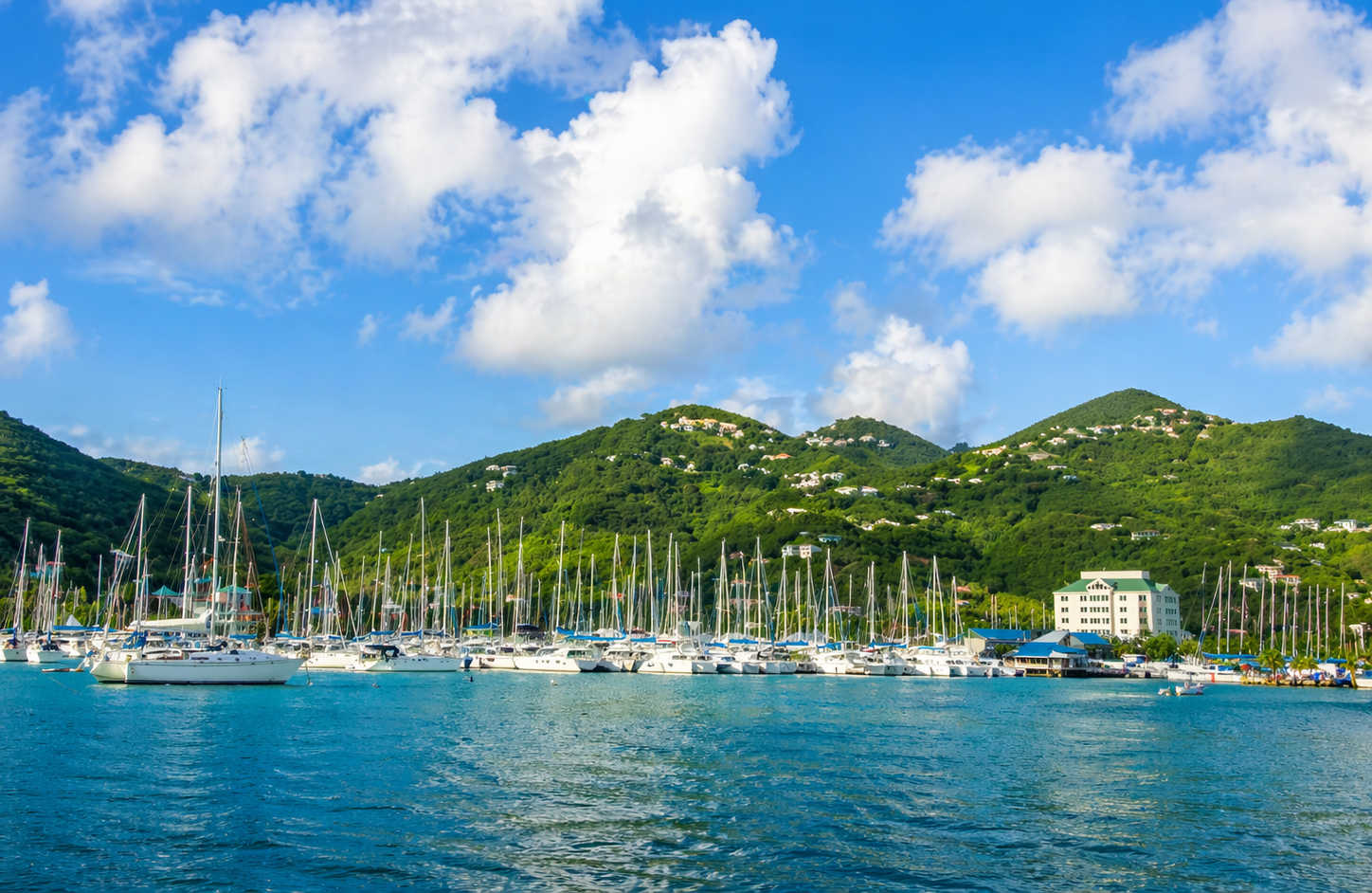
Project Fair Waters is calling for a coordinated U.S.-UK framework for the regional charter market after the Office of the United States Trade Representative identified the British Virgin Islands’ vessel licensing fee structure as a foreign trade barrier.

In the 2026 National Trade Estimate Report on Foreign Trade Barriers, USTR said the British Virgin Islands adopted the Commercial Recreational Vessel Licensing Act on June 1, 2025, increasing fees on foreign charter vessels entering BVI territorial waters by up to 4,000 percent. The report says the changes are significantly affecting the U.S. Virgin Islands marine tourism industry, which is closely integrated with the BVI, including by forcing U.S. Virgin Islands charter operators to close or relocate.
Project Fair Waters, a coalition of marine-industry stakeholders based in the U.S. Virgin Islands, said the report’s inclusion of the BVI vessel licensing regime creates an important opportunity for coordinated U.S.-UK engagement on a practical solution for the regional charter market.
According to the coalition, the USTR report is significant because it moves the issue beyond the earlier Caribbean Basin Economic Recovery Act review and into the United States’ formal trade-barrier process, increasing the likelihood of sustained federal attention and a durable resolution. Because the BVI is a British Overseas Territory, the coalition said it is appropriate for Washington, London, Road Town and Charlotte Amalie to work together on concerns affecting a shared marine tourism economy.

Project Fair Waters said the matter should be approached as a constructive diplomatic and trade issue, not a political confrontation. Against the backdrop of broader U.S.-UK trade discussions involving President Donald Trump and British Prime Minister Keir Starmer, the coalition said the most productive path is a framework that protects legitimate charter businesses, reduces unnecessary friction and supports both territories.
“The NTE report gives all sides a clearer basis to solve this problem cooperatively,” said Mr. Kosei Ohno, lead of Project Fair Waters. “We should use this moment to build a modern, reciprocal and efficient framework for charter operations before the current season’s departures become a longer-term loss of vessels, jobs and goodwill.”
Project Fair Waters said recent vessel movements show why timing matters. Transport vessels have been loading yachts in the Territory as the season closes, with many operators preparing to reposition boats to Europe and Florida. According to the coalition, approximately 90 vessels had left the U.S. Territory earlier in the season, and as the season comes to a close, more than 300 vessels have left or are preparing to leave. The group said a practical framework should be outlined before the Virgin Islands Boating Expo opens May 14 at Yacht Haven Grande to reassure operators, brokers, vendors and investors that a path forward is in motion.
“Once these vessels scatter, the challenge is no longer simply keeping boats here — it becomes re-marketing the Virgin Islands to operators who may leave with negative perceptions after increased costs, restrictive access, overcrowding and long delays,” Ohno said. “The Virgin Islands brand is strongest when the region is seen as seamless, predictable and commercially fair.”
Separately, the coalition estimates that approximately 90 vessels departed the U.S. Territory earlier in the season and said that, according to the U.S. Virgin Islands Commercial Vessel Licensing Authority, more than 300 vessels have since relocated operations from the U.S. Virgin Islands to the BVI following implementation of the new regulatory and fee regime.
Project Fair Waters said the affected marine tourism sector supports as many as 5,000 jobs and contributes approximately $166 million to the U.S. Virgin Islands economy. In the St. Thomas-St. John district, the coalition said 5,000 jobs represent roughly one-fifth of the entire workforce and closer to one-third of private-sector employment, which it described as a direct hit to the territory’s economic backbone.
“What the BVI havehas done in the guise of modernization and protectionism is create an untenable structural disruption in the market. The earlier CBERA report highlighted this economic pressure, and the NTE report now demonstrates that these excessive, one-sided fees and unduly restrictive entry access regulations create a foreign barrier to trade,” said Michelle T. Meade of Meade PC, counsel to Project Fair Waters. “With this report we now have a credible opportunity for USVI, BVI, U.S. and UK stakeholders to work collaboratively toward timely, balanced solutions that support long-term stability and growth in the region’s maritime economy.”
The coalition said a durable solution should include a reciprocal and transparent licensing structure, predictable and proportionate fees, coordinated inspection and documentation processes, faster and clearer entry procedures, and an interim or pilot arrangement before the next charter season. Project Fair Waters also said targeted improvements on the U.S. Virgin Islands side should be part of the framework where changes can simplify processing without weakening safety, customs or border security.
According to the coalition, a lasting solution will require coordinated work by the Office of the United States Trade Representative, the U.S. Department of State, the U.S. Department of Commerce, and the U.S. Small Business Administration, along with operational engagement from the U.S. Coast Guard and U.S. Customs and Border Protection. It said coordination with the Government of the Virgin Islands and relevant BVI and UK authorities will also be essential.
Project Fair Waters said the U.S. and British Virgin Islands function in practice as one interconnected charter and marine tourism market, and that the U.S. and UK therefore have a necessary role to play. The coalition said a modern, cooperative framework would lower friction for legitimate operators, protect jobs, support a healthier shared economy, and reinforce the Virgin Islands as one of the world’s premier sailing destinations.

The coalition said it remains ready to work with federal and territorial officials, industry stakeholders and BVI counterparts on reforms that support tourism, lawful operations and long-term regional prosperity.