




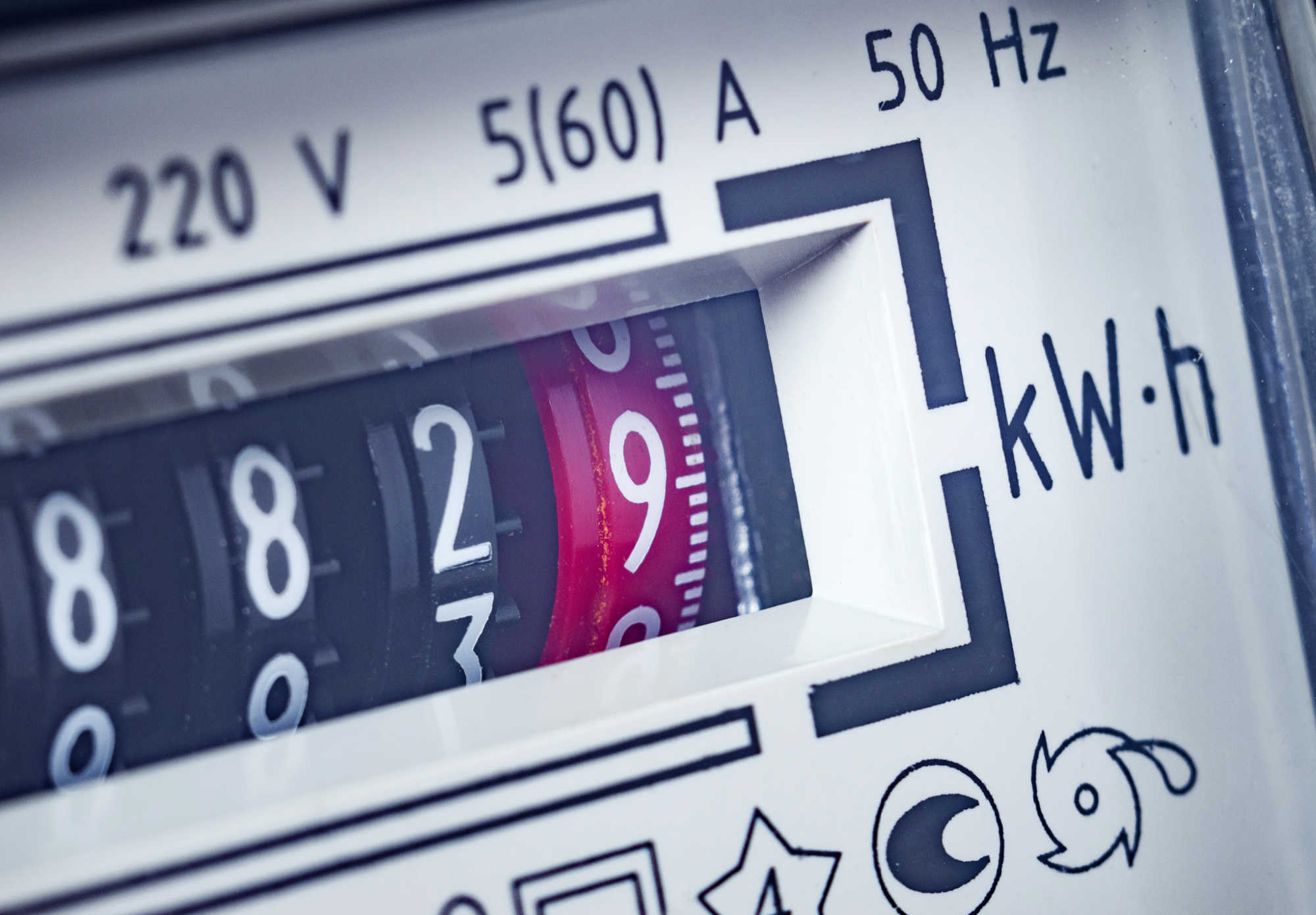
Several Virgin Islands residents who say they are being exploited by high estimated bills from the Water and Power Authority have now taken the utility to court.
A civil complaint in District Court names WAPA, its CEO Karl Knight, and Itron Inc as defendants against a charge of due process violation. Several plaintiffs are listed including HealthQuest, LLC, which does business in the territory as Caribbean Kidney Center, the dialysis services provider which recently shuttered its St. Thomas operations.
Attorney Terri Griffiths, who had much of an earlier lawsuit against WAPA, Itron and other defendants tossed out by a District Court judge, is focusing this complaint on the bills generated as a result of faulty Itron meters and WAPA's practice of issuing bills based on estimated usage. The two issues result in bills that are unreasonably high, the lawsuit claims, for sums that are many times what the customers’ normal usage would be.
The established process to challenge these suspiciously high bills is broken, the suit alleges, with neither WAPA nor the Public Services Commission responsive to complaints in a timely manner. All the while, the eye-watering amounts billed continue to pile up as arrears, which in at least one case WAPA has allegedly used as reason for disconnection.

Ninety-year-old Elsa Beatty, who lives on St. Croix with a companion, says her days are mostly taken up with sitting on the verandah. Despite owning a washer and dryer, monthly bills used to average around $100. Once the new smart meters were installed, Ms. Beatty's bills have multiplied by a factor of 15. Multiple complaints to WAPA resulted in a service call, but “Mrs. Beatty continues to receive power bills in the $1500-$2000 range,” the lawsuit states.
Nelson Uzzell's electricity service was terminated despite the senior citizen actively contesting several unreasonable large bills, the lawsuit claims. Increased usage claims came after the post-hurricane smart meters were installed, persisting even after Mr. Uzzell invested in home solar power generation to operate his kitchen appliances, water pumps and water heater. Mr. Uzzell's attempts to resolve the issue have included several unanswered letters to WAPA, as well as the recent filing of what the lawsuit refers to as an “informal complaint” with the Public Services Commission.
Similar claims emanate from Jeff Konowal, whose day job takes him out of the house during the week. “Historically, his power bills have averaged around $160 a month,” the lawsuit states. After vocal complaints on social media regarding potential damage to appliances and electronics due to WAPA's frequent outages and rolling blackouts, Mr. Konowal “suddenly” began receiving “extraordinary” power bills, the complaint alleges. The bill received in April of this year was reportedly over $3700, prompting Mr. Konowal to also file an “informal” complaint with the PSC. He was advised to pay his usual average bill while the dispute process played out. However, after additional unusually high bills were issued in May and June of this year, Mr. Konowal received a disconnection notice from WAPA, demanding just over $4900.
The suit argues that mandated avenues for dispute resolution have failed consumers. Seeking intervention from the PSC often goes nowhere, the complaint alleges. In the case of Kerry Harrigan, a promised 15-day response time for a complaint submitted last October turned into months of silence. A second query submitted in December resulted in a response from WAPA in late January; “a $401.64 credit, which pales in comparison to his overcharges,” the lawsuit alleges. Mr. Harrigan's electricity bills “are no longer quadruple his average power bill, but are more than double,” according to the complaint. This, even as the Harrigan family installed a 12-kWh solar system, “taking 80% of their house off the grid.”
The Caribbean Kidney Center, the only plaintiff that is a commercial entity, alleges that “the WAPA bills, obviously not based on actual usage, are crippling.” In CKC's case, unreasonably high bills are for water, rather than on the electricity side. However like other plaintiffs, attempts at relief have been futile, with WAPA representatives failing to turn up to “several meetings” scheduled in an attempt to determine and resolve the issue.
It is this alleged failure to allow customers a fair chance to properly dispute suspicious bills that comprises a violation of their due process rights, the lawsuit claims. Itron, meanwhile, is liable for the faulty smart meters that were manufactured with defective components and sold to WAPA, the complaint alleges. The defendants, by their combined behavior, have demonstrated negligence, the lawsuit argues.

Plaintiffs are demanding total damages of $39 million, with $29 million of that sum levied as punitive damages. “Without a sizeable punitive damages award, Itron, the finished product manufacturer and seller, will continue to sell ‘smart meters’ with defective component parts…and Knight, the WAPA CEO, will continue to intentionally disregard the foreseeable consequences,” the complaint concludes.