




ST. THOMAS — A precedential ruling issued Monday by the U.S. Court of Appeals for the Third Circuit has established new federal guidance for product-liability cases arising under Virgin Islands law, holding that a plaintiff cannot rely on the relaxed evidentiary standard of the “malfunction theory” when the allegedly defective product remains available for inspection and testing.

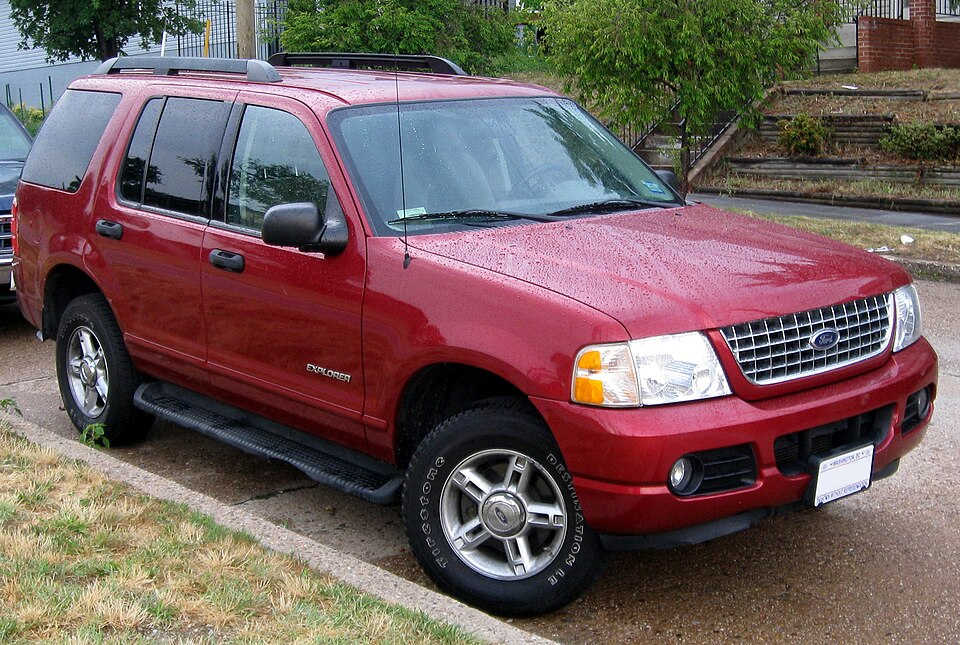
The decision arose from a September 2016 crash on St. Thomas involving Millentine Coates, who alleged that the airbags in her 2002 Ford Explorer deployed unexpectedly while she was driving, striking her and filling the vehicle with smoke. Coates said the deployment caused her to become disoriented, cross the opposing lane and crash into a hillside, leaving her with significant injuries. Ford denied that a defect caused the accident.
Coates could not identify a specific manufacturing or design defect and instead sought to proceed under Section 3 of the Restatement (Third) of Torts, commonly associated with the malfunction theory. That doctrine can allow a jury to infer a product defect from circumstantial evidence even when a plaintiff cannot identify the precise defect that caused a malfunction.
Because the Virgin Islands Supreme Court has not squarely decided the issue, the Third Circuit was required to predict how the territory’s highest court would rule. The appeals court concluded that the V.I. Supreme Court would adopt Section 3, pointing in part to the territorial court’s 2021 decision in Davis v. UHP Projects, Inc. But the Third Circuit also predicted that the V.I. Supreme Court would not allow the doctrine’s relaxed proof requirements where the product has not been lost or destroyed and remains available for examination.

That distinction proved decisive for Coates. Her Explorer and airbag system remained available, and the court found that additional investigative avenues had not been exhausted. Coates’s expert had recommended further examination, including testing involving the restraint-control module and frontal accelerometer, but that work was not performed. The court rejected the argument that unavailable crash data from the restraint-control module placed her in the same position as a plaintiff whose allegedly defective product had been destroyed.
The Third Circuit also concluded that Coates’s evidence would be insufficient even if the malfunction theory were available. By the time of the crash, the Explorer was 14 years old, had accumulated more than 93,000 miles and had passed through multiple owners while undergoing earlier repairs, accident-related work and modifications. The court said the record did not adequately support an inference that an unspecified defect existed when the vehicle originally left Ford’s control.
The panel therefore affirmed Chief District Judge Robert A. Molloy’s grant of summary judgment to Ford.
The ruling is significant beyond Coates’s individual lawsuit because it supplies precedential Third Circuit guidance to federal courts confronting an unsettled question of Virgin Islands product-liability law. It does not mean that the V.I. Supreme Court itself has adopted the limitation. The Third Circuit was predicting how the territorial court would rule; if the V.I. Supreme Court later answers the question differently, its interpretation of Virgin Islands law would control.