

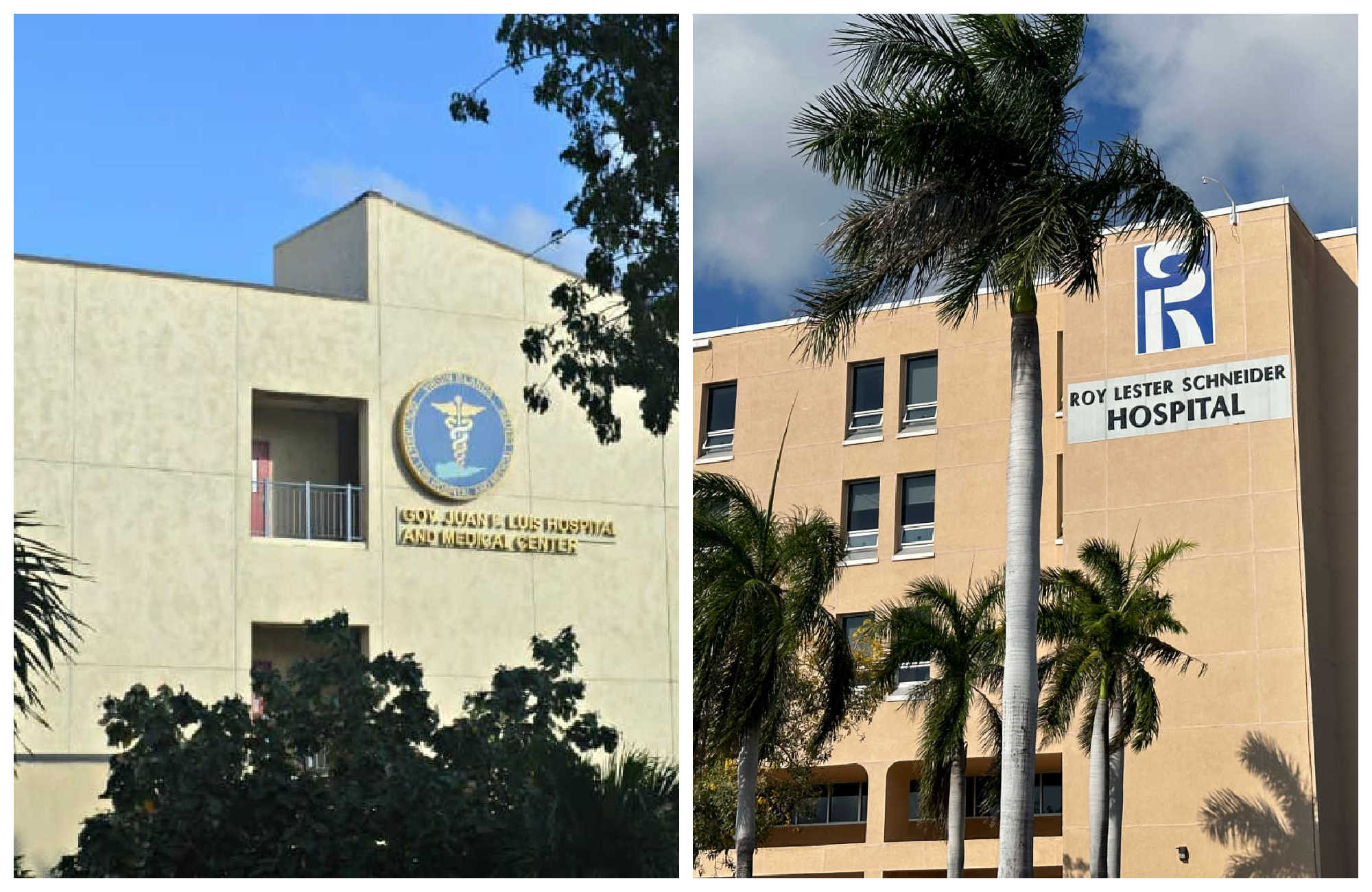
Cash shortages at the territory’s two hospitals have left millions of dollars in employee-related obligations unpaid, including pension contributions, taxes, union deductions and other withholdings, while some former employees are also waiting months for lump-sum payments owed after leaving their jobs.

During Wednesday’s hospital budget hearing, Darlene Baptiste, chief executive officer of Juan F. Luis Hospital and Schneider Regional Medical Center, told lawmakers that the hospitals’ “cash position” means management is “unable to meet the entire gross amount for their wages and benefits.”
Accounts payable at both facilities include “outstanding employee withholdings and related obligations,” she said. Those balances include money owed to the Government Employees’ Retirement System, the Bureau of Internal Revenue, unions and “other employee deductions.”
At JFL, employee-related obligations total $22.7 million. Baptiste did not provide lawmakers with a corresponding overall figure for SRMC.

The disclosure prompted sharp questioning from Sen. Kenneth Gittens, who accused hospital leadership of being “fraudulent” for failing to remit deductions taken on behalf of employees.
“I don’t know where these monies are going, but it is fraudulent,” the lawmaker insisted.
Gittens said employees may believe their deductions are being properly transmitted to the appropriate entities, only to discover otherwise when attempting to use benefits such as GERS loans.
JFL Says GERS Payments Recently Resumed
Responding to Sen. Franklin Johnson, Baptiste said the hospitals recognize the amounts as liabilities owed to the respective entities.
“we take on the liability of recognizing that it's a charge that's borne by the organization as owed to the entities.”
Baptiste said cyberattacks affecting the hospitals more than a year ago contributed to disruptions and that the hospitals “just restarted resuming payments” to the GERS.
Johnson warned that failing to remit deductions creates direct consequences for workers.
He said the situation “creates some real hardship for employees.”
GERS contributors, for example, can qualify for loans, but employees whose payments are delinquent may be unable to access that benefit. Workers nearing retirement could also face difficulties if their recorded contributions do not reflect what should have been paid.
“It's a double whammy for those employees, especially if somebody is on the verge of retiring,” Sen. Johnson said.
Baptiste sought to reassure lawmakers about employees approaching retirement.
“a separate check is cut for those individuals to meet their obligation, so their annuities are not deferred.”
Retirees Also Waiting for Lump-Sum Payments
The discussion led Sen. Kurt Vialet to ask whether the hospitals are able to promptly make annual-leave payments owed to employees when they retire.
Baptiste acknowledged that there is often a “delay” because of “cash flow.”
How long employees must wait, she told Vialet, “depends on the cash pass position.”
JFL Senior Executive Director of Financial Services Asa Victor confirmed that the hospital does not always have enough cash available to make those payments when they become due.
“After they get their last paycheck, we're supposed to pay it, but because of our cash flow issues, we are unable to pay,” said JFL’s Senior Executive Director of Financial Services, Asa Victor.
The same problem exists at SRMC.
Kenisha Angol, director of finance, told lawmakers that “a number of individuals” are waiting for lump-sum payments covering “at least a five-month period.”
“When there is cash availability, those payments are prioritized,” she stated.
JFL Owes Millions in Taxes and Social Security
Baptiste said the hospitals have “ongoing payment arrangements” with several entities, including Masa, which provides air ambulance services.
Other significant obligations remain.
Victor told lawmakers that JFL owes approximately $5.9 million to the Bureau of Internal Revenue and $6.4 million in Social Security taxes.
Those critical payments are not currently being fully met by the hospital.
SRMC does not owe Social Security taxes on behalf of its employees, according to testimony, but the hospital carries an outstanding $20.8 million balance to GERS.
Angol also said SRMC has another $3.4 million obligation; the material provided identifies that amount as being owed to SRMC itself and does not specify a different creditor.
The unpaid pension contributions drew particular concern because employees can feel the consequences even though deductions were taken from their compensation.
Lawmakers stressed that workers could encounter problems obtaining GERS loans or finalizing retirement benefits despite believing their required contributions were being transmitted.
The cash shortages are also affecting former employees waiting to receive money owed upon separation from the hospitals.

Gittens urged hospital leadership to “get this addressed immediately."