

Legislation establishing a uniform process for naming and renaming government-owned parks, recreational areas and facilities advanced Friday from the Senate Committee on Culture, Youth, Aging, Sports and Parks after lawmakers waived debate on the measure.
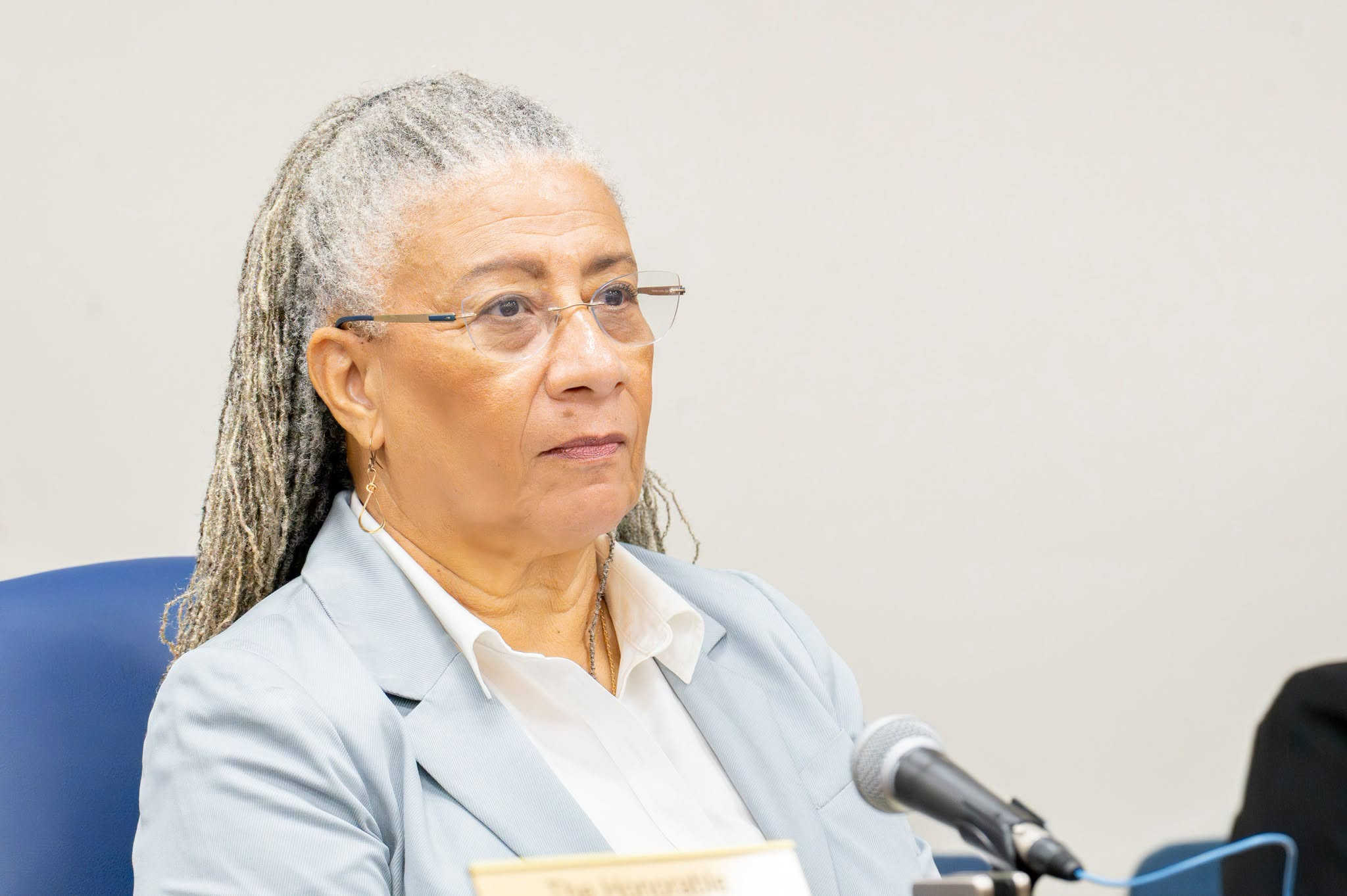
Bill 36-0247, sponsored by Senator Marise James, would create a Territorial Park Naming Program and establish standards and procedures for future naming decisions.
The Department of Sports, Parks and Recreation, the Department of Planning and Natural Resources and the Department of Property and Procurement supported the proposal while recommending amendments addressing government property inventories, standardized addresses and signage, federal requirements and restrictions contained in property deeds.
Ms. James said she would incorporate the recommended changes before the bill is considered by the Committee on Rules and Judiciary. She described their omission during Friday’s meeting as an “oversight.”

Introducing the measure, Ms. James said its enactment “provides a fair, transparent, and consistent process to guide future decisions by establishing clear standards and procedures.”
Those standards would ensure that naming decisions are “thoughtful, based on merit, and made with due consideration of the significance of the honor being bestowed, good government depends on clear policies.”
“Our parks belong to all the people of the Virgin Islands. The names we place upon them should be the product of a deliberate and principled process that inspires pride, preserves our heritage, and honors those who have made extraordinary contributions to our community,” Senator James stated.
DSPR Commissioner Vincent Roberts supported the establishment of a formal naming process, saying it “can promote consistency, encourage public participation, and ensure appropriate historical documentation and accountability.”
He nevertheless presented several recommendations to “support successful implementation.”
Mr. Roberts first recommended completing a “comprehensive inventory” of all parks, recreational areas and public facilities that could fall within the legislation’s scope.
He said there is a “broader need to identify and document all government-owned recreational assets…and clearly establish which agency has ownership management responsibility, or operational jurisdiction over each property.”
His second recommendation called for all facilities covered by the program to be “identified with complete and standardized physical addresses.”
Mr. Roberts expressed hope that the territory’s ongoing street-addressing initiative would include parks, beaches and other recreational facilities.
He also recommended incorporating technology into the program. QR codes placed on facility signs could provide the public with information about the person or event being recognized.
The establishment of “uniform signage standards” is also necessary, Mr. Roberts said.
Kristina Edwards, director of DPNR’s Division of Territorial Parks and Protected Areas, also recommended several changes.
She urged the bill’s sponsor to add language that “addresses properties that were donated with the stipulation that the park carry a specific name which is included in the deed.”
Ms. Edwards also reminded lawmakers that properties purchased using federal funds typically carry specific signage requirements.
“Even if a name is eventually changed, federal requirements must always be followed…,” she said.
DPNR also requested more time to develop the program’s regulations.
The department is seeking “365 days rather than 180 days in order to work within the reality of creating and approving such documents within the GVI systems.”
The Department of Property and Procurement also endorsed the proposal, subject to the recommended amendments.
Assistant Commissioner Vincent Richards said the department supports establishing a “consistent process for naming public facilities that promotes accountability, preserves our history, recognizes community contributions, and strengthens public confidence in government decision-making.”

Bill 36-0247 now moves to the Committee on Rules and Judiciary, where the proposed amendments are expected to be incorporated.