



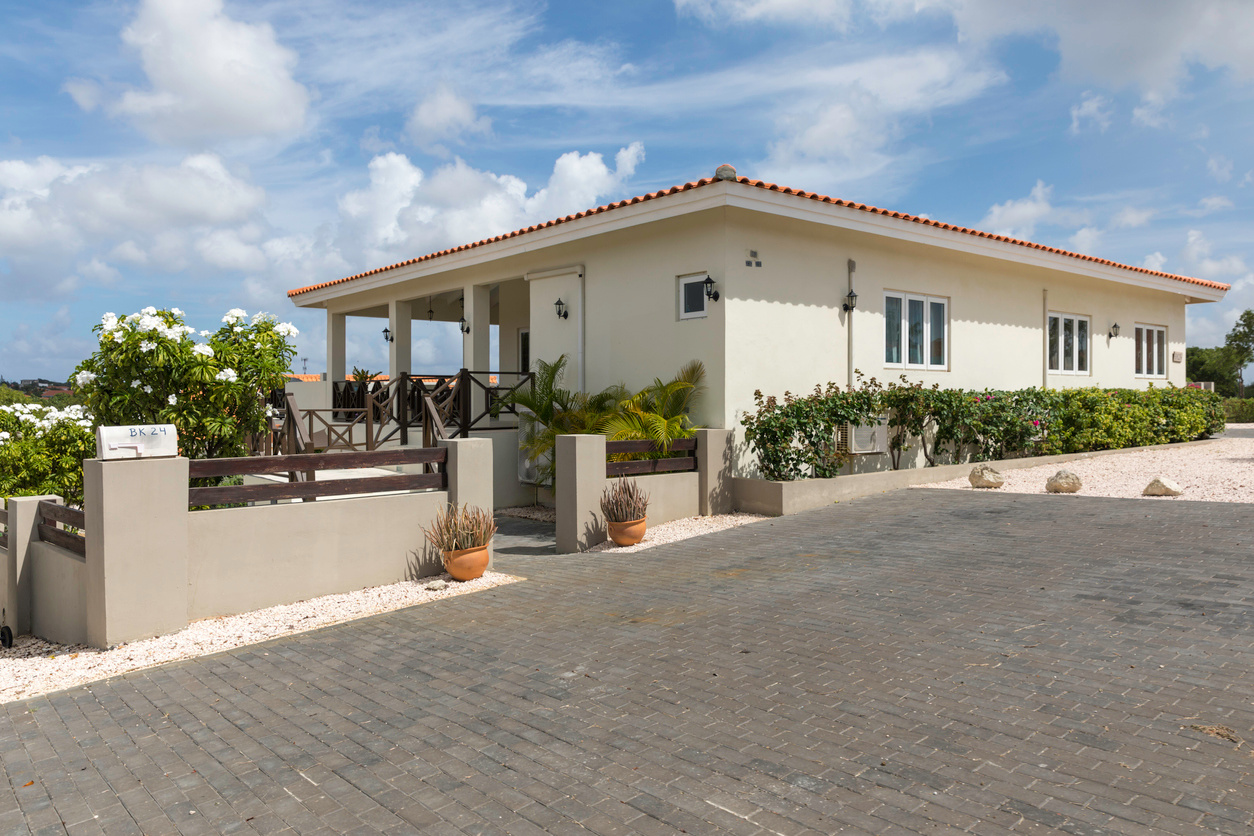
One of the largest expenses for most adults who do not own their own home is rent. Yet while there are many renters in the USVI who have considered the possibility of purchasing their own home, with inflation reaching a 40-year high and the Federal Reserve raising its benchmark interest rate to 2.25 -2.5 percent, some quite simply can't afford it.
The feds 0.75 percentage-point increase two days ago pushed the cost of borrowing, including mortgages, to its highest level since 2019.
After the Virgin Islands Housing Finance Authority presented testimony in the Earl B. Ottley Legislature on Tuesday, senators debated on the difficulties of owning a home in the territory.
Testimony was given during the hearing on the Emergency Rental Assistance Program (ERAP), and the First-Time HomeBuyers Program. The latter was created to provide mortgage assistance for moderate-income, first-time homebuyers to purchase a single-family house, including but not limited to a prefabricated home or manufactured house, or any other housing structure that meets the current building code.

V.I.H.F.A. Chief Operating Officer Darren Richardson said four local lenders have so far committed to being part of the program, but he added that applicants were not yet forthcoming.
Sen. Marvin Blyden, chairman of the Committee on Housing, Transportation and Telecommunications, said the government wanted to keep the program funded while ensuring residents had the opportunity and a level playing field. The senator brought into focus the territory’s housing woes and peppered questions to V.I.H.F.A. about the eligibility requirements necessary for applicants to be selected. In particular, Mr. Blyden wanted clarification on the work history requirement.
Responding to the chairman, V.I.H.F.A. testifiers said that aside from tax information, credit checks, and other requirements, there were certain underwriting criteria. This included an individual being able to show they had worked at the same establishment for at least 3 years.
Mr. Blyden took issue with this requirement, pointing to the Millennials who he said “have offers all the time and move accordingly.”
Relative to credit score, a minimum score of 620 is required. Other criteria include the first-time homebuyer status, meaning it must be the applicant's first home. Additionally, if married, both individuals must be on the application for homeownership; the applicant must be a resident of the U.S. Virgin Islands for the last three consecutive years as evidenced by tax filings with the V.I. Bureau of Internal Revenue; minimum and maximum household income requirements for all working occupants no matter how many are living in the household, are considered, V.I.H.F.A. said.
For moderate-income wage earners, the income requirements as of June 2022 are as follows:
Minimum Household Income
- St. Croix $53,101
- St. John $79,301
- St. Thomas $58,401
Maximum Household Income
- St. Croix $216,300
- St. John $260,750
- St. Thomas $242,900
During the hearing, some senators debated whether the First-Time Home Ownership program was innovative enough. Senator Janelle Sarauw challenged her colleagues along with the V.I.H.F.A. as to whether these programs were sustainable in the long-term, given the limited availability of land left in the territory, particularly in St. Thomas and St. John. Ms. Sarauw felt more effort needed to be placed into the rehabilitation of derelict homes in the islands as land space dwindles.
The senator said she was disappointed in the progress at the V.I.H.F.A., contending that if capacity were to be built in the USVI, people needed a place to live.
Senator Novelle Francis saw an opportunity to educate young people on saving money and building credit. He said people could not always expect that government and other entities to support their endeavors.

Senators at Tuesday’s hearing echoed the need for a sense of urgency in addressing the housing demands of the population. It was also agreed that a roundtable discussion was necessary with all parties involved in home ownership in the territory.