

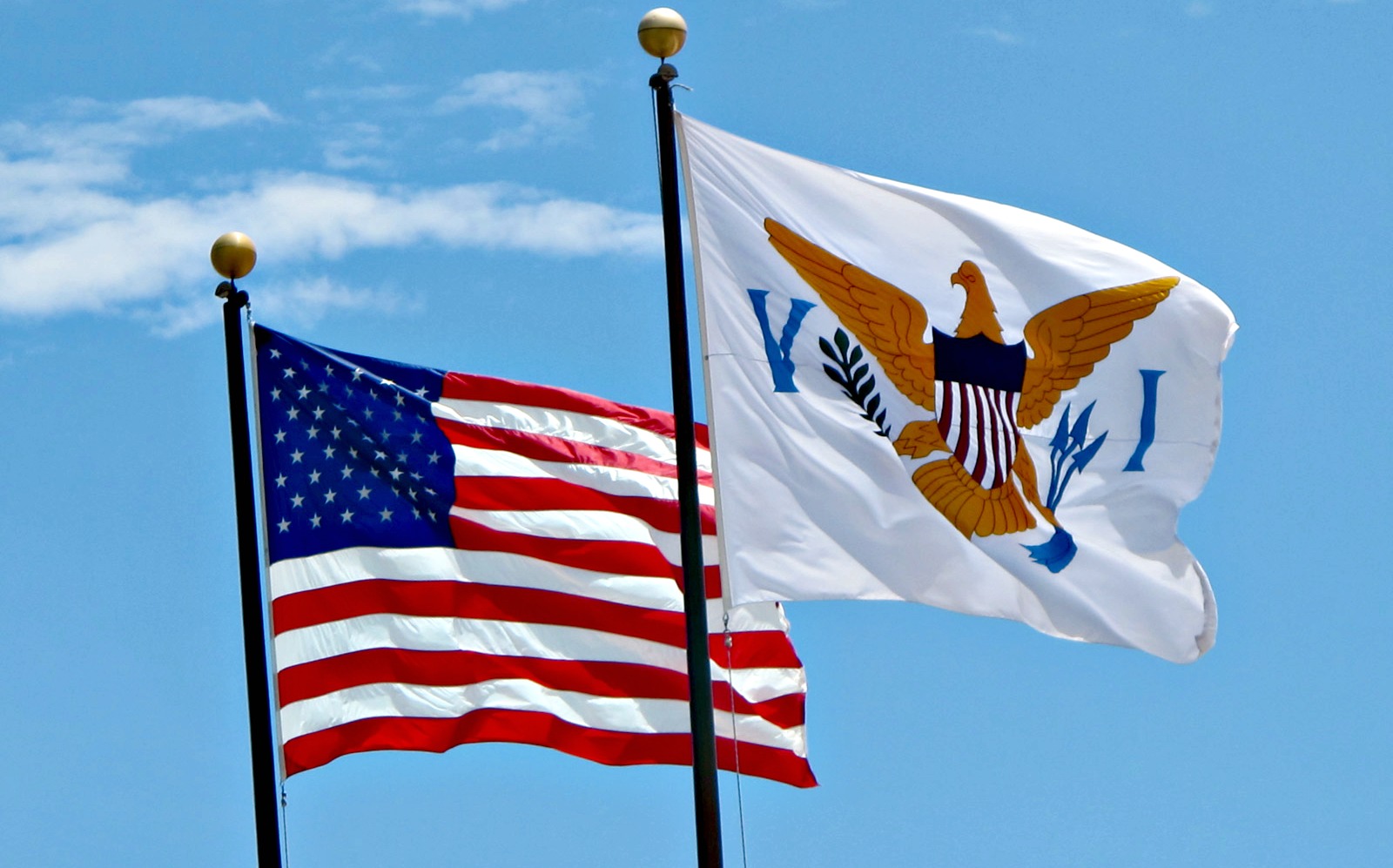
As debate grows over the future of the Insular Cases, long-criticized Supreme Court decisions that shaped the constitutional relationship between the United States and its territories, a key question has resurfaced: Would overturning these cases lead to the imposition of federal income taxes across the territories? According to a legal analysis released by Right to Democracy, the answer is no.

Despite widespread calls for the U.S. Supreme Court to finally strike down the Insular Cases—opinions rooted in openly racist views that denied full constitutional protections to millions of U.S. citizens living in territories—the report argues that Congress already has broad authority to set tax policy in the territories and that this authority is independent of the Insular Cases.
The report, titled Overruling the Insular Cases: What About Federal Taxes?, explains that the current system of differential taxation between U.S. states and territories would remain intact even if the Insular Cases were overturned. That’s because Congress’s tax authority flows from the U.S. Constitution’s Territories Clause and the Sixteenth Amendment, not from the Insular Cases themselves.
“Overruling the Insular Cases would not impact the federal tax obligations of people living in U.S. Territories,” the authors write. “These concerns are misplaced.” They note that the federal government already collects billions annually from territorial residents through payroll taxes and other forms of federal taxation.
While many assume that residents of U.S. territories do not pay federal taxes, the truth is more complex. In 2023 alone, residents of the territories collectively paid over $5 billion in federal taxes, and more than $100 billion over the past 25 years, according to federal data.
Residents of Puerto Rico, Guam, the U.S. Virgin Islands, American Samoa, and the Northern Mariana Islands are subject to a patchwork of tax rules, some of which mirror the Internal Revenue Code while others operate independently.
-
Mirror-code territories (U.S. Virgin Islands, Guam, and Northern Mariana Islands) apply federal tax rules locally, with revenue going to territorial treasuries.
-
Non-mirror code jurisdictions, like Puerto Rico and American Samoa, use distinct systems authorized by federal law.
In mirror-code jurisdictions, residents generally do not file income taxes with the IRS but rather with their local government. However, federal employees, those with U.S.-sourced income, or those working outside their territory may still owe taxes to the U.S. Treasury.
In addition, federal payroll taxes such as Social Security and Medicare are universally applied in all territories, and federal unemployment tax applies in both Puerto Rico and the U.S. Virgin Islands.
Some have feared that striking down Downes v. Bidwell and other Insular Cases—particularly those involving the Uniformity Clause of the Constitution—would suddenly compel Congress to impose federal income taxes on all territorial residents. But the report strongly refutes this idea.
The authors explain that the Uniformity Clause and Sixteenth Amendment allow Congress wide latitude to distinguish between jurisdictions when imposing indirect taxes like income tax. The Supreme Court has already held that these distinctions are permissible as long as they have a rational basis, such as geographic, economic, or political differences.
“Congress may distinguish between geographic categories in indirect taxation—including income taxes—provided that the discrimination is based on neutral factors, including disproportionate costs and difficulties,” the authors write.
In other words, even if the Insular Cases were invalidated, Congress would still retain full discretion to continue treating territories differently when it comes to income taxes.
The report also clarifies that certain indirect taxes already comply with the Uniformity Clause and would not be affected by the end of the Insular Cases. One example is the rum cover-over, a federal excise tax on rum produced in the Virgin Islands and Puerto Rico. The revenue is returned to territorial treasuries based on each territory’s production volume. The tax itself is levied uniformly across the U.S., meeting constitutional requirements.
Other indirect taxes, including customs duties, corporate income taxes on U.S. citizens with ownership in territorial businesses, and environmental levies like the Oil Spill Liability Tax, are also applied in ways that conform to existing constitutional standards.
The report also emphasizes that while some tax policies may appear to favor territories, they come with major tradeoffs. Residents of U.S. territories are excluded or limited in access to several federal programs, including Supplemental Security Income (SSI), Supplemental Nutrition Assistance Program (SNAP), and Medicaid. The value of these lost benefits often exceeds any tax savings, particularly for low-income residents.
Because territorial residents do not have voting representation in Congress, they are subject to taxation without representation—a principle at odds with foundational American values, the report argues.
The Insular Cases, decided in the early 20th century, created the doctrine of territorial incorporation, which held that full constitutional rights do not automatically extend to so-called “unincorporated territories.” These rulings were steeped in racist language and theories of cultural inferiority, asserting that residents of the new island territories were “unfit” for full constitutional protections.
The report cites recent statements from Justice Neil Gorsuch and Justice Sonia Sotomayor, both of whom condemned the Insular Cases as legally unsound and morally indefensible. The U.S. Department of Justice during President Joe Biden's tenure has also issued a formal policy denouncing the rulings.
Yet despite growing consensus that the Insular Cases must go, concerns over tax policy have been a common argument in favor of preserving the status quo. The new report seeks to put those fears to rest.

The report was authored by Neil Weare, Sumaya Bouadi, and Alex Golubitsky—all legal experts with deep experience in constitutional law, tax law, and U.S. territorial issues. It was published by Right to Democracy, a non-profit organization focused on advancing equity, democracy, and self-determination in U.S. territories.


Advertisements