




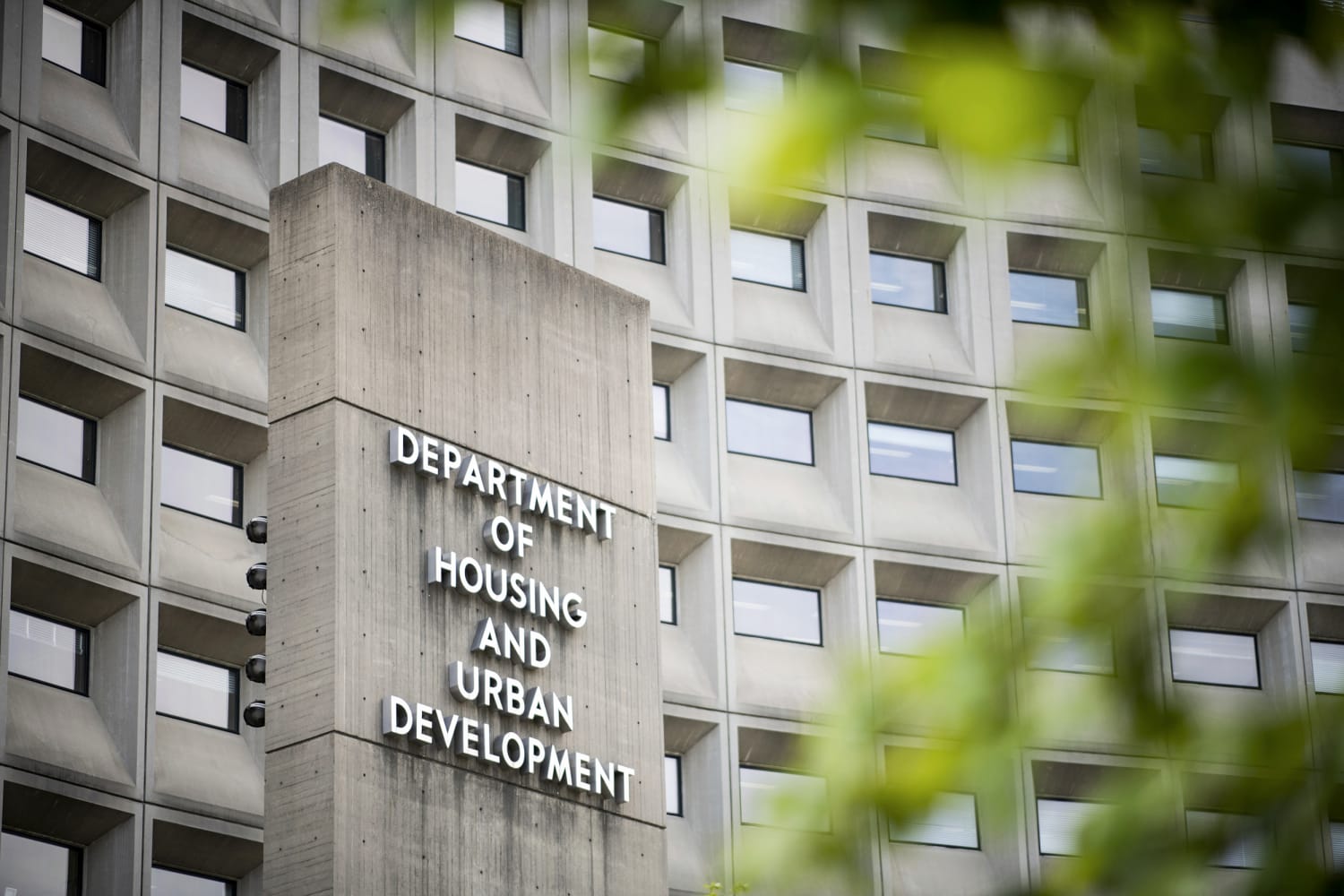
ST. THOMAS — The U.S. Department of Housing and Urban Development has labeled the V.I. Housing Finance Authority an “abysmal steward of taxpayer funds,” accused it of knowingly submitting false certifications to obtain federal grants and described the territory’s disaster recovery as “glacial to practically non-existent” in a 13-page letter immediately suspending VIHFA from future federal transactions while an inspector general investigation proceeds.

“HUD will not accept this record of empty promises and abject failures,” Deputy HUD Secretary Andrew D. Hughes wrote in the July 20 notice, which alleges years of delayed spending, inadequate internal controls, unaddressed fraud risks, improper duplication of federal benefits and false statements concerning VIHFA’s financial safeguards.
The suspension extends beyond future HUD procurement. It applies to procurement and nonprocurement transactions involving VIHFA as a participant or principal throughout the executive branch of the federal government, pending the outcome of an investigation by HUD’s Office of Inspector General into potential offenses involving the authority, its officers, directors or employees.
HUD said the scope of that investigation is subject to privilege.

The notice, sent by email and FedEx to VIHFA official Dayna Clendinen and copied to authority counsel Vanessa Hewitt-Quinland, was accompanied electronically by 16 exhibits. It was issued under federal suspension and debarment regulations and takes effect immediately.
HUD Says Failure Put Nearly $2 Billion at Risk
HUD said it sent VIHFA approximately $1.9 billion to rebuild the territory following Hurricanes Irma and Maria, an amount the department calculated at more than $20,000 for every Virgin Islands resident.
“Nine years later, because of VIHFA’s blatant mismanagement of these critical disaster funds, USVI citizens still do not have the housing and electrical power they were promised nearly a decade ago,” the letter states.
The department said there is more than adequate evidence to suspect that VIHFA violated its public agreements with HUD and is not presently responsible to participate in federal programs.
According to the notice, the authority failed to establish effective fraud controls, repeatedly certified that it had safeguards and financial-management systems that HUD says were not in place, and improperly obtained duplicate federal benefits.
“VIHFA’s failures put at risk up to $2 billion in funding from HUD,” the department wrote, saying the seriousness of the deficiencies and the amount of money involved required immediate action.
HUD further determined that continuing to allow VIHFA to participate in federal programs while the inspector general investigates possible violations of federal law would not be in the public interest.
Less Than One-Third of Recovery Funding Spent
VIHFA was established in 1981 to support affordable-housing development throughout the territory. It administers several HUD programs, including Community Development Block Grant Disaster Recovery and mitigation funding.
Following the 2017 hurricanes, Congress authorized HUD to provide disaster-recovery assistance. Between February 2018 and June 2021, HUD allocated nearly $2 billion in CDBG-DR and CDBG-MIT funding to the Virgin Islands, with VIHFA serving as the grantee responsible for administering the money.
The suspension notice states that of the $1,917,330,884 appropriated to the territory, VIHFA had spent $571,239,436, or 29 percent.
During the same period, the authority spent $52,657,309, representing 55 percent of the funding set aside for administrative expenses.
HUD called the difference between administrative spending and expenditures benefiting residents a “yawning gap.”
“Whether through poor management or something worse, the consequences are unacceptable—the residents of the USVI who were devastated by disaster are not getting what they need from VIHFA,” the letter states.
HUD said VIHFA’s failure to spend the money in accordance with federal deadlines had deprived Virgin Islanders of approximately $1.3 billion in assistance Congress intended them to receive.
Housing and Mitigation Tables Show Uneven Progress
The letter included a table of VIHFA’s reported results from its direct CDBG-DR recovery work.
Of 95 projected single-family rental rehabilitation units, two had been completed, representing 2 percent. Seventy-two of 440 projected single-family homeowner rehabilitation units had been completed, or 16 percent.
For multifamily rental rehabilitation and new construction, VIHFA reported completing 319 of 1,643 projected units, or 19 percent.
The strongest reported performance was in public facilities, where 477 of 572 projected facilities had been completed, representing 83 percent.
No properties had been assisted under an economic-development program that projected work involving 18 properties.
The mitigation results showed no completed housing units or facilities among 329 projected single- and multifamily housing projects. One of two projected public facilities had been completed, while none of 18 planned economic-revitalization projects had been finished.
HUD also said progress on electrical-grid recovery and resiliency work was “practically nonexistent.”
Through May 2026, VIHFA reported spending $1,125,860.19, or 2 percent, from a total budget of $67,653,000.
Of a $35,788,437 Grid Resiliency budget, $177,975.68 had been expended, amounting to less than 1 percent.
The Community Innovative program had spent $320,943.41 from a budget of $19,010,493, or 2 percent. No money had been spent from the $2,706,120 allocated for Solarized Hubs.
Planning expenditures totaled $177,975.68 from a budget of $6,765,300, or 3 percent.
By comparison, the administration category had expended $626,941.10 from its $3,382,650 budget, representing 19 percent.
HUD Cites Local Reporting on Stalled Programs
The department cited prior V.I. Consortium reporting in outlining what it characterized as examples of delays resulting from VIHFA’s actions or inaction.
The letter referenced contractors working on the EnVIsion Tomorrow housing program who said payment delays had accumulated for years. According to those contractors, unpaid invoices caused work stoppages, leaving homeowners waiting while damaged residences remained unfinished.
HUD also cited a Consortium report on a Senate hearing where lawmakers learned that millions of dollars in housing funding remained unspent and faced possible de-obligation because of federal deadlines.
The letter noted that approximately $8 million was sitting idle, another $4.2 million faced a September 2026 deadline, and officials had no clear spending plan for certain locally funded homebuyer programs.
Audits Spanning a Decade Raised Repeated Concerns
HUD relied on several inspector general audits in supporting the suspension.
A 2016 audit identified what the department described as long-running concerns and questioned approximately $6.2 million in costs.
A 2023 audit of VIHFA’s administration of its nonfederal match program found insufficient financial controls and project oversight, inaccurate performance measures in quarterly reports and inadequate documentation supporting national objectives.
The audit found that VIHFA either lacked adequate policies and procedures or did not implement those already in place. It warned that the weaknesses could delay assistance to beneficiaries and increase the risk of improper payments.
A second 2023 audit concluded that the authority did not effectively monitor CDBG-DR-funded activities and found weaknesses in its supervision of federally funded recovery projects. That report also questioned whether performance measures and federal objectives were being met.
A 2026 audit found that VIHFA’s fraud-risk-management practices were “at or below the lowest desired goal state.”
Auditors concluded that anti-fraud activities were disorganized, reactive or absent and that VIHFA had not established a structured fraud-risk-management framework despite administering nearly $2 billion in disaster-recovery funding.
The letter also cited open monitoring findings involving noncompliance with financial-management requirements, ineligible costs, insufficient procurement documentation, recordkeeping deficiencies and incomplete environmental-review records.
Review Found Divisions Operating Silos
HUD said the 2026 findings resulted from a three-month audit conducted in 2025, during which the inspector general interviewed at least nine senior VIHFA officials and reviewed the authority’s policies and procedures.
The investigation found that VIHFA had not designated a component or individual to design and oversee a fraud-risk-management program.
It also found that the authority’s divisions operated in silos, interfering with communication and the effective management of fraud risks.
According to HUD, VIHFA did not adequately implement or follow its own “Anti-fraud, Waste, Abuse, and Mismanagement” policy or properly communicate the policy to employees.
Employees Reportedly Knew of Suspected Fraud
The letter said VIHFA’s Internal Audit Division conducted a fraud-risk questionnaire in 2023 involving the Procurement Division and Disaster Recovery Finance Unit.
The responses reportedly showed that employees had personal knowledge of fraud or suspected fraudulent activity.
Instead of conducting a further investigation or informing the authority’s senior management team, the Internal Audit Division notified only the directors of the divisions involved, HUD said.
Those directors “sat on the findings” and took no additional action, according to the notice.
HUD said VIHFA’s then-executive director apparently was not informed of the survey’s findings and had complained of being “excluded from day-to-day agency operations.”
The department said those circumstances raised questions about whether anyone at VIHFA had responsibility, authority or the ability to prevent and respond to suspected or actual fraud.
In a footnote, HUD also referenced a wrongful-termination action filed by former VIHFA Chief Operating Officer Stephanie Berry against the authority and two of its officers. Her verified complaint alleges “a parade of fraud and mismanagement” at VIHFA at the same time the authority’s internal audit was identifying similar concerns. The letter presents those statements as allegations contained in the pending action.
Richardson Scheme Central to HUD's Findings
Former VIHFA Chief Operating Officer Darin Richardson’s conviction is a central basis for the suspension.
Mr. Richardson was sentenced in March to 36 months in federal prison after being convicted of bank fraud, money laundering, making false statements and criminal conflict of interest.
HUD said Mr. Richardson used his position as COO and leader of VIHFA’s Bid Evaluation Committee to corrupt the contracting process involving Island Service Group, which received a contract to store and maintain lumber intended for post-hurricane rehabilitation projects.
Island Service Group subcontracted essentially all of the work to D&S Trucking. According to the letter, D&S Trucking and its owners were significantly overcompensated because of fraudulent acts committed by one of the company’s owners.
HUD said Mr. Richardson helped award the contract to Island Service Group, later increased its value by more than $1 million, caused the company to be paid when it had performed no work and accepted a $107,000 kickback from one of its co-owners.
The contract increased by 50 percent, from $3 million to $4.5 million.
“To add incompetence to the corruption, VIHFA’s neglect then allowed that lumber to rot in the tropical sun, rendering the lumber unusable and a complete waste of taxpayer funds,” the letter states.
HUD said the scheme was the type of misconduct a properly designed and managed anti-fraud system should have identified and prevented.
The department further alleged that VIHFA had not taken significant action to reduce the possibility of future violations even after Mr. Richardson was indicted and convicted.
HUD said Mr. Richardson’s criminal conduct could be legally attributed to VIHFA because he carried out the scheme through his employment as the authority’s COO.
HUD Alleges Improper Duplication of Federal Benefits
The suspension notice also accuses VIHFA of improperly billing for and receiving approximately $6.2 million in CDBG-DR funding for disaster-recovery costs already paid by the Federal Emergency Management Agency.
Under FEMA’s Public Assistance Program, FEMA typically reimburses 90 percent of eligible disaster-recovery costs, with the recipient responsible for the remaining 10 percent from nonfederal sources.
CDBG-DR funding may be used to cover that 10 percent match under certain conditions, but federal law prohibits using the grants to pay for activities already reimbursed by FEMA.
HUD said that in late 2021 and early 2022, VIHFA submitted vouchers requesting CDBG-DR funding to pay 100 percent of several invoices for which FEMA had already reimbursed 90 percent.
The letter first describes the amount as $6,215,654.87 and then states on the following page that HUD overpaid $6,215,654.72.
VIHFA acknowledged that CDBG-DR money had been used to cover expenses previously invoiced to and paid by FEMA. The authority and its subrecipient characterized the situation as a mismatch in how funding was reimbursed and initially applied.
HUD’s inspector general determined that certain invoices were overpaid but said VIHFA’s lack of controls and procedures prevented auditors from definitively calculating the full extent of the overpayment at the project level.
The inspector general warned that the practices increased the risk of improper payments that might not be detected until much later and, in some instances, resulted in CDBG-DR funding covering more than the allowable 10 percent of a project’s cost.
HUD said it had warned VIHFA as early as 2019 that using CDBG-DR grants for costs reimbursable by FEMA was an impermissible duplication of benefits.
Letter Alleges Repeated False Certification
HUD accused VIHFA of repeatedly submitting false certifications concerning conflicts of interest, financial controls and the duplication of federal benefits.
The authority certified at least four times each year that it would establish safeguards preventing employees from using their positions for personal gain or in ways creating actual or apparent conflicts of interest, the letter said.
HUD alleged those safeguards were not established.
“These certifications were false, and VIHFA knew they were false when VIHFA submitted them to HUD each time it applied for a federal grant,” the department wrote.
The department also said VIHFA submitted a Financial Management and Grant Compliance Certification on at least two occasions, affirming that it had adequate financial controls, procurement procedures and safeguards against duplicated benefits, waste, fraud and abuse.
HUD alleged that the authority did not have those controls and knew the certifications were false when it submitted them.
The department further cited three CDBG-DR vouchers involving the V.I. Water and Power Authority as a subrecipient. Each included certifications that the requested funding did not duplicate reimbursements from another source, involved allowable costs and had not previously been paid.
HUD alleged those certifications were also false and that VIHFA knew they were false when submitted.
The letter warns that, unless HUD intervened, the authority was likely to submit similar statements in future grant applications.
HUD Notes No Other Criminal Charges
The suspension notice is an administrative action pending investigation and does not itself constitute a criminal conviction against VIHFA.
In a footnote, HUD acknowledged that, to the department’s knowledge, neither VIHFA nor any senior member of its staff other than Mr. Richardson had been charged with or convicted of a criminal offense or held civilly liable for the false statements described in the letter.
HUD nevertheless said the available evidence was sufficient to warrant an immediate suspension. It added that any later conviction or civil judgment for fraud, false statements or false claims could independently support debarment.
HUD Calls Alleged Violations "Highly Irresponsible"
In its conclusion, HUD said years of audits, assessments, court cases, reports and submissions from VIHFA and former employees showed that the authority lacked the financial-management systems, internal controls and conflict-of-interest safeguards required to administer federal grants.
“VIHFA’s repeated false statements, actions, and inaction, in the face of blatant fraud and serious red flags, are disqualifying violations of multiple HUD regulations and programmatic requirements and are highly irresponsible,” the letter states.
HUD said the most recent audit showed that previously identified problems persisted and that VIHFA’s years-long failure to spend its existing disaster-recovery allocation suggested that improvement was unlikely.
The department said it was not in the public interest to allow VIHFA to continue receiving additional millions in federal funds when the evidence suggested that it was not complying with HUD requirements and was not presently responsible to participate in government programs.
HUD Secretary Scott Turner previously said the suspension was part of a wider effort by the Trump administration to increase scrutiny of federal grant recipients.
“The Trump administration is changing the game when it comes to who we entrust with taxpayer dollars. Organizations riddled with corruption, mismanagement and crime will no longer be allowed to squander billions,” Mr. Turner told Fox News Digital.
“[VIHFA] officials cannot be allowed to prioritize kickbacks over helping families recover from disasters. I promised that HUD would be a faithful steward of the American people’s hard-earned money, and we are keeping that promise.”
Fox News Digital reported that a representative who answered the telephone at VIHFA on Monday directed the publication to a voicemail box that was full. The outlet subsequently sought comment through VIHFA’s online contact page.
The publication also contacted Delegate to Congress Stacey Plaskett and the office of Gov. Albert Bryan for comment.
VIHFA may contest the suspension by requesting a hearing within 30 days of receiving the notice.
HUD said a hearing request must identify specific facts contradicting the notice, noting that a general denial would not be sufficient to create a genuine dispute over material facts.
The authority must also disclose existing, proposed or previous exclusions imposed by federal, state or local agencies; relevant criminal and civil proceedings not addressed in the notice; and all affiliated entities covered by the regulations.

HUD warned that providing false information during the process could result in further criminal, civil or administrative action.