


ST. CROIX — A federal judge has ruled that a V.I. Police Department detective questioned a handcuffed suspect about ownership of a firearm without first advising him of his constitutional rights, making the suspect's initial admission inadmissible in court. The interrogation also proceeded after the suspect reported being ill and on his way to a hospital when police arrested him, raising questions about recording procedures and the department's handling of detainees with medical needs.

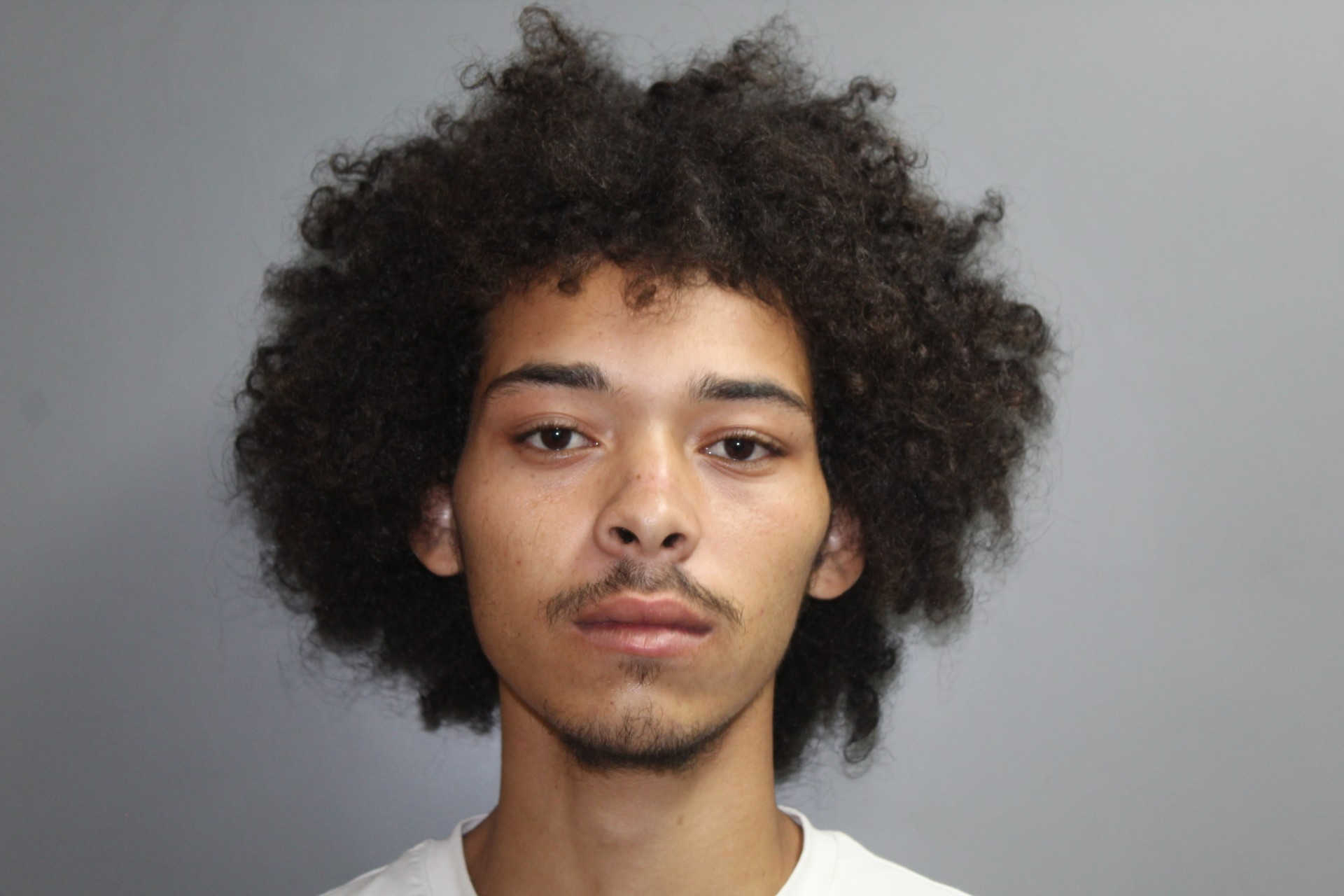
In a 10-page memorandum opinion issued Friday, October 30, Chief U.S. District Judge Robert A. Molloy partially granted a motion by Ervin Noel Jr. to suppress statements he made to VIPD Detective Salim Ross following his May 9, 2025, arrest in Frederiksted.
The judge found that Ross questioned Noel about a firearm discovered beneath the passenger seat of a vehicle in which he had been traveling, despite Noel already being under arrest and in police custody. Ross had not yet administered the warnings required under Miranda v. Arizona, which protect suspects from compelled self-incrimination during custodial interrogation.
However, Judge Molloy declined to suppress a second set of admissions made after Noel received his Miranda warnings, signed a waiver and participated in a recorded interview. The court determined that those later statements were made knowingly and voluntarily, notwithstanding Noel's illness and the detective's earlier reference to the possibility that the vehicle's driver could also face arrest.

Initial questioning occurred before warnings or recording
According to the court's findings, VIPD officers stopped the vehicle on May 9 while executing an arrest warrant issued three days earlier by the Superior Court of the Virgin Islands. Noel was seated in the front passenger seat, while Omolara Simmonds, the mother of one of his friends, was driving.
Simmonds testified during an October 19 evidentiary hearing that Noel had been staying at her home for seven days and had been sick throughout that period. She said she was transporting him to the hospital because his condition had not improved.
Police arrested Noel on the outstanding warrant, impounded the vehicle and subsequently discovered a firearm beneath the front passenger seat during a search.
While Noel was being booked at the police station, Ross informed him about the discovery and asked who owned the weapon. The detective also told Noel that if nobody claimed the firearm, both he and Simmonds would be arrested and charged with possessing it.
Noel responded that the firearm belonged to him.
At that point, however, the detective had not informed Noel of his Miranda rights. The initial conversation had also not been recorded.
The opinion states that Ross acknowledged during the suppression hearing that the exchange was unrecorded and that "there was no reason that he did not start the camera earlier."
Judge Molloy found that the circumstances clearly constituted custodial interrogation. Noel had already been arrested under a warrant, was handcuffed and was being questioned at the police station about possible criminal conduct.
The court therefore ruled that the admissions made before the detective administered Miranda warnings could not be introduced against Noel.
The judge reached that conclusion even though neither side had explicitly addressed the admissibility of the initial unwarned statements in its arguments.
Recorded admission followed approximately four minutes of questioning
After the initial exchange, Ross advised Noel of his constitutional rights, including the right to remain silent and the right to have an attorney present during questioning.
Noel signed a warning and consent form bearing a handwritten time of 1:57 p.m. The detective then conducted a recorded interview lasting approximately four minutes and ending around 2:02 p.m.
During that interview, Noel again claimed ownership of the firearm, described the weapon, acknowledged placing it inside the vehicle and explained how he had obtained it.
Judge Molloy found that Noel understood the rights he was surrendering and had voluntarily agreed to answer questions. The opinion notes that Ross read the rights aloud while Noel followed along on the form before signing it.
The judge also rejected the argument that the earlier failure to administer Miranda warnings automatically invalidated the subsequent admissions. Federal precedent permits later statements to be admitted when a suspect receives proper warnings and voluntarily waives those rights, provided the circumstances do not establish improper coercion sufficient to undermine the later waiver.
The court concluded that the recorded interview met those requirements.
Suspect vomited in police vehicle, reported illness before questioning
The ruling also details Noel's physical condition while he was in police custody, an issue his defense raised in challenging the voluntariness of the recorded statements.
The prosecution and defense stipulated that Noel vomited in the police vehicle while being transported to the station.
Before providing his recorded admissions, Noel informed detectives that he was not feeling well, that his "belly was hurting," and that he had been traveling to the hospital when officers stopped and arrested him.
Ross testified that Noel did not explicitly request medical attention or indicate that he was unable to proceed with the interview.
The detective also acknowledged that VIPD medical policy requires officers who are aware of a person's medical needs, or who receive a request for medical attention, to address those needs before continuing with other duties, including questioning.
According to Ross, he did not learn until after the interview that Noel had vomited in the police vehicle.
The parties agreed that officers eventually transported Noel to the hospital at approximately 2:50 p.m., nearly 50 minutes after the recorded interview ended. He was returned to the police station around 4:50 p.m.
Although the court acknowledged that Noel had been experiencing an illness, it found insufficient evidence that his condition compromised the voluntariness of his later statements.
Judge Molloy based that conclusion partly on the recorded interview, during which Noel appeared alert, answered questions coherently and did not display visible distress. The judge also found no evidence that officers deliberately exploited his medical condition to obtain admissions.
The opinion does not determine whether the timing of Noel's medical treatment complied with every aspect of VIPD's internal medical policy. That question remains distinct from the constitutional issue the judge resolved concerning the admissibility of his statements.
Judge rejects claim that reference to driver's arrest was coercive
Noel's defense also argued that Ross's warning about the possible arrest of Simmonds contributed to an involuntary confession.
The court rejected that argument, finding that informing a suspect about possible legal consequences does not necessarily constitute coercion.
Because the firearm was discovered inside a vehicle operated by Simmonds and beneath the seat Noel had occupied, the court found that officers were entitled to explain the possibility that she could face charges.
Judge Molloy concluded that the warning did not amount to improper intimidation sufficient to invalidate Noel's later admissions.
The ruling therefore distinguishes between the detective's failure to issue Miranda warnings before the initial interrogation, which required suppression of those statements, and the circumstances of the subsequent recorded interview, which the court found constitutionally permissible.
Federal prosecution involves machine gun and shooting allegations
Noel's arrest originated from an investigation into a February 28, 2025, shooting in Frederiksted.
The Consortium reported his arrest in May 2025, when VIPD identified him as a suspect in gunfire reported near Legendz Lounge.
A federal grand jury subsequently returned an indictment on January 14, 2026, charging Noel with illegal possession of a machine gun, discharging a firearm during and in relation to a crime of violence, unauthorized possession of a firearm during a crime of violence, third-degree assault and first-degree reckless endangerment.
In a separate February 5 detention order, U.S. Magistrate Judge Emile A. Henderson III summarized federal prosecutors' allegations that the recovered firearm had been modified to fire automatically.
Prosecutors also asserted that preliminary ballistic testing connected the weapon to approximately eight other shooting incidents, including two in which people were killed.
Those claims were presented as part of the government's case for pretrial detention. They do not establish that Noel personally committed the other shootings or that he was responsible for the deaths.
Judge Henderson granted the government's detention motion in February, ordering Noel held pending trial.
Ruling raises questions about interrogation practices
The October 30 decision does not dismiss the criminal charges against Noel, invalidate his arrest or exclude the firearm itself from evidence. It prevents prosecutors from using his statements made before Miranda warnings were administered while allowing them to rely on the subsequent recorded admissions.
Nevertheless, the findings raise questions about VIPD interrogation practices, particularly why questioning about firearm ownership began before the required warnings and why the initial exchange was not recorded despite the availability of recording equipment.
The medical testimony also raises questions about how officers communicate information concerning a detainee's health and determine when questioning should be postponed in favor of treatment.

The court did not make a finding of deliberate coercion or medical neglect. Its decision was confined to the admissibility of Noel's statements under federal constitutional standards.