
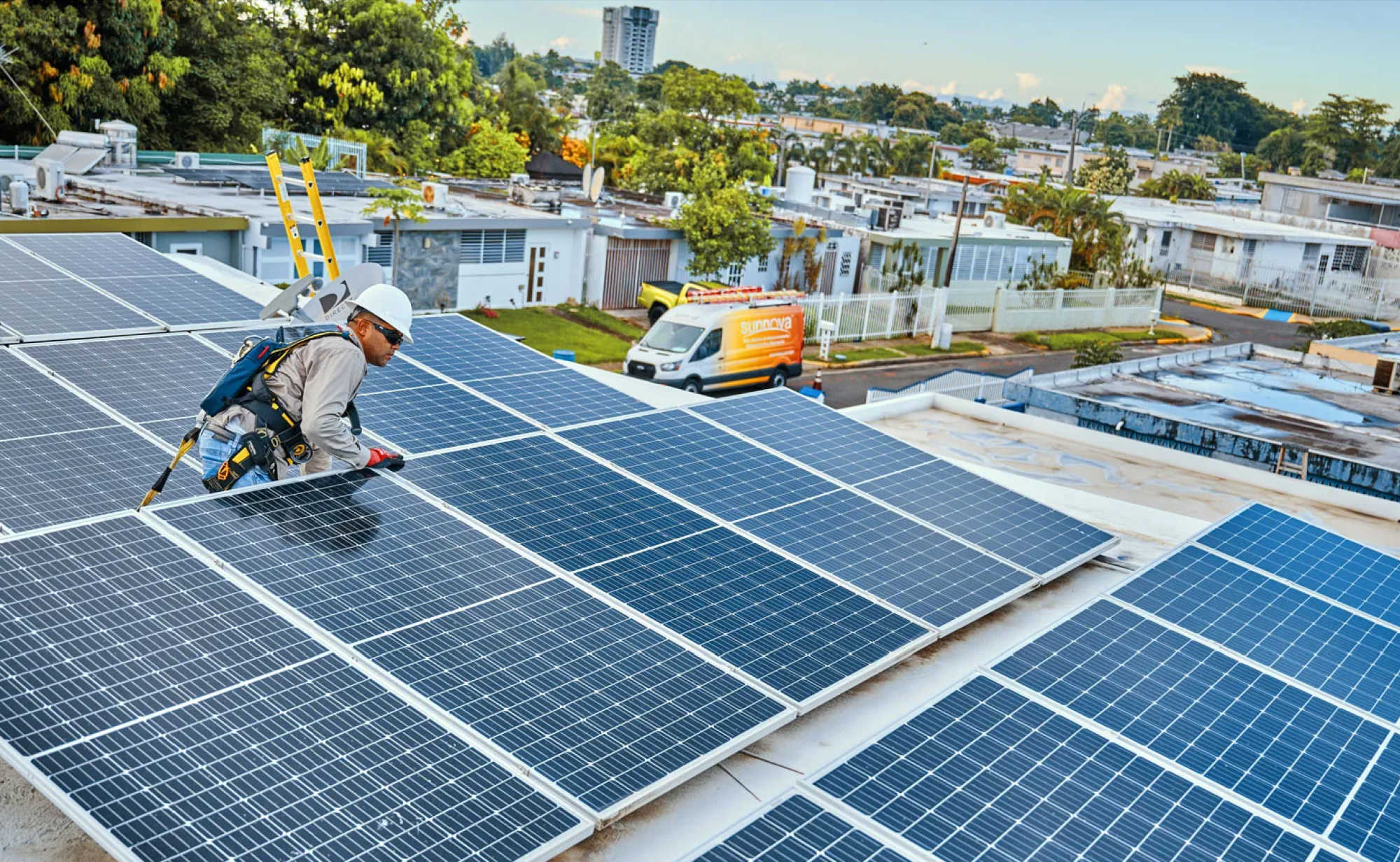
The push to install rooftop solar panels in neighborhoods across Puerto Rico is paying off, as the batteries connected to these panels are being used to provide backup power for the national grid. This is intended to help prevent blackouts, and may eventually obviate the need for “peaker plants”, which generate energy only when demand spikes.

Luma Energy, responsible for power generation and distribution in the territory, launched a year-long pilot program last year which gets power from as many as 6,500 households to smooth over energy shortages. Luma intends to expand the pilot, if successful, into a virtual power plant that could be the largest such plant in North America if all home batteries are included in the initiative.
Following Hurricane Maria which in 2017 devastated the territory’s already struggling grid, adoption rates of rooftop solar soared, with over 100,000 households boasting independent power generation capacity and approximately 4,000 new systems coming online each month. These systems are currently reducing Puerto Rico’s energy needs by about 600 megawatts, while the pilot program could provide an additional 26 megawatts to the grid. Before the end of 2023, Luma says almost a third of their target number of households had already joined the pilot program, making over 12 megawatts of power capacity available.
Residents whose solar batteries feed power into the grid are compensated at a rate three times the value of net metering, according to Javier Rua-Jovet, chief policy officer at the Puerto Rico Solar and Energy Storage Association. Over the span of about a decade, a homeowner could recoup the cost of their solar battery investment through participation in the program, which has been activated three times thus far, with more need expected as temperatures rise in the summer.

The Virgin Islands Energy Office is looking towards the establishment of a similar system, utilizing federal grant funding from the Inflation Reduction Act and the Bipartisan Infrastructure Law to expand access to battery storage in the Virgin Islands. Some of the money will be spent on providing rebates that will significantly reduce the upfront costs for consumers interested in installing home battery systems, making energy storage more accessible to Virgin Islands homeowners.