




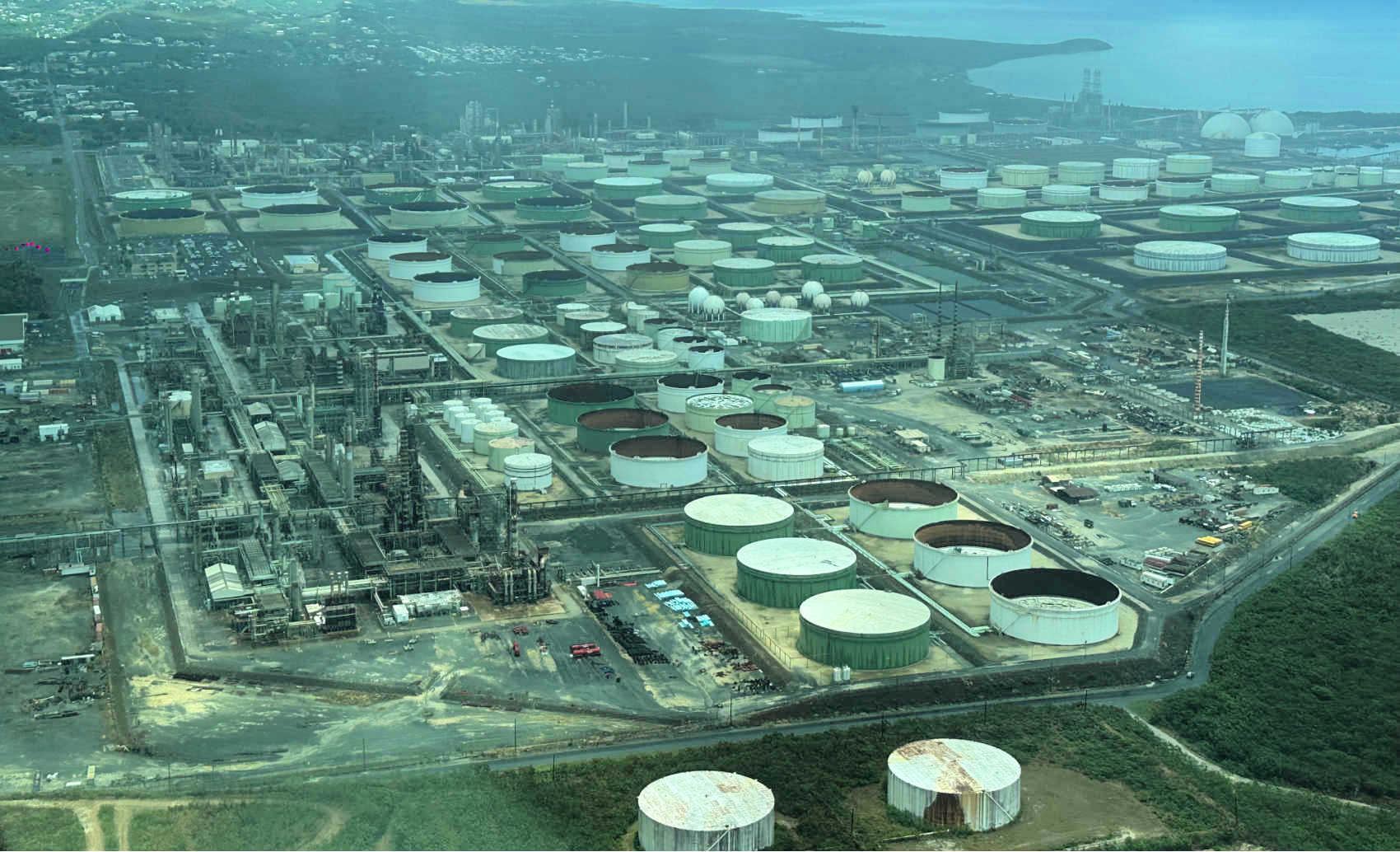
The Environmental Protection Agency has approved a plan to safely remove liquefied petroleum gas (LPG) stored at the Port Hamilton Refining and Transportation facility on St. Croix.

EPA officials shared details during a community meeting on Tuesday evening. On-scene co-ordinator Chris Jiminez said that just over 40,000 gallons of LPG would be vaporized in batches, with that vapor subsequently destroyed in a thermal oxidation process.
“PHRT had applied for a permit for a temporary thermal oxidizer through DPNR, and that was approved in March,” noted Mr. Jiminez. “Prior to going through the thermal oxidizer, it will also go through carbon scrubbing,” he advised. That process will remove any harmful mercury present in the LPG vapors.
EPA officials and contractors will be on site and conducting air monitoring operations “during the entirety of the removal operation,” Mr. Jiminez assured. “We'll be on site when PHRT and their contractor sets up the equipment …for the destruction, we'll be there for the entirety of the actual removal operation…and then we'll again be there for the demobilization of all the equipment,” he continued. Apart from mercury, officials will be monitoring for carbon monoxide and hydrogen sulfide among other volatile organic compounds.

After the LPG has been removed from where it is currently being stored, inert nitrogen gas will be piped in to flush the system of any remaining potentially flammable materials.
According to Mr. Jiminez, work is currently underway to assemble the equipment for the removal exercise. Additional materials are expected to arrive toward the end of this month, after which a three-week setup process will occur. Once a successful “test burn of the thermal oxidizer” has been conducted, full-scale removal operations will begin. “It's expected that that will happen sometime in August, probably towards the end of August,” Mr. Jiminez said. The entire operation “should take approximately 11 to 12 weeks,” he estimated.
Despite the plan underway to safely remove lingering LPG at the refinery, EPA officials were unequivocal in stating that there was no refinery restart operations currently on the horizon. “We have not received any formal notification from Port Hamilton of an intent and a plan to restart the refinery,” said Carmen Guerrero, EPA's Region Two director of the Caribbean Environmental Protection Division. “EPA does not have a refinery restart plan from the formal owners.”

With the St. Croix hotline no longer available, residents with questions are asked to email or call the officials responsible for the district directly.