

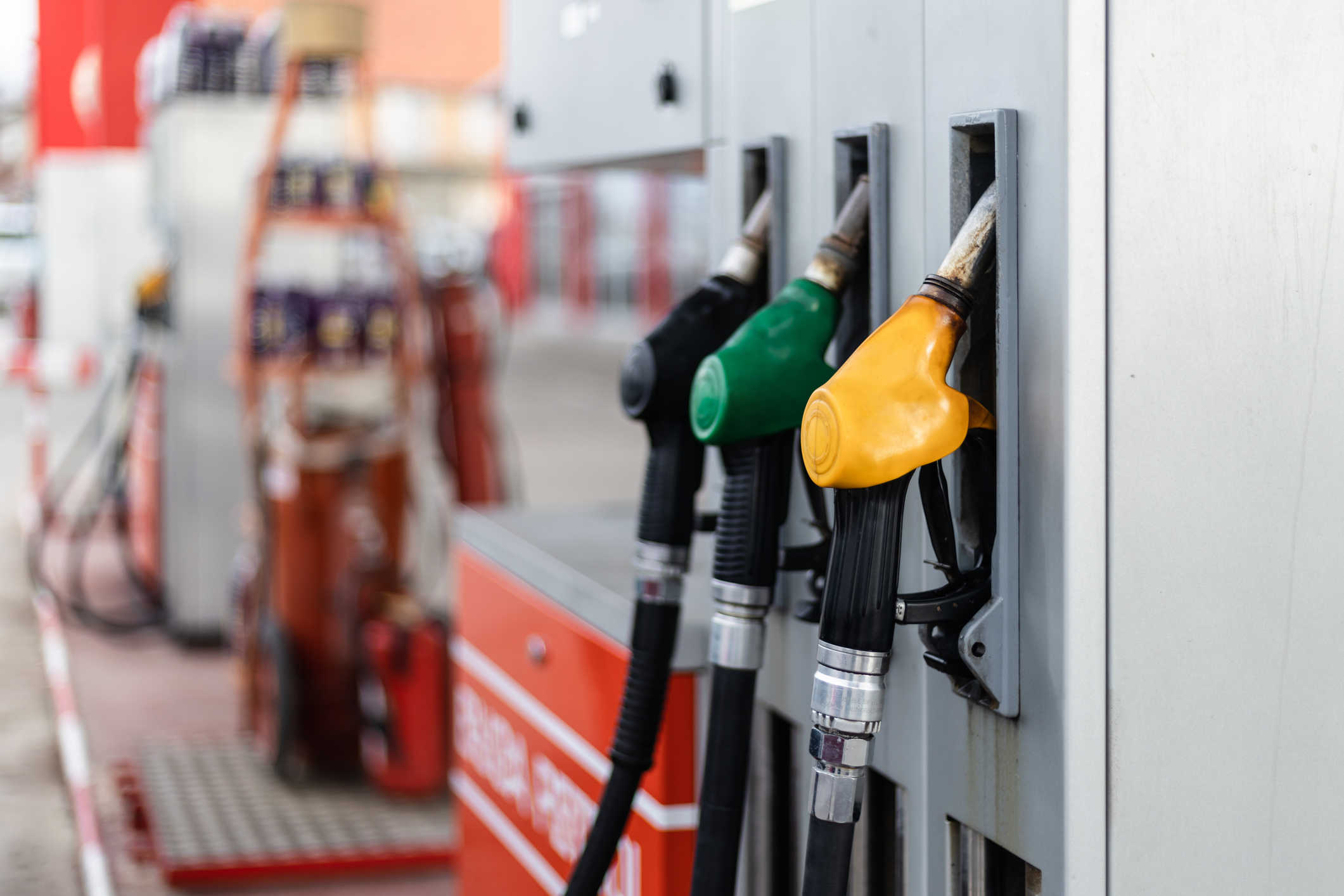
Several Virgin Islands lawmakers accused gas stations of colluding to keep fuel prices high during a legislative hearing Monday, but the Department of Licensing and Consumer Affairs declined to reach that conclusion while its territorywide pricing investigation remains underway.
DLCA Assistant Commissioner Horace Graham told the Committee on Economic Development and Agriculture that Virgin Islands consumers are paying “substantially more at the pump than their mainland counterparts,” and that the department has observed retail fuel price increases exceeding increases in wholesale acquisition costs across every fuel category.
Still, Graham emphasized that DLCA “has not concluded that any retailer engaged in unlawful pricing conduct.”
The department hopes to present preliminary findings from its investigation “within the next 90 days,” provided there are no additional delays.

Lawmakers Point to Possible Collusion
Committee Chairman Sen. Hubert Frederick and Sen. Clifford Joseph both raised the possibility that gas retailers are coordinating prices to the detriment of consumers, even as the global fuel supply chain has become increasingly complex.
“It’s like a collusion, because when you stop to think, when it’s time for the price to drop, it takes forever to drop,” Senator Joseph stated.
Sen. Marise James pointed to a similar concern frequently expressed by consumers.
“The prices are hiked quickly, and then the reductions are like molasses slow.”
Graham repeatedly resisted characterizing the pricing patterns as evidence of collusion before DLCA completes its review.
“DLCA is not in a position right now to say that this is collusive activity or not.”
Frederick remained skeptical.
“There's an old saying: If it walks like a duck, quacks like a duck, then it's a duck. So we're here trying to massage the word collusion,” he said, before trailing off into another thought.
DLCA Examining Costs, Profits and Pricing Methods
DLCA began its broad investigation into fuel pricing practices in late 2025.
The department requested information covering retail sales, historical pump sales, wholesale purchase invoices, transportation and delivery costs, operating expenses, labor and utility costs, lease payments, profit and loss statements, pricing methodologies, tax records and compliance filings.
DLCA intends to examine the combined data to determine whether the retail prices charged by individual gas stations “reasonably correspond to whole acquisition costs” and other expenses, including transportation and operating costs.
Based on those findings, the department will determine whether any pricing practices warrant “further administrative, civil, or legislative action.”
Graham acknowledged that high fuel prices in the territory predate the current global pressures.
The department is aware that “Virgin Islands fuel prices were already significantly higher than the national average,” he said.
Graham described that disparity as a “structural reality that reflects the Territory’s geographic isolation” and dependence on imported fuel, along with the “limited economies of scale available in a small island market.”
He said local motorists were already paying more per gallon before the war on Iran began than the national average would later reach at its peak during the conflict.
Gasoline and Diesel About 19 Percent Higher and June
As of June 2026, the national average for regular gasoline stood at $4.28 per gallon, compared with a Virgin Islands average of $5.11, making local gasoline approximately 19.4 percent more expensive.
Diesel averaged $5.21 per gallon nationally, while Virgin Islands consumers paid an average of $6.20, or approximately 19 percent more.
Graham explained that the territory starts from a higher pricing baseline before global increases are factored in.
“When global prices rise, the Territory absorbs the same wholesale increases as mainland markets, but does so from a baseline that is already significantly elevated by transportation costs…”
At the same time, DLCA has found that “retail fuel price increases exceeded wholesale fuel acquisition cost increases across all fuel categories.”
Graham cautioned lawmakers against interpreting that finding by itself as proof of improper conduct. He said the observation “does not constitute an accusation of wrongdoing” because “wholesale acquisition cost is only one component of retail fuel pricing.”
Subpoenas Follow Court Dispute
There is no firm date for completion of DLCA’s investigation.
Although the department issued its initial information requests in November 2025, some gas station proprietors argued that the investigation amounted to a constitutional violation.
The dispute resulted in a legal challenge, with the Superior Court ultimately supporting DLCA’s investigative authority.
DLCA subsequently issued administrative subpoenas, which prompted additional gas stations to provide the requested information. Some businesses, however, still have not complied.
Graham said the V.I. Department of Justice is assisting DLCA with enforcement.
That pace drew criticism from Sens. Kenneth Gittens and Alma Francis Heyliger, who questioned why noncompliant businesses had been allowed to prolong the investigation.
Gittens argued that DLCA has not fully exercised the enforcement authority available to it.
“If your enforcement officers are going out and conducting inspections and giving orders, if they disobey lawful orders, then under Title 14, individuals can be arrested, and I am not seeing this taking place…If you start making examples, people will come into compliance. We're playing games…You have a lot of authority vested in you under the Virgin Islands code, and I wish that you all will exercise your law enforcement authority,” Senator Gittens pleaded.
Graham responded that the circumstances involved are “nuanced.”
Earlier in the hearing, he told Joseph that what is “legally allowed” in connection with subpoena noncompliance is the assessment of penalty fees.
Lawmakers Question Whether Profit Caps Could Work
Monday’s hearing also turned to whether DLCA could establish limits on fuel retailers’ profit margins.
Graham expressed caution about such an approach.
“We are a free market economy…I'm being extremely cautious on suggesting that we set profit margins,” he told Sen. Angel Bolques Jr.
Graham said previous efforts to establish profit margins were challenged in court and eventually reversed.
“It hasn't been sustained across the nation in any other jurisdiction where that has been attempted,” Mr. Graham added.
Instead, DLCA could engage directly with retailers once the department better understands their costs and margins.
Graham said the department hopes to encourage retailers to “ameliorate your prices to the extent that it's reasonable.”
He said retailers could “look at granting some relief” if they determine that “profit margins are excessive in your own estimation.”
Heyliger Questions What Happens After Investigation
Heyliger said she wanted a more concrete course of action than another study followed by discussions with retailers.
She complained that the Virgin Islands had become a territory of “research…a territory of studies, building architectural designs, and nothing don’t get built. There’s no end result.”
Heyliger also questioned what DLCA planned to do if its investigation ultimately showed that retailers were earning excessive margins.
She told the department it appeared to have “no appetite to really do anything after this report. You're just going to have a conversation and hope and pray that they actually try to be decent human beings and do something about it.”

For now, DLCA has not accused any fuel retailer of collusion or unlawful pricing. The department says that determination will depend on the financial and pricing data collected through its investigation, with preliminary findings potentially coming within the next 90 days if the remaining information is obtained without further delays.