




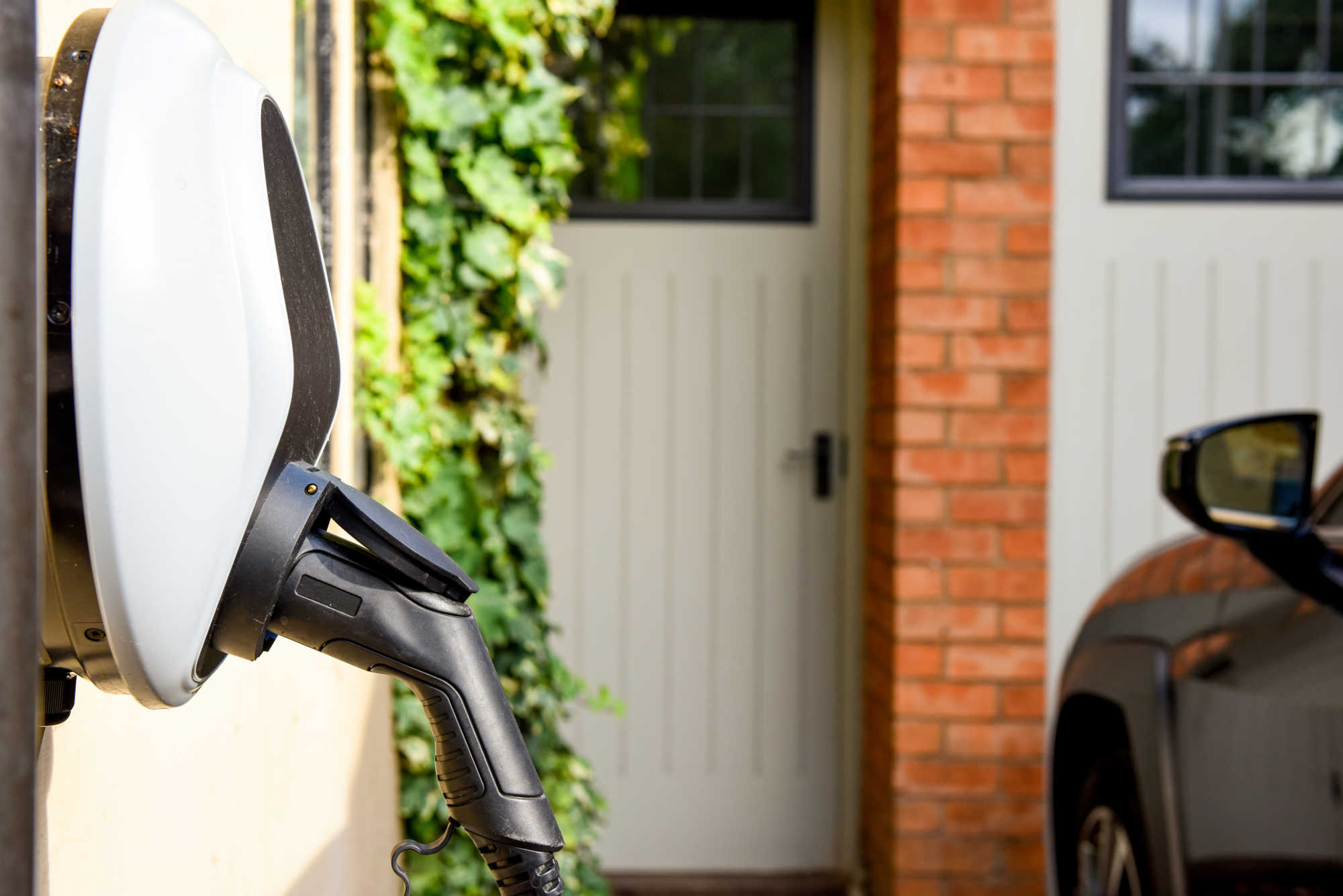
Warren Mosler says fixing the Virgin Islands’ power crisis requires more than reducing fuel costs or expanding renewable generation. Instead, he argues the solution lies in increasing electricity sales so WAPA’s fixed costs are spread across more usage—a strategy he says could be achieved by transitioning residents toward electric vehicles, even if that shift ultimately leads to gas stations shutting down.

In an interview with the V.I. Consortium on Wednesday, Mosler framed electric vehicles not primarily as an environmental initiative, but as an economic policy designed to stabilize WAPA while lowering household transportation costs. He said the territory’s long-standing focus on reducing generation costs misses what he sees as the real driver of high power bills: fixed operating expenses that remain constant regardless of how much electricity is sold.
Mosler explained that WAPA’s marginal cost—the cost of producing one additional kilowatt-hour of electricity—is, by his understanding, about 13 cents per kilowatt-hour, while customers are billed around 45 cents. In his view, even significant reductions in fuel or generation costs would only shave a few cents off customer bills because the bulk of the bill reflects fixed costs such as staffing, maintenance, and infrastructure.
He said those fixed costs were estimated at about $150 million per year several years ago. As customers reduce grid dependence through rooftop solar or other measures, Mosler said that fixed cost is spread across fewer ratepayers, driving bills higher for those who remain on the system. He described an extreme example to illustrate the point: if only one customer were left on the grid, that person would be responsible for the entire fixed cost.

Against that backdrop, Mosler said the territory needs to move in the opposite direction by expanding electricity usage rather than shrinking it. His most prominent proposal to accomplish that goal is a large-scale shift to electric vehicles.
Mosler said he has already begun exploring access to electric cars from China, describing new tariff arrangements that he says allow the Virgin Islands to obtain vehicles that cannot be sold on the U.S. mainland but can be used locally. He said the price point he is targeting is between $7,000 and $8,000 for a brand-new electric car.
He compared the strategy to a business model in which an upfront product leads to recurring revenue, arguing that the real benefit comes from ongoing electricity consumption. In Mosler’s plan, electric vehicles would significantly increase WAPA’s electricity sales while costing the utility very little to serve.
He estimated that widespread adoption of electric vehicles could generate an additional $25 million to $30 million per year in electricity sales for WAPA, representing roughly a 10% increase in overall sales. He said the added demand would not require new generators because WAPA already has excess capacity, meaning the cost of supplying the additional electricity would be minimal.
Mosler also noted the household savings side of the equation. He said residents would spend less on electricity to operate electric vehicles than they currently spend on gasoline. In the interview, he framed the comparison in monthly terms, suggesting that a household might spend about $100 per month on gasoline, compared with roughly $80 per month to charge an electric vehicle.
To make the transition feasible, Mosler said the vehicles could be financed so that the cost of a new electric car would be about $150 per month. He argued that when combined with lower fuel costs, the overall monthly expense would be manageable for many residents and, in some cases, cheaper than maintaining a gasoline-powered vehicle.
When asked directly about the impact on gas stations, Mosler did not minimize the consequence. He said gas stations would close as electric vehicle adoption increases, though he emphasized that the change would not happen overnight. He acknowledged that many residents would continue driving gasoline-powered vehicles for years, creating a transition period in which both systems coexist.
Mosler compared the shift to historical changes in transportation, such as the move from horses and buggies to automobiles. He said progress of that kind inevitably disrupts existing industries, but argued that broader benefits justify the transition. While acknowledging that gas station owners and workers could be affected, he said new opportunities would emerge as the economy adjusts.
As for timing, Mosler said he does not know exactly how long the transition would take, but estimated it could span three to four years. He noted logistical constraints, including shipping timelines—remarking that vehicles would arrive “on a slow boat from China”—and said adoption would likely build gradually as people choose to participate.
He stressed that participation would not be mandatory. Residents who prefer to keep gasoline vehicles would be free to do so, and those who do not want a new car would not be required to take one. However, Mosler suggested that many people would opt in once they see the cost savings.
The electric vehicle proposal is part of a broader approach Mosler outlined for WAPA, which centers on increasing electricity sales rather than relying solely on fuel cost reductions or renewable generation. While he said he supports solar power and has solar on his own home, he argued that solar alone cannot solve the bill problem because it does not address fixed costs. He said solar and batteries help the environment and contribute incremental savings, but in his view they reduce bills by only a few cents.

Mosler said his electric vehicle plan is intended to tackle what he sees as the structural problem at WAPA by adding significant new demand that is cheap to serve. By spreading fixed costs across more electricity usage, he said, WAPA’s finances could stabilize while residents save money on transportation—even as the territory undergoes a disruptive shift away from gasoline.