




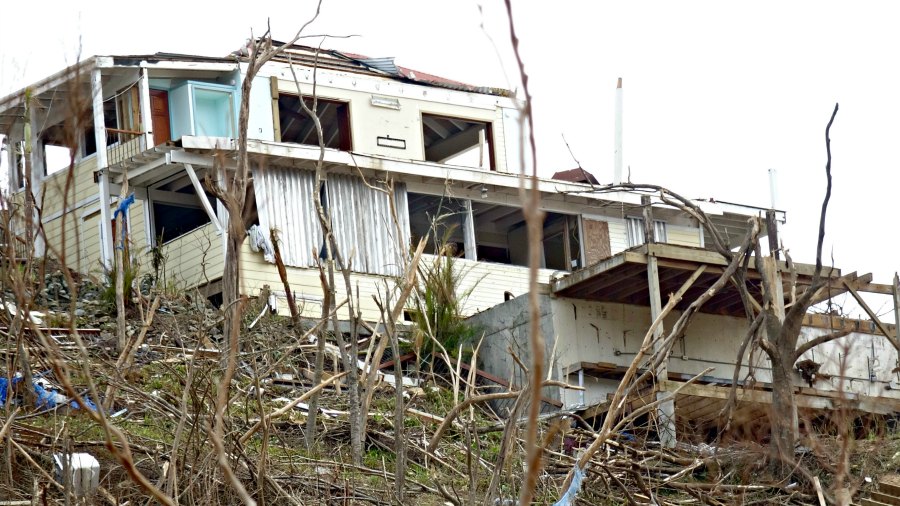
The Virgin Islands Housing Finance Authority on Monday night issued a statement blasting the Federal Emergency Management Agency, in response to a Consortium article on the Dept. of Homeland Security, Office of the Inspector General audit report that said V.I.H.F.A. mismanaged public assistance funds leading to cost overruns of disaster-related projects following Hurricanes Irma and Maria of $296 million.

V.I.H.F.A. pushed back forcefully, laying blame for the overruns on FEMA, stating that the agency had projected costs for projects to rise to $600 million, but only provided funding of $222 million.
"With regards to cost overruns mentioned in the report, FEMA originally estimated an approximate cost of $600 million for the STEP program. However, FEMA only obligated $222 million, leaving an almost $300 million shortfall in the actual cost. By its own estimates, FEMA only partially funded the projects, but the OIG report castigated V.I.H.F.A. for overruns," V.I.H.F.A. said.
The authority went on to chide FEMA, stating that it underfunded the $766 million Sheltering & Temporary Essential Power (STEP) Program, while moving slow to obligate funding.

"From its inception, the STEP program in the Territory was inadequately funded by FEMA. Moreover, FEMA delayed the obligation of funding for critical tasks necessary to start the program as thousands of American citizens in the Territory languished in the aftermath of two Category 5 hurricanes. The report mistakenly states that VIHFA began identifying cost overruns in January 2018. This is not possible because the STEP program in the Territory did not start until weeks after January 2018 (the initial prime contractors, AECOM, did not sign a contract with VIHFA until February 5, 2018). In addition, different funding tranches were not even obligated until May 2018 and then November 2018," V.I.H.F.A. said.
The authority did not address why it took several months to inform FEMA of the cost overruns. The O.I.G. report says V.I.H.F.A. did not notify FEMA of the $296 million in cost overruns until September 2018 — nearly 9 months after incurring a significant amount of the costs."
"Recipients of federal funding are required to report deviations from budget or project scope or objectives and request prior approvals from federal awarding agencies for budget and program plan revisions," said the O.I.G. "FEMA policy requires that states report cost overruns as soon as they identify them." The O.I.G. report says the V.I. Housing Finance Authority, which has been led by Daryl Griffith during the Mapp administration years and currently in the Bryan administration, indicated it was not aware of the requirement to report cost overruns.
"Failure to notify FEMA of project cost overruns may result in delayed payments to contractors. This may result in an increase in the total costs of related services because damaged facilities may deteriorate further if they are not repaired or replaced promptly. Additionally, failure to promptly notify FEMA of project cost overruns has caused delays in payments to contractors, resulting in litigation claims against V.I.H.F.A. Such delays may damage V.I.H.F.A.’s reputation with existing and potential contractors and increase the likelihood that contractors do not bid on future work," the Dept. of Homeland Security, Offie of the Inspector General said.
Additionally, due to delays in notifying FEMA of project cost overruns, V.I.H.F.A. may place undue pressure on FEMA to fund costs that are not allowable or reasonable, the report says.
The O.I.G. recommended that FEMA perform a detailed review of the $296 million in cost overruns and disallow all costs that do not fully comply with federal regulations. It also recommended that FEMA require that V.I.H.F.A. adhere to federal regulations for all future project worksheet requests and modifications.
In its statement, V.I.H.F.A. said that throughout the STEP program and continuing to today, FEMA, the Virgin Islands Territorial Emergency Management Agency, the Office of Disaster Recovery (O.D.R.) and V.I.H.F.A. "have been in regular contact about the funding challenges of the STEP program."
"From the program’s inception, V.I.H.F.A., through its project manager Witt O’Brien’s provided weekly reports to FEMA," the authority said.
Additionally, V.I.H.F.A. said FEMA's reimbursement model is not feasible "for cash strapped jurisdictions without vast reserves, such as the U.S. Virgin Islands, because it requires governments like Texas to front hundreds of millions of dollars and later apply to FEMA for reimbursement."
Relative to compliance issues, V.I.H.F.A. said it repeatedly requested guidance from FEMA. However, STEP contracts are in full compliance with V.I.H.F.A. procurement policies.
"The STEP Program made homes safe and accessible for sheltering and provided temporary repairs to 6,516 homes and permanent roof repairs to 1,516 homes to allow over 24,000 American citizens to safely shelter in the USVI after the devastation of Hurricanes Irma and Maria in 2017," said the authority.
"All STEP invoices for subcontractor payments have been thoroughly reviewed by the Territory’s Public Finance Authority contractors Witt O’ Brien’s and Ernst & Young, and have been submitted to FEMA for payment," the statement reads.
The authority said it, along with Governor Albert Bryan, ODR, VITEMA and other key stakeholders have requested for many months that FEMA expeditiously release the funding to make remaining payments owed to all STEP program contractors who have successfully performed.

"V.I.H.F.A. thanks the Prime Contractors, and all the subcontractors, big and small, local and stateside that were hired for their patience in a very long and frustrating process for all involved. VIHFA will continue to do everything within its power to pay contractors in accordance with federal laws," the statement concluded.