


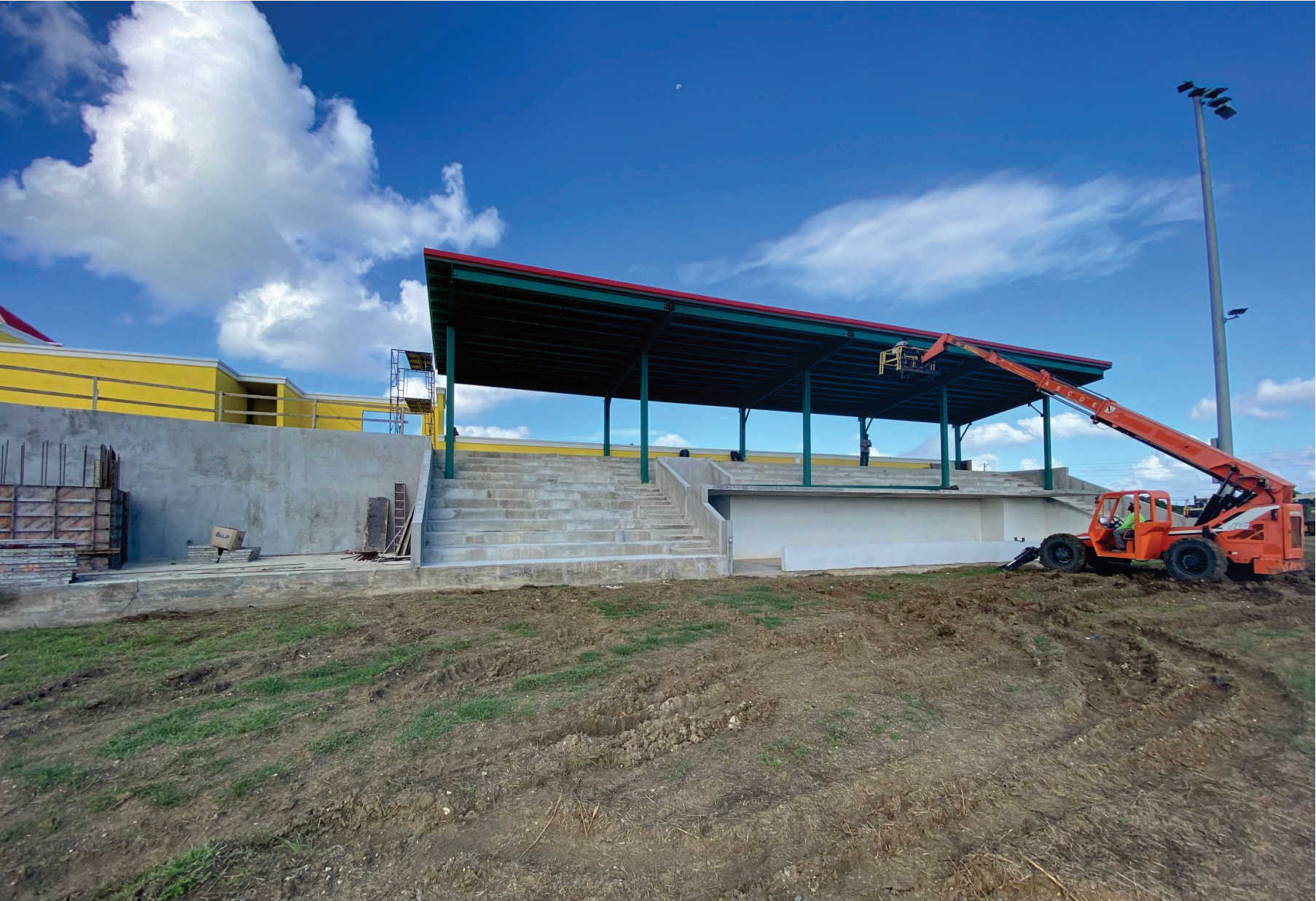
The left field bleacher roof of the Paul E. Joseph Stadium, currently under construction. Photo Credit: DPW.
Even as questions continue over whether GEC, LLC can complete the Paul E. Joseph Stadium by the newly proposed September 2026 date, the Department of Sports, Parks, and Recreation is already preparing for what comes next: taking over and operating a facility expected to cost far more each year than it is likely to bring in.
During Monday’s hearing, Sports, Parks, and Recreation Commissioner Vincent Roberts said his department is planning for the stadium’s formal turnover, but also made clear that long-term operations will require careful planning, outside support, and likely continued public investment.
Mr. Roberts told lawmakers that once the stadium is formally turned over, DSPR will “immediately implement a structured operational rollout.” He said that plan includes facility commissioning, the “deployment of a dedicated staffing model,” and the implementation of standard operating procedures for scheduling and vendor coordination.
He also warned that operating the stadium will come at a significant cost. Based on “comparable facilities and our operational experience,” Mr. Roberts said annual operating expenses are expected to range between $1.5 million and $2.2 million.
According to the commissioner, those costs would be driven by personnel, utilities such as stadium lighting and water, field and facility maintenance, equipment, and security and event operations.
“It is important to recognize that facilities of this scale are high cost to maintain, and that reality must be factored into long-term planning,” Mr. Roberts warned.
To help offset those expenses, DSPR plans to implement what Mr. Roberts described as a “diversified revenue model.”
He said projected annual revenue is expected to range from $800,000 to $1.6 million, below the level needed to fully operate the facility.
According to Mr. Roberts, revenue would come from league games, sports tourism initiatives, facility rentals, cultural events, vendor and concession fees, and sponsorship and advertising opportunities.
Mr. Roberts said he wanted to be “candid” with lawmakers, telling them that “facilities of this nature are not typically profit-generating.” Instead, he said, their value is “measured by economic activity, community engagement, and utilization, not solely direct revenue.”
Even so, he warned that “there is a risk of operational deficits if revenue does not meet projections.”
He also said maintenance costs are expected to “remain consistently high,” and cautioned that personnel shortages could “affect upkeep of the facility and the ability to transform the venue from one event to another.”
In DSPR’s written testimony, Mr. Roberts stated that the stadium “must operate as a full-time facility, not an event-only venue.”
Senator Alma Francis Heyliger asked whether the department was being proactive in reaching out to potential sponsors or teams, given that the facility on its own is not expected to generate enough revenue to cover its operating costs.
Mr. Roberts confirmed that the department has already begun those conversations. He said several people have expressed interest in visiting the territory to view the facility, but added that “we can't set no dates until this project is completed.”
Without outside funding, the question of how to keep the Paul E. Joseph Stadium operational and properly maintained may ultimately fall to the Legislature.



Advertisements