




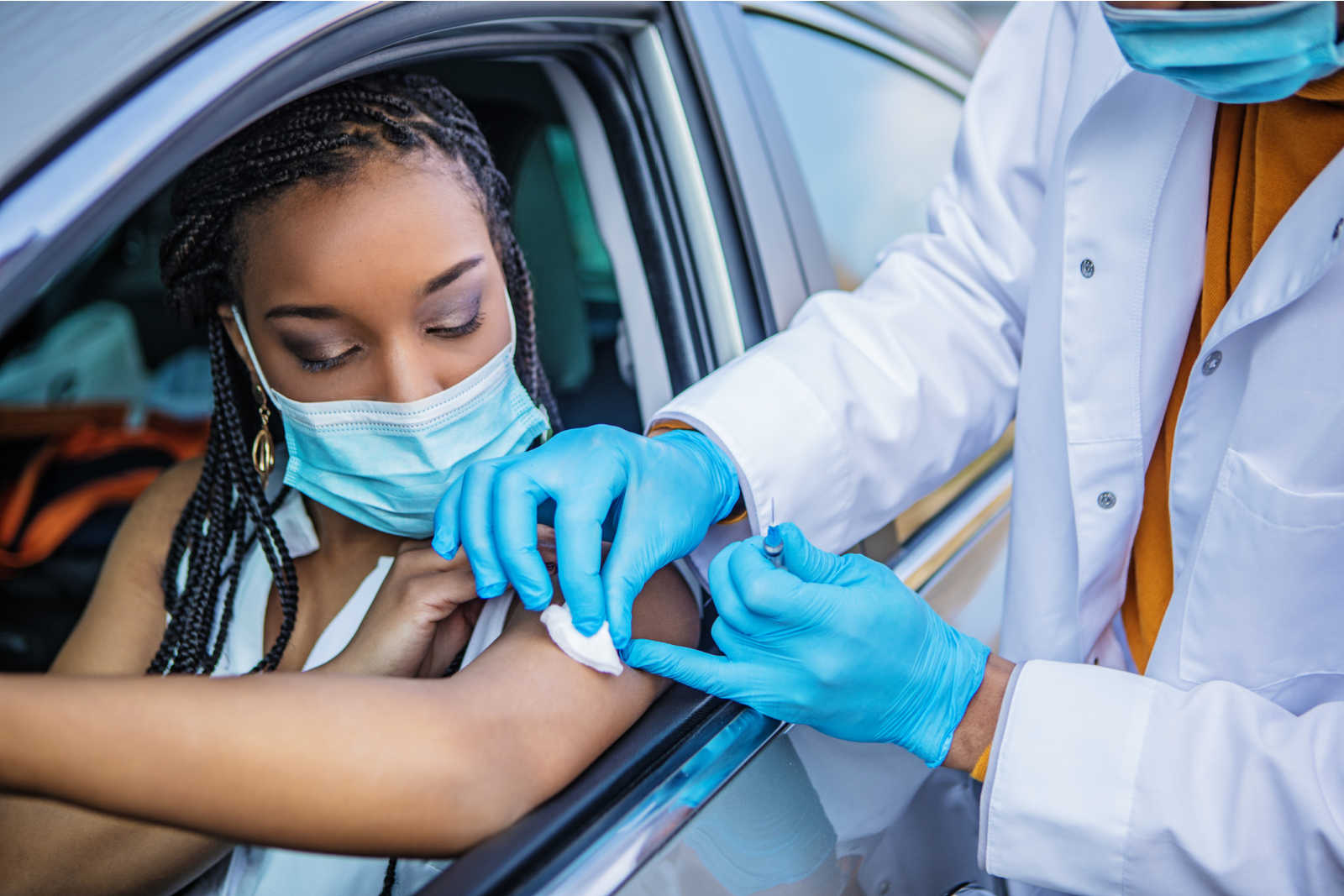
Not too long ago, world economies were on track to leave the coronavirus behind, relegating the disease to be diminished similarly to the seasonal influenza without the sting of overwhelming hospitals with patients. This was thought to be the case because vaccines had proven effective at preventing severe illness, which led to a drastic decrease in cases with U.S. Covid-19 deaths falling to the lowest point in more than a year in June to a weekly average of 432, according to the Wall Street Journal, which analyzed data from Johns Hopkins University.

At the time, WSJ quoted Andrew Brouwer, an assistant research scientist in epidemiology at the University of Michigan, as stating, "This milestone reinforces that the U.S. is in the homestretch of the epidemic, thanks to vaccinations."
Now, June looks like a world away from July, courtesy the Delta variant, which is now the dominant strain in the U.S. (83 percent of cases) and the world, accounting for the vast majority of infections with its ability to evade vaccines and its extremely high transmissibility.
The good news is the vaccines are still effective against Delta as it relates to preventing severe illness and deaths. But because the variant is so contagious, it has disrupted recoveries and projections regarding when economies would leave Covid-19 behind and emerge into normalcy.

Here's a quote from WSJ on Sunday, relative to the high transmissibility of Covid-19 and how it has disrupted the pandemic response: "Estimates vary, but scientists believe the Delta variant is perhaps two to three times more transmissible than the original virus that first emerged from China in 2019. In the absence of any mitigating public-health measures, every 10 people infected with the original virus would go on to infect 25 people, on average. With Delta, 10 infections would likely result in between 60 to 70 new infections, a big increase."
Just Saturday night, Governor Albert Bryan told the Consortium the following: "We could be back to normal if we get to 70 percent vaccinated."
Mr. Bryan would be right just weeks ago. However, the extremely high contagious nature of the Delta variant puts the threshold of achieving herd immunity, or the the percentage of people who need to be inoculated against the virus either through vaccination of a previous infection to beat the disease, further out of reach. "Where previously governments and public health officials had hoped herd immunity might have been achievable with between 60% and 70% of the population vaccinated, Delta means that threshold is likely between 80% to 90%, said Mark Woolhouse, professor of infectious disease epidemiology at the University of Edinburgh," according to WSJ.
WSJ said some estimates put the percentage even higher, "at more than 95 percent, once vaccines’ less than 100 percent effectiveness at reducing viral transmission has been taken into account."
Then there's the question of how long the current vaccines will protect against the virus, especially if new variants continue to emerge with the ability to sidestep vaccine defenses. Federal health authorities are already pointing to the need of not only one or two Covid-19 booster shots, but a third. Among the scientists, Dr. Anthony Fauci, the U.S.'s top infectious disease expert and President Joe Biden's chief medical advisor, who said Sunday on CNN that a third Covid vaccine booster shot "might likely happen."
The Delta variant has sent into disarray what was a trend of sharp decline in Covid caseloads. Analyzing Johns Hopkins University Data, WSJ found that the seven-day average for new daily cases has exceeded 49,000, more than double the number from only 10 days earlier, leading to fresh restrictions in some parts of the country.
The U.S. Virgin Islands has seen cases surge to over 200 as of Saturday, a worrisome trend that Mr. Bryan has said is being caused by the Delta variant. On Friday night, the governor issued a statement that called on Virgin Islanders to follow health protocols and forsake events that were once again becoming the norm: large gatherings such as parties, events at beaches, nightclubs and other such activities.
Part of the problem the USVI is facing is a relatively low vaccination rate. The territory as of Friday had yet to cross the 50 percent vaccination threshold, which as of last week stood at 48.1 percent, or 38,220 people. The number is even less when taking into account people who traveled to the USVI during the early days of vaccine availability for the sole purpose of taking the shots.
[Track vaccination rates by state]

The Delta effect puts not only the reopening of schools to in-person learning in the USVI in jeopardy, but also the true start of the new normal, which will see the territory fully reopened to all activities that preceded Covid, though with new hygiene rules. If this trend continues, expect to see the cancellation of the Crucian Christmas Festival, which leaders had hoped would serve as the launching pad for the new normal in the territory.