




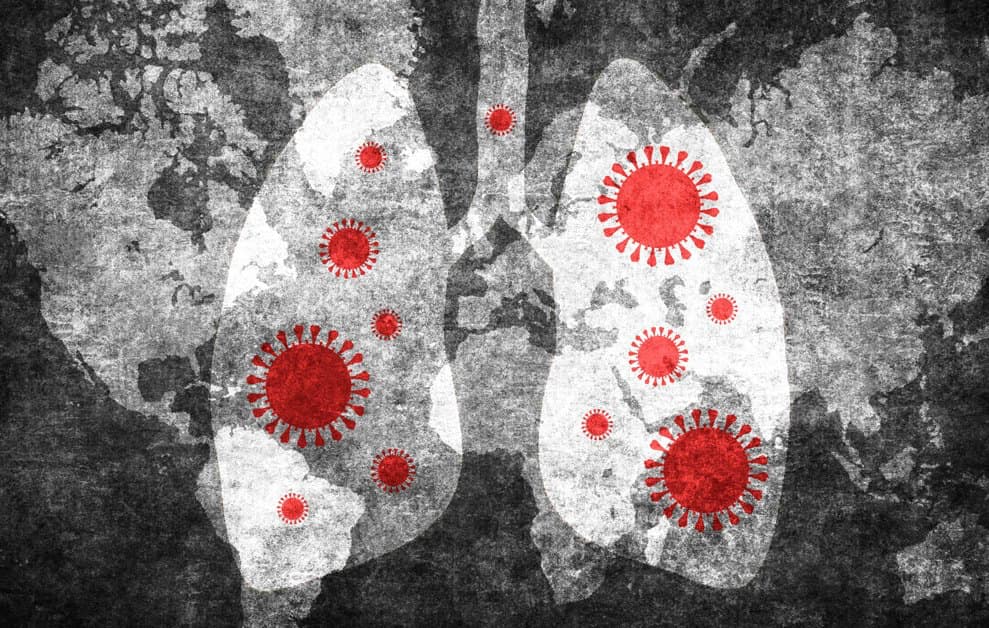
The coronavirus of 2019, called Covid-19 and also severe acute respiratory syndrome coronavirus 2 (SARS-CoV-2), is about six times more lethal than the regular cold, according to data collected by researchers. The virus is much less lethal than two similar contagions. For example, SARS-CoV, the first SARS outbreak which occurred in 2003, has a fatality rate of 9.6 percent, and the Middle Eastern respiratory syndrome, or MERS — first reported in 2012 — has a fatality rate of 34 percent. According to data collected over the years, the difference with the aforementioned two viruses is that they are harder to spread.

Covid-19 on the other hand, while less lethal than SARS-CoV and MERS, is transmitted much easier. To date, the contagion has infected over 27 million people worldwide and killed nearly 900,000.
Another dangerous trait of Covid-19 is the severe side effects it causes in roughly 20 percent of the individuals who contract it, according to David Hui, a respiratory disease expert at the Chinese University of Hong Kong (via Wall Street Journal).
Mr. Hui told WSJ that Covid-19 is “mild, until it decides to become nasty.”
When the virus was first encountered by doctors, it was diagnosed by looking for symptoms such as shortness of breath, fever and a cough. But as more data became available, the broad scope of side effects started to unfold: Covid-19's complications range far and wide, mystifying researchers.
Here are a few quotes from the Wall Street Journal's excellent piece in its "Covid Storm" series of articles, titled "Really Diabolical: Inside the Coronavirus that Outsmarted Science": "People complained of nausea or diarrhea. Some had arrhythmias or even heart attacks. Some suffered kidney damage or liver failure. Some lost their sense of smell or taste. Other patients turned up at clinics with blood clots or swollen purple bumps on their toes.
"In most countries where the virus triggered outbreaks, it sent people to the hospital with delirium, blackouts, brain inflammation or strokes, researchers at the U.K.’s Liverpool University reported in The Lancet Neurology in July.
In a separate review, researchers at Columbia University Vagelos College of Physicians and Surgeons found that up to a third of those infected had neurological symptoms."
According to University of Oxford's Sarah Gilbert (via WSJ), whose team is developing a vaccine against the virus that is currently in late-stage human trials, by coming into contact with Covid-19, “you wouldn’t know what kind of effect a meeting with it would have: Maybe you will be unscathed, but maybe you would die."
Governor Albert Bryan has announced that he will ease restrictions and allow non-essential businesses to reopen today, as part of the administration's second attempt at the Safer-at-Home phase of reopening. Mr. Bryan said restaurants will also be allowed to accept dine-in guests, and the territory's lodging facilities will be allowed to start accepting reservations on Sept. 12 for leisure guest arrivals beginning Sept. 18.
Mr. Bryan's latest action comes against the backdrop of 40 Covid-19 cases between Friday and Sunday. Earlier last week, the territory had realized a notable decrease in cases, and D.O.H. on Monday reported only one Covid-19 infection — another encouraging indicator that measures taken under the Stay-at-Home order were producing positive results — though only 24 individuals were tested.
The V.I. Department of Health said it was monitoring as of Monday 103 active cases: 17 on St. Croix, 7 on St. John and 79 on St. Thomas. The department said of the total 1,191 individuals who tested positive for the virus, 1,070 had recovered as of Monday. To date 17 people have died from Covid-19: 5 on St. Croix, 1 on St. John and 11 on St. Thomas.