




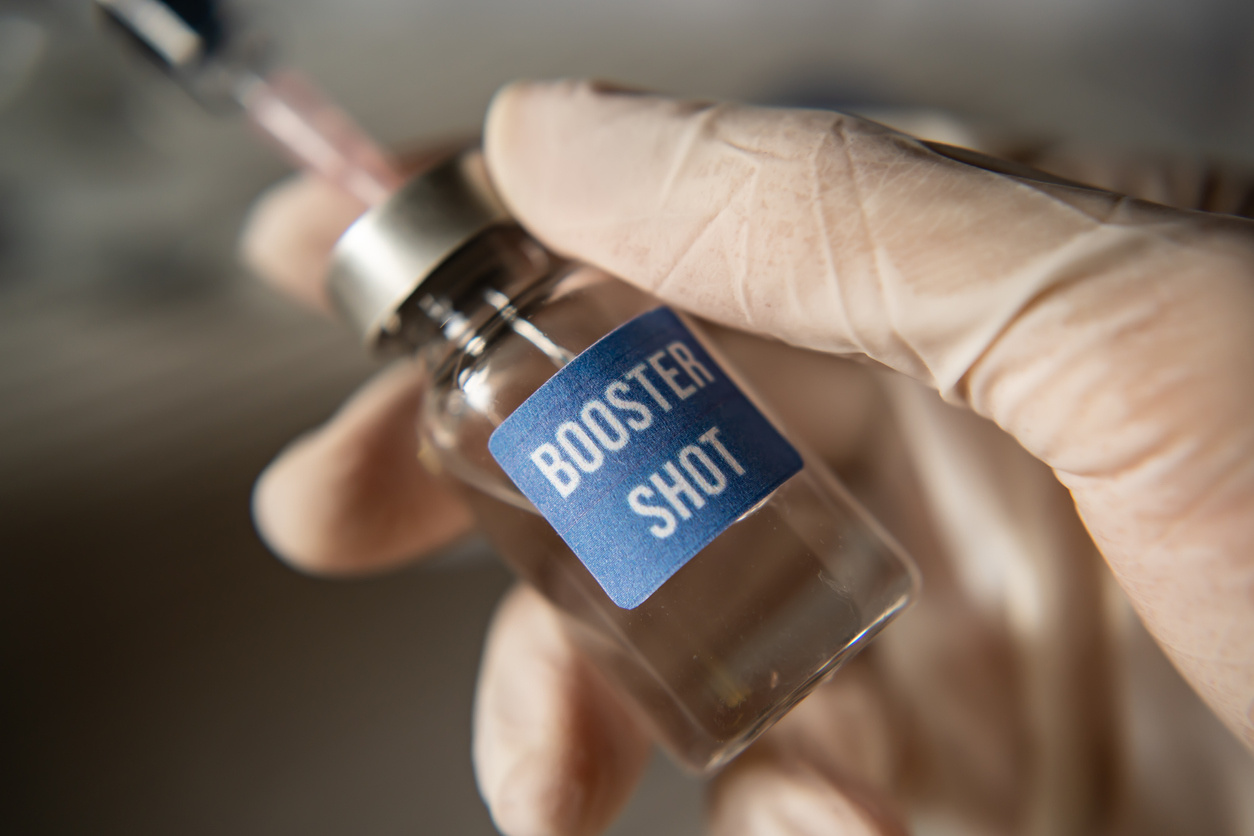
The Biden administration on Wednesday called for booster Covid-19 vaccine shots from the Pfizer and Moderna drugs to be offered to fully vaccinated people eight months after the initial two doses, with the administration pointing to concerns from the highly contagious Delta variant and data showing that immunity provided by the vaccines wane overtime.

The announcement means booster Covid shots would be available to 155 million people beginning in the fall who have been fully vaccinated against the virus. The government said it is planning to make those shots available as early as Sept. 20.
Just last week the U.S. Food and Drug Administration approved booster shots for immunocompromised individuals.
“The current protection against severe disease, hospitalization, and death could diminish in the months ahead, especially among those who are at higher risk or were vaccinated during the earlier phases of the vaccination rollout," said federal health authorities in a statement Wednesday. "For that reason, we conclude that a booster shot will be needed to maximize vaccine-induced protection and prolong its durability."

Similarly to the early days of vaccine rollout, people 65 and older along with health workers are expected to be among the first in line for the booster shots, said the federal health authorities, including the FDA, CDC and the National Institute of Health.
According to the Wall Street Journal, citing people familiar with the plan, the third dose will be of the same vaccine from the two-dose regimen.
The vaccines so far appear to be effective in most cases at protecting people against severe Covid-19 illness, and they appear to work against most strains. But the shots don't appear to be as effective against the Delta variant, and preliminary research suggests that the immunity provided by the vaccines diminish and become weaker overtime.
The V.I. Dept. of Health will be offering the booster shots in the territory, and Health Commissioner Justa Encarnacion along with D.O.H. Infectious Disease Specialist Dr. Tai Hunte-Ceasar are working with the CDC to formulate a cohesive strategy to be executed in a careful and organized manner.
"The CDC is providing guidance from a territorial perspective," Ms. Encarnacion said. The health department's plan to administer the booster shots will follow a path similar to the strategy it utilized during the initial weeks and months of vaccine availability, where frontline health workers and elderly and chronic-care populations were first in line.
"We want to make sure that we promote it in a very organized manner and that we have sufficient vaccines," Ms. Encarnacion said, restating that the local government would have enough vaccines to meet demand.
The U.S. is not alone in approving booster Covid-19 shots. Other countries such as Israel, Germany and Francis are making preparations to do the same.
According to data released by Pfizer-BioNTech in July, the efficacy of their vaccine at protecting against symptomatic disease dropped every two months to 84 percent after six months from a peak of 96 percent within two months of vaccination. Additionally, the research data was gathered before the more contagious Delta variant is believed to have started spreading in the U.S.

On August 5 Moderna said research suggested that its vaccine remains 90 percent effective six months after the administration of two doses. However, the company saw a decline in antibody levels — which play a key role in protecting against infection — during the same time period, especially against new strains of Covid-19, among them the Delta variant.