
As U.S. President Donald Trump lashes out at Colombia’s leader following his criticism of ongoing U.S. military operations in the southern Caribbean Sea, Trinidad and Tobago has reiterated its strong support for the campaign of airstrikes targeting alleged narco-terrorist networks.

As of Sunday, the United States has conducted at least seven airstrikes against vessels in the Caribbean, claiming that they were all part of drug trafficking operations conducted by people deemed narco-terrorists by U.S. authorities. The bombing campaign, which began in early September and which has killed at least 32 people thus far, is being met with mounting criticism from both local and international sources.
Most recently, Colombian president Gustavo Petro accused the United States of committing murder, claiming that one of the strikes hit and killed Alejandro Carranza, a “lifelong fisherman” in territorial waters. In a social media post, Mr. Petro called the strike a violation of the country's sovereignty and said that the fisherman's boat “was adrift and had its distress signal up due to an engine failure.” Contrary to U.S. assertions that information and evidence not shared with the public identified all those killed as drug traffickers designated as “narco-terrorists,” Mr. Petro insisted that the fishermen “had no ties to the drug trade.”
“We await explanations from the U.S. government,” he said. Rather than the requested explanations and justifications, however, President Trump responded by calling Mr. Petro a “drug leader” with a “fresh mouth toward America.” In a social media post on Sunday, Mr. Trump said that he would stop all financial aid to Colombia, and threatened that if the nation did not address its drug production issue and “close up these killing fields immediately..the United States will close them up for him, and it won't be done nicely.” The president later confirmed Senator Lindsey Graham's assertion that “major tariffs” would now be imposed on Colombia.
However, questions about the justification for the bombings, and the identities of those killed in the strikes, continue. On Saturday, President Trump disclosed that two survivors of a strike on an alleged drug-smuggling submarine had been detained and would be repatriated to their countries of origin, Ecuador and Colombia, for “detention and prosecution.”
President Petro, meanwhile, called on his Attorney General to assist Mr. Carranza's family in pursuing legal claims against the United States. He even suggested that the family of a Trinidadian national killed in a U.S. strike be included in the action against the U.S.
Trinidad & Tobago's leadership, however, has shown no inclination to challenge the U.S. Over the weekend, the nation excluded itself from a joint statement of the Caribbean Community (CARICOM) and issued a release of its own which expressed “strong support for the ongoing military intervention of the United States of America in the region.”
At the same time, the United States Embassy in Trinidad was directing American citizens to stay away from the facility “due to a heightened state of alert,” based on threats it said “could be linked” to the escalating tensions between Venezuela and the United States.
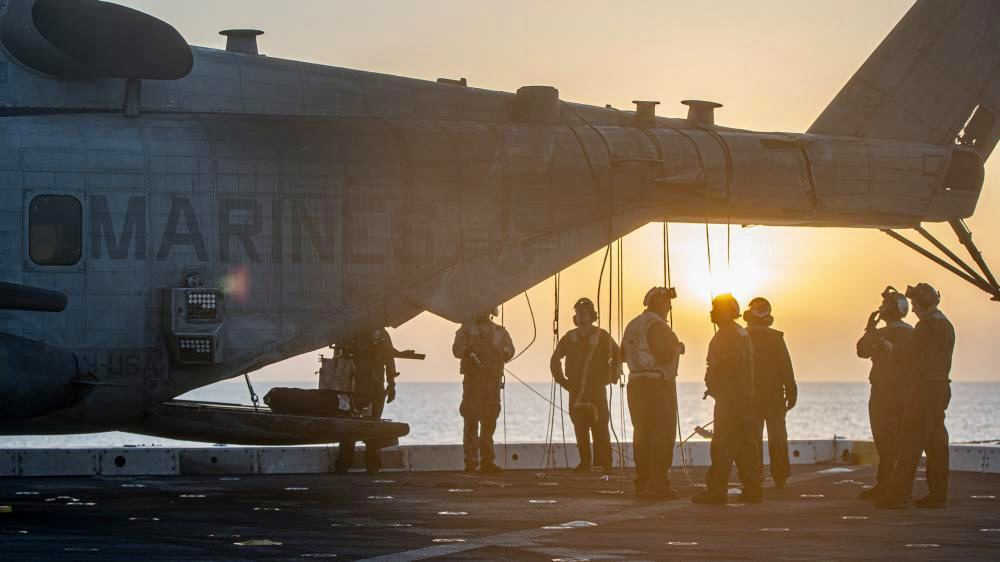
Venezuela, meanwhile, has been mobilizing its military in response to President Trump's suggestion that land operations in the country might be next, moving troops towards the country's coastline and activating national militias, in response to the build-up of American military assets offshore. “The people are ready for combat,” Venezuelan President Nicolas Maduro said during a public address last week.
Even so, Caracas has quietly signaled an alternative path to confrontation: recently, Nicolás Maduro sent a letter to the U.S. president proposing direct talks with Richard Grenell, a special envoy of the Donald Trump administration.
In the letter, Maduro asserted his government’s willingness to engage diplomatically amid the military build-up in the Caribbean.
This comes as both sides undertake dramatic displays of force and readiness, yet the outreach offers a quieter — though fragile — indication that Venezuela may prefer negotiation over direct escalation.

According to statements by Marco Rubio, the U.S. Secretary of State, and other senior administration officials, the campaign is framed as a counter-terrorism effort rather than pure drug enforcement. Rubio declared that “we are undertaking these operations against narco-terrorist organizations,” describing some Latin American drug cartels as “foreign terrorist organizations” that have “corporate structure” and pose a serious national-security threat. Additionally, the Trump administration has formally determined that the U.S. is engaged in a “non-international armed conflict” with these designated groups, a classification meant to allow military force under the law of armed conflict rather than traditional law-enforcement measures.