



The United States government has issued a security alert urging American citizens in Mexico to shelter in place following widespread violence that erupted after the killing of one of the country’s most powerful cartel leaders.

In an updated advisory, U.S. officials said: “Mexico: UPDATE - Due to ongoing, widespread security operations and related road blockages and criminal activity in many areas of Mexico, U.S. citizens should shelter in place until further notice. Roadblocks have impacted airline operations, with some domestic & int’l flights canceled in both Guadalajara & Puerto Vallarta. Taxis/ride shares are suspended in Puerto Vallarta. Seek shelter and remain in residences or hotels.”
The alert comes after Mexican security forces killed Nemesio Rubén Oseguera Cervantes — known as “El Mencho” — during a military operation in Tapalpa, Jalisco, on Sunday, February 22, 2026.
According to Mexico’s Defense Ministry, the 59-year-old leader of the Jalisco New Generation Cartel (CJNG) was wounded in a shootout and died while being airlifted to Mexico City for medical treatment. At least six other cartel members were killed during the operation, and three Mexican soldiers were injured.

Oseguera, a former police officer from Michoacán, founded the CJNG around 2010 after splitting from the Millennium Cartel. Under his leadership, the organization grew into Mexico’s most powerful criminal enterprise, controlling drug trafficking routes, extortion operations, fuel theft networks, and synthetic opioid production, including fentanyl. He was among the world’s most wanted fugitives and had a $10 million bounty placed on him by the United States.
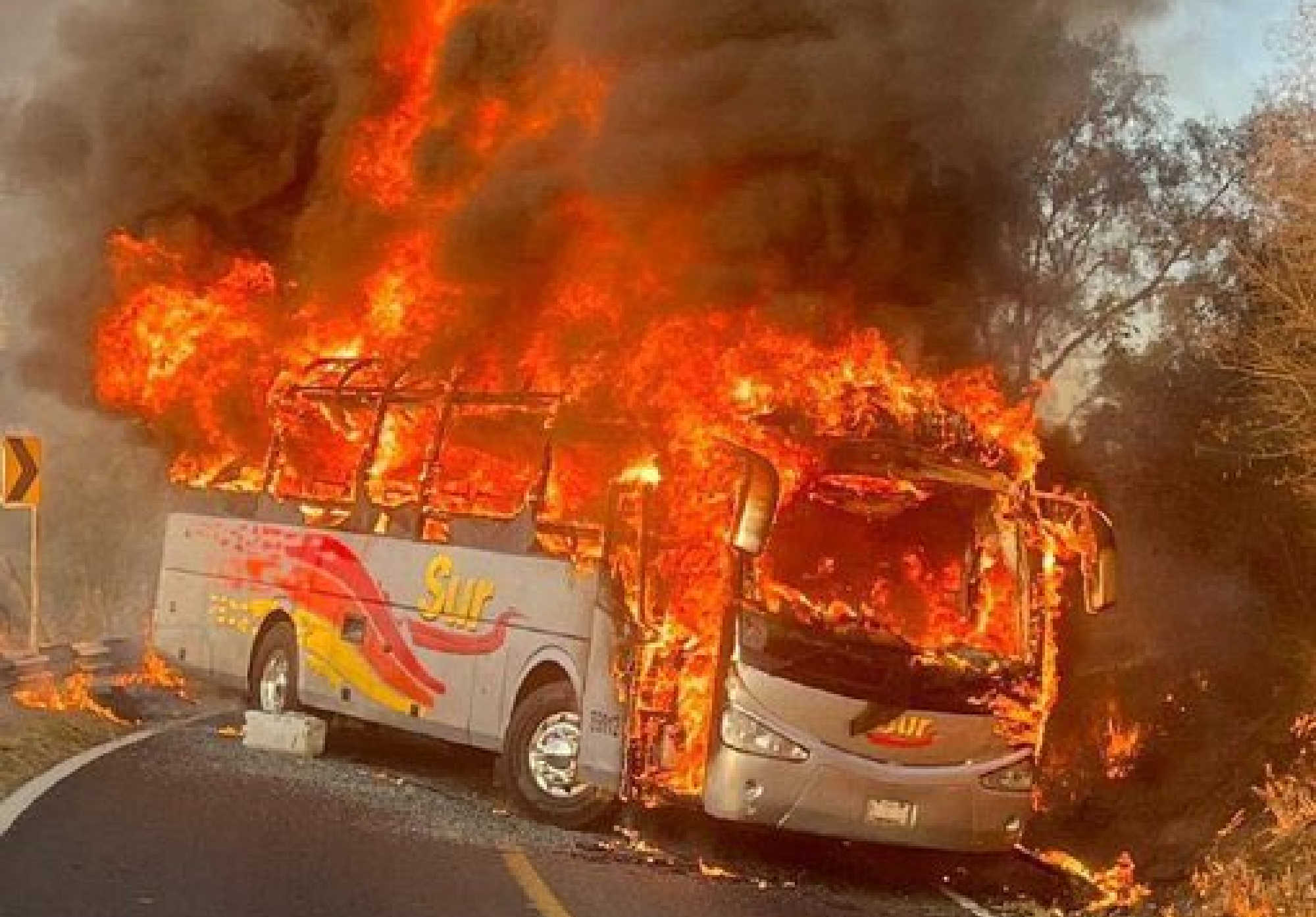
His death triggered immediate retaliatory violence across Jalisco and neighboring states. Authorities documented at least 29 road blockades as suspected CJNG members set vehicles ablaze and obstructed highways. Incidents were reported in Guadalajara, Puerto Vallarta, Zapopan, and in states including Guanajuato, Colima, and Michoacán.
The U.S. State Department issued a shelter-in-place advisory for American citizens in Puerto Vallarta and surrounding areas, while the U.S. Embassy in Mexico City warned of potential disruptions at Guadalajara International Airport, where smoke from burning buses was visible.
The situation has disrupted transportation throughout the region. Flights were canceled in both Guadalajara and Puerto Vallarta, and taxis and ride-share services were suspended in Puerto Vallarta as security forces conducted operations.
Mexican President Claudia Sheinbaum described the killing as a “significant achievement” in the fight against organized crime, noting its alignment with broader efforts to address fentanyl trafficking concerns raised by the United States.
The Trump administration welcomed the development, calling it a “great development” in bilateral cooperation between the two countries.
In response to the unrest, Mexican authorities deployed additional troops to affected areas. Jalisco Governor Enrique Alfaro reported more than 100 arrests related to the violence by Sunday evening.
No civilian casualties were immediately reported, though businesses and schools in Guadalajara closed amid the chaos.
As of Sunday night, authorities continued working to dismantle roadblocks and stabilize affected areas. Officials warned that tensions remain high.
Analysts have cautioned that Oseguera’s death could spark internal power struggles within the CJNG, potentially leading to further violence as factions compete for control. The cartel is known for its sophisticated weaponry and attacks on authorities and has expanded operations into more than 30 Mexican states as well as international networks.